
Silai Machine Yojana is designed to help eligible women start or expand home-based tailoring by providing either a free sewing machine or financial assistance to purchase one, along with short skill training and, in some cases, a daily stipend during training. The program prioritizes women from economically weaker sections, including widows, single women, and socially disadvantaged groups, and is implemented through state departments and allied artisan-support tracks to turn tailoring skills into reliable income at home.
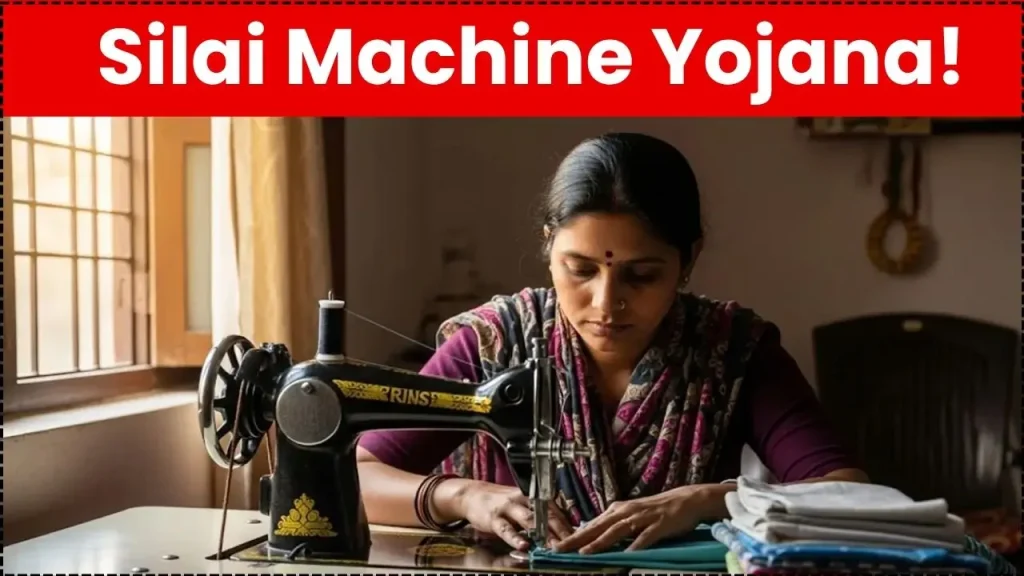
If you’re exploring a simple way to earn from home, Silai Machine Yojana gives you a clear start: a free sewing machine or a cash incentive to buy one, basic tailoring training, and where available a daily training stipend so you can learn without losing a day’s earnings. Applications are typically accepted through state social welfare or labour portals, Common Service Centers, and recognized artisan pathways that formalize skills, offer a toolkit incentive, and enable access to concessional credit for microenterprise growth.
Silai Machine Yojana
| Item | Details |
|---|---|
| Scheme Name | Silai Machine Yojana / Free Sewing Machine Scheme (state-led variants and artisan-linked support) |
| Objective | Enable women’s self-employment in tailoring via machine support, training, and toolkits |
| Benefit | Free sewing machine or toolkit incentive (commonly up to ₹15,000), daily training stipend in some tracks, and step-up enterprise loans in artisan pathways |
| Eligibility | Women (often 20–40 years) from EWS/BPL; priority for widows, single women, differently abled, and SC/ST/OBC; state criteria vary |
| Application | State portals/department offices, CSC assistance, or artisan registration for toolkit and credit linkage |
| Key Portals | State social welfare/labour portals and scheme listings; artisan registration portals for training, ID, and credit |
What Is Silai Machine Yojana
Silai Machine Yojana refers to a cluster of government-backed initiatives that either distribute free sewing machines or provide a one-time incentive to purchase one, with the goal of enabling women to earn from home through tailoring, basic repairs, and small garment work. In several states, the scheme is run by Social Welfare or Labour/Welfare Boards (including unorganized or construction worker boards), while artisan-linked pathways add a toolkit e-voucher, formal recognition, training, and access to concessional credit.
Why This Matters
A sewing machine can convert existing skill into steady cash flow without upfront capital, shop rent, or fixed hours. Tailoring is flexible around childcare and household routines, and even a few regular customers for stitching, alterations, or school uniforms can cover daily expenses and support savings. When paired with short training and small working-capital loans, the income potential scales from household side-work to a dependable home business.
Who Is Eligible for Silai Machine Yojana
- Women from economically weaker sections and BPL households form the core target group, with priority commonly extended to widows, deserted women, differently abled beneficiaries, single mothers, and socially affected women.
- Typical age bands cited in state notifications range around 20–40 years; some states extend the upper limit slightly (always check your state’s current circular).
- First-time beneficiaries are usually preferred to expand coverage; if you’ve already received a machine under a similar program, you may be ineligible for a second unit.
- For artisan-linked pathways, eligible applicants (usually 18+) in recognized trades can register to receive an artisan ID, training, toolkit support, and access to concessional loans.
What Benefits You Get
- Free sewing machine distribution under state schemes, often routed through Social Welfare or Labour/Welfare Boards or district-level offices.
- Toolkit incentive that commonly goes up to ₹15,000 to purchase tailoring tools and accessories if a physical machine isn’t directly provided.
- Short-duration training (often 5–15 days) in basic tailoring, measurement, and finishing; some implementations include a daily stipend during training so you don’t forgo income while learning.
- Step-up, collateral-free enterprise loans in artisan tracks to upgrade from a base machine to better equipment, add attachments (pico/overlock), and buy fabric and threads for small orders.
Documents You’ll Need for Silai Machine Yojana
- Identity and address: Aadhaar, residence proof, and a recent passport-sized photo.
- Income and banking: Income certificate, bank account details/passbook copy, and active mobile number.
- Priority proofs: Caste/community certificate, widow certificate, or disability certificate, if applicable.
- Registration where required: If your state delivers through a labour or unorganized worker board, ensure your board registration is active and at least the minimum tenure mandated in the guidelines.
How To Apply (Online And Offline) for Silai Machine Yojana
- State Schemes: Visit your state Social Welfare, Women & Child Development, or Labour/Welfare Board portal to find the sewing machine scheme page. Fill the form, upload documents, and submit. If offline, collect the form from the local office, attach photocopies, and file it at the designated counter. Keep the acknowledgment for status tracking.
- CSC Assistance: If you prefer assisted filing, visit a nearby Common Service Center with originals and photocopies. The operator will complete your online submission and print a receipt.
- Artisan Pathway: Register on the official artisan-support portal when applicable, complete basic onboarding, attend the prescribed training, receive the toolkit incentive, and then become eligible for concessional credit in tranches as your skills and business readiness improve.
Selection, Verification, And Distribution
- Verification teams review your documents and may conduct a brief local check to confirm residence and eligibility.
- On approval, beneficiaries are informed via SMS/portal notifications to collect machines at a distribution camp or receive the toolkit incentive in their bank account.
- For artisan pathways, you’ll receive a formal certificate/ID after training, followed by toolkit disbursal and subsequent loan eligibility as per program stages.
Training And Stipend
- Short modules focus on measurement, basic cutting, seams, hemming, buttonholes, alterations, and simple children’s wear to get you production-ready quickly.
- Where provided, the daily training stipend helps offset the opportunity cost of attending classes and encourages consistent attendance until completion.
- Finishing the training improves your chances of steady orders, especially local school uniforms and alteration work that bring repeat customers year-round.
How To Maximize Earnings with One Machine
- Start with essentials: blouse alterations, pant hems, kurta adjustments, zipper replacements, and school uniform repairs these have high repeat demand and quick turnaround.
- Offer pick-up slots and next-day delivery for alterations to stand out. Keep a rate card, but allow small combos (e.g., two hems + one zip at a bundled price).
- Reinvest early profits in strong thread cones, quality needles, spare bobbins, and a sharp pair of shears; these small upgrades raise finish quality and reduce rework.
- Add profitable add-ons after a month: pico/fall for sarees, simple piping, and decorative trims. If working capital allows, procure a pico attachment or negotiate access to one on a rental/hourly basis from a nearby shop.
- Partner locally: coordinate with a school shop, uniform vendor, or dry cleaner for steady alterations. Offer a revenue share per garment to keep orders flowing.
Common Reasons For Rejection (And Fixes)
- Mismatch in name or bank details between application and documents. Ensure Aadhaar, bank passbook, and application spellings match exactly.
- Age or income outside scheme limits. Recheck your state’s current cut-off; if ineligible, consider the artisan pathway for training and toolkit support.
- Duplicate benefit history. If you previously received a machine, look for training-only or credit-linked options to upgrade rather than reapply for a free unit.
- Incomplete files. Submit clear scans, include all priority certificates, and keep originals for verification day.
Silai Machine Yojana For Different States
- Social Welfare-led distribution: Many states directly provide machines to eligible women through district offices, often prioritizing widows and destitute women to support rehabilitation and self-reliance.
- Labour/Welfare Board assistance: Unorganized/construction worker boards offer a one-time grant or free machine to registered women workers or spouses of registered male workers who meet minimum registration tenure.
- Electric and toolkit variants: Some states provide electric sewing machines or combine a basic mechanical machine with a motor and accessories kit, depending on budget availability and vendor tie-ups.
Linkage With Artisan Support For Tailors
- Recognition and ID: Formal registration as an artisan creates a verifiable identity for accessing training, tools, and finance.
- Toolkit And Training: A one-time toolkit e-voucher supports purchase of sewing kit essentials, while training updates stitching, finishing, and basic costing to improve margins.
- Credit Tranches: Collateral-free loans in stages (typically first for working capital, later for expansion) help you move beyond alterations to made-to-measure garments and small batch orders.
Realistic Timelines and What to Expect
- Application to approval can take a few weeks depending on batch size and verification backlogs, especially around financial year ends when distribution camps are scheduled.
- Training batches often run monthly or quarterly; completing training early can place you in the next toolkit or credit tranche window.
- If you’re waitlisted, keep your documents valid and watch for notification windows; camps frequently allocate by district quotas.
Practical Tips for Faster Approval
- Register with your state’s relevant welfare board if required, and make sure your registration is active before applying for the sewing machine benefit.
- Use consistent KYC across documents and the application form; even minor spelling differences cause delays in DBT or distribution lists.
- Keep SMS alerts on and note your application number; track status weekly and respond quickly to any clarification requests.
Canara Bank 310-Day FD Scheme 2025 — Safe and Quick Investment Option
Monetization Roadmap: 90 Days to Consistent Orders
- Days 1–15: Finish training, set up the machine corner, test-stitch sample fabric, and finalize a basic price list; do two “free fixes” for neighbors to spark word-of-mouth.
- Days 16–45: Focus on alterations only; aim for 5–8 garments per day with same-day or next-day delivery; collect customer phone numbers and ask for repeat business.
- Days 46–75: Add saree pico/fall and simple kidswear; track which items have the highest hourly return and drop unprofitable work.
- Days 76–90: Approach a school uniform vendor and a local dry cleaner for alteration tie-ups; invest early profit in an overlock/edge-finishing solution or rent one by the hour.
FAQs on Silai Machine Yojana
Is The Silai Machine Yojana Really Free
Yes, many state-led models provide a free sewing machine to eligible women, while some programs offer a one-time incentive to purchase one. In artisan-linked tracks, the benefit can be a toolkit e-voucher rather than a physical machine, but the outcome enabling home-based tailoring remains the same.
Who Can Apply for The Silai Machine Yojana
Women from economically weaker sections, commonly in the 20–40 age group, with priority to widows, single women, differently abled beneficiaries, and socially disadvantaged communities. Always check your state’s live notification for exact age, income, and residency rules.
What Documents Are Required
You’ll typically need Aadhaar, residence proof, a recent photo, income certificate, bank account details, and if claiming priority caste/community, widow, or disability certificates. Where delivered through a welfare board, active registration is essential.
How Does Training and Stipend Work
Short tailoring modules cover measurements, basic construction, alterations, and finishing, and some implementations pay a daily stipend during training. Completing the module improves your placement in toolkit or credit tranches and boosts early earning potential.