

Rental Rules 2025 are here to make renting simpler, fairer, and far less stressful for both sides of the agreement. Think lighter, predictable deposits, written and properly registered agreements, digital stamping, clear rent hike rules, and faster dispute resolution. If you’ve dealt with vague clauses, surprise rent increases, or endless delays in the past, this is the year processes become clearer, timelines get tighter, and documentation actually protects you. Expect standardized, written contracts filed on time, digitized paperwork that’s tamper‑resistant, and structured remedies via Rent Authorities and Tribunals. For tenants, that means protection from arbitrary demands. For landlords, it means stronger, enforceable documentation and quicker routes when things go wrong. Rental Rules 2025 fit the moment, as urban renting scales and both trust and speed matter
Rental Rules 2025 focus on a few essentials that remove ambiguity from day one: capped residential deposits, mandatory written agreements filed within set timelines, digital stamping for a clean audit trail, and rent increases that must follow the escalation clause in the contract. States are aligning with the Model Tenancy Act’s architecture, so you’ll increasingly see dedicated portals, standardized formats, and faster decisions from Rent Authorities and Tribunals. For a market long driven by informal practices, this shift prioritizes predictability over guesswork.
Rental Rules 2025
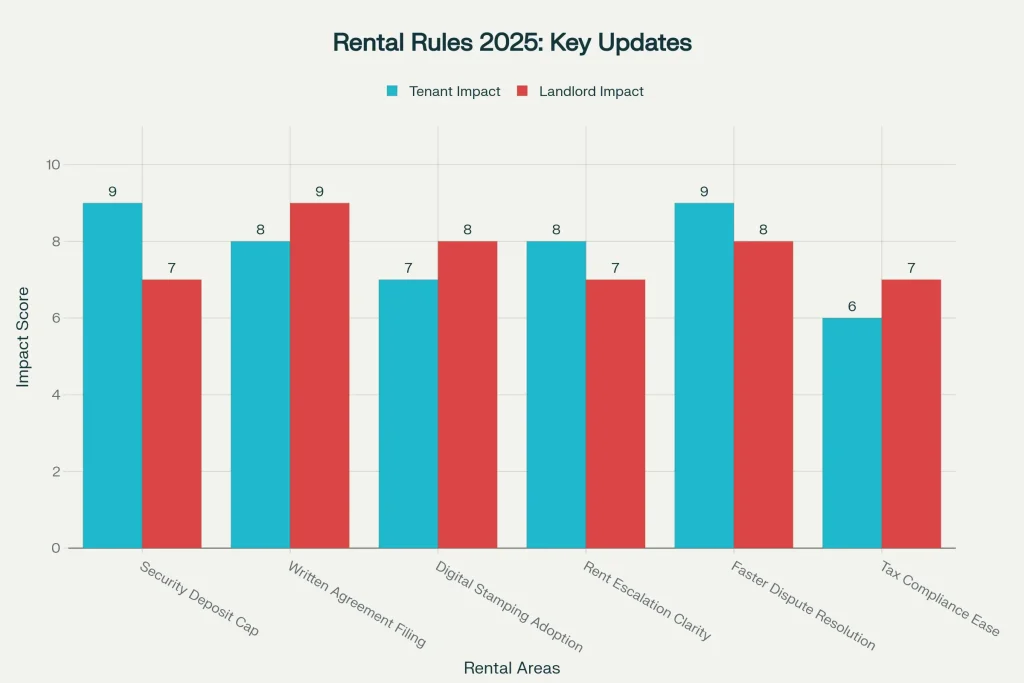
| Item | What changes in 2025 | Why it matters |
|---|---|---|
| Security deposit | Residential deposits standardized toward two months’ rent; non‑residential commonly higher within notified caps | Reduces cash burden; stops arbitrary demands |
| Written agreement | Mandatory written contracts; filing with Rent Authority within a fixed window (commonly two months where notified) | Clear, enforceable terms; fewer disputes |
| Digital stamping | Digital-first stamping and e-filing becoming standard | Tamper-resistant records; easy verification |
| Rent escalation | Must follow the pre-agreed clause; no mid-term arbitrary hikes | Predictable budgeting; fewer conflicts |
| Dispute forum | Rent Authorities and Tribunals prioritized over slow civil routes | Quicker, specialized resolution |
| Tax compliance | Higher TDS thresholds and clearer reporting norms in recent guidance | Smoother cash flow; cleaner filings |
Rental Rules 2025 bring predictability to India’s rental market: capped deposits that don’t drain savings, written and registered contracts that actually protect both sides, digital stamping that creates verifiable records, rent hikes bound by the agreement, and faster dispute forums that keep cases moving. If you’re renting or letting this year, treat the contract as your operating manual. Get it right, file it on time, keep your records tight and most of the usual friction never shows up.
What’s Changing and Why It Matters
India’s rental market has long leaned on informal arrangements: verbal assurances, oversized deposits, vague notice periods, and slow civil cases. The 2025 framework professionalizes this landscape. With defined deposit ranges, mandatory written agreements, digital stamping, and time-bound recourse, tenants get predictability and landlords gain enforceability. In practice, that means fewer shocks mid-tenure, and clear steps when either side needs to act.
Security Deposits
Expect residential leases to settle around a two‑month deposit band in states aligning with the new framework, with higher limits typically reserved for non-residential properties. The upside is obvious: tenants don’t need to drain savings to secure a home, and landlords still have a reasonable buffer for genuine damages or dues. The key to avoiding conflict at move-out is documentation—photos, inventory lists, and receipts so deductions are justified, proportionate, and provable.
Written Agreements and Registration
A written agreement is no longer optional make it standard practice. Use a clear, plain-language contract that spells out duration, rent, deposit, escalation schedule, maintenance splits, notice periods, entry/inspection norms, and dispute forum. Where notified, submit the agreement to the Rent Authority within the stipulated window (commonly two months) so it’s recognized and enforceable. A filed agreement shortens arguments later; it’s worth the extra few clicks.
Digital Stamping And E‑Workflows
Digital stamping and online filing are transitioning from “nice-to-have” to “default.” The benefits are tangible: a traceable document history, reduced tampering risks, and easier retrieval during disputes or tax seasons. As more states push digital workflows, landlords, tenants, and brokers will spend less time shuttling between counters and more time getting the essentials right verification, clarity, and compliance.
Rent Hike Rules
Annual rent increases must follow the escalation clause stated upfront in the agreement. If the clause says 5% after 11 months, that’s the rule. Mid-term arbitrary hikes aren’t allowed outside the contract. This protects tenants’ monthly budgets and helps landlords plan yields without last-minute renegotiations. If you’re drafting now, keep the escalation realistic and consistent with local norms so renewals remain smooth.
Faster Dispute Resolution
Rent Authorities and Tribunals are designed to handle tenancy issues faster than general civil courts. For non-payment, repeated breaches, or deposit disputes, this path provides a specialized, time-bound forum. The speed matters: delays often turn solvable issues into permanent fallouts. With a properly filed agreement and clean payment trails, both sides stand a better chance of quick, fair outcomes.
Eviction, Notice, And Possession
Evictions must follow due process and valid grounds persistent non-payment, misuse, major breaches, or owner’s bona fide need under applicable law. Landlords should serve notices exactly as the agreement specifies. Tenants should respect notice periods and surrender possession peacefully when terms end or a valid order is issued. Both sides should avoid self‑help tactics; they’re risky and can backfire legally.
Maintenance And Repairs
The cleanest way to avoid maintenance fights is to split responsibilities clearly in the agreement. As a working norm, landlords handle structural and major systems; tenants handle day‑to‑day upkeep and minor wear-and-tear items. Put service timelines in writing who calls whom, within how many days and document major repairs with invoices. At handover, do a walk‑through with photos and a signed checklist.
Tax And Compliance for Landlords
Recent guidance points to higher TDS thresholds and simpler reporting under “income from house property,” which reduces routine friction in compliance. Keep digital copies of rent receipts, bank credits, and repair bills. If you’re offering furnished units, maintain an inventory with values; it helps with both disputes and accounting. For portfolio landlords, standardize documents across units to cut repetitive effort.
State Adoption And Timelines
Not every state flips the switch on the same day. Expect phased adoption, with some states moving faster on digital stamping and online filing, and others taking longer to notify deposit caps or Rent Authority procedures. Best practice is to check your state portal or local notification before signing. The north star remains the same: written, filed agreements; predictable deposits and escalations; and digital records.
Practical To‑Dos For Tenants
- Insist on a written, plain-language agreement and verify deposit terms before paying.
- Register or file the agreement within the required timeline where applicable.
- Keep a digital paper trail: rent receipts, UPI/bank proofs, and a dated move‑in inventory.
- Push for a clear escalation clause; avoid vague phrases like “as decided later.”
- If talks stall, use the Rent Authority route rather than informal fixes.
Aadhaar Card Changes Made Simple — Update Your Details Online in Minutes for 2025
Practical To‑Dos For Landlords
- Use a standardized agreement with clear clauses on escalation, maintenance, and notice.
- Adopt digital stamping and e-filing; store everything in organized folders.
- Issue receipts for all payments; keep a ledger for the deposit and deductions.
- Follow notice and escalation steps exactly as written to preserve rights.
- For persistent defaults, escalate promptly to the Rent Authority/Tribunal.
FAQs on Rental Rules 2025
Are security deposits now the same across India?
No. Many states are aligning residential deposits to about two months’ rent, but adoption is state‑specific. Always check your local notification and the exact terms in your agreement.
Can the landlord increase rent in the middle of the term?
Only if the agreement explicitly allows it. Otherwise, rent increases must follow the escalation clause and notice rules agreed at signing, typically at renewal or after the defined term.
Do I need to register my rent agreement?
Yes, a written agreement is essential, and where notified, filing with the Rent Authority within a set window is expected. Registration and digital stamping make the agreement stronger and easier to enforce.
What’s the fastest way to resolve a rent dispute?
Use the dedicated Rent Authority/Tribunal where available. It’s designed to be quicker and more specialized than general civil court routes, especially for non‑payment, deposit, or breach cases.