
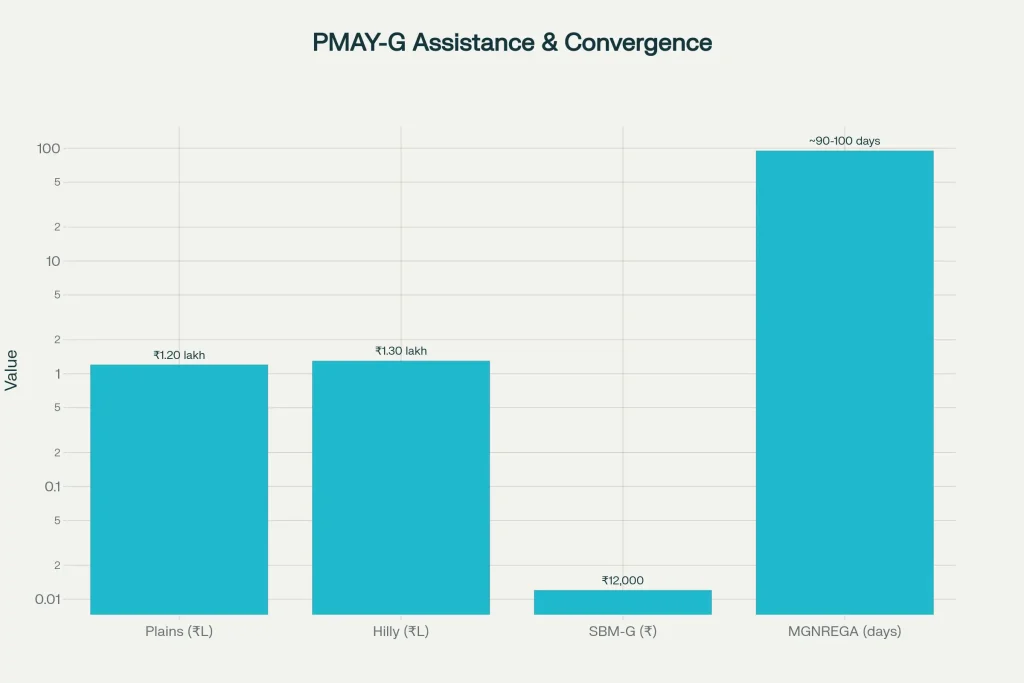
PM Awas Yojana Gramin is a lifeline for rural families who still dream of a safe, permanent home. Under this mission, eligible households get ₹1.20 lakh in plain areas and ₹1.30 lakh in hilly or difficult regions, released directly to the beneficiary’s bank account in stages as construction progresses. The selection relies on objective deprivation data and Gram Sabha verification to ensure support reaches families that are truly houseless or living in kutcha or dilapidated structures.
PM Awas Yojana Gramin prioritizes families without a pucca house, landless laborers, and those identified through SECC-based lists and Gram Sabha scrutiny. If your name appears in the priority list, you can complete Aadhaar and bank linkage at the Gram Panchayat or CSC, after which installments are released with geo-tagged progress checks and local verification.
PM Awas Yojana Gramin
| Key Item | Details |
|---|---|
| Scheme | Pradhan Mantri Awaas Yojana – Gramin (PMAY-G) |
| Assistance | ₹1.20 lakh (plains), ₹1.30 lakh (hilly/difficult) per house via DBT |
| Minimum Size | 25 sq. m including hygienic cooking space |
| Selection | SECC-based priority, Gram Sabha verification, deprivation criteria |
| Convergence | MGNREGA labor days, SBM-G sanitation support (toilet assistance) |
| Apply/Track | Through Gram Panchayat/CSC; services available via official portals and UMANG |
PM Awas Yojana Gramin is more than a housing subsidy, it’s a structured pathway for rural families to move into safe, permanent, and dignified homes with a clear, transparent process. If your household has no pucca house, start at the Gram Panchayat or nearest CSC, confirm your inclusion, and complete Aadhaar and bank linkage so your installments flow on time. Keep documents ready, align your construction milestones with tranche releases, and use convergence like MGNREGA and SBM-G to lower costs without slowing progress.
Scheme Overview and Benefits
PMAY-G funds the construction of a core, all-weather pucca house that meets the 25 sq. m minimum with space for hygienic cooking, while encouraging locally suitable designs and climate-resilient materials. Installment-linked DBT reduces leakage and aligns cash flow with construction milestones so families can plan materials, labor, and completion timelines more confidently.
Eligibility Criteria for PM Awas Yojana Gramin
Eligibility focuses on rural households without a pucca house anywhere in India, especially houseless families and those in kutcha or semi-pucca units as identified in the SECC list. Priority typically extends to SC/ST households, landless laborers, persons with disabilities, and women-led households, with the Gram Sabha finalizing verification before sanction.
How Selection And Registration Work
The process starts from the SECC database and local surveys, is vetted by the Gram Sabha, and then sanctioned by the competent authority before digital onboarding. Beneficiaries complete Aadhaar seeding and bank account details at the Gram Panchayat or CSC; a registration/reference number is generated to track status and installments online.
Required Documents to Apply for PM Awas Yojana Gramin
Keep these ready to avoid delays:
- Aadhaar and consent for Aadhaar-based use
- Active bank account details for DBT
- MGNREGA job card (if applicable)
- Swachh Bharat Mission (SBM) number for toilet convergence
- Land documents or declaration; where land is unavailable, coordinate with local authorities for site allocation norms
- Self-declaration that no household member owns a pucca house
Financial Assistance and Installments
Assistance is disbursed in tranches mapped to construction milestones such as foundation, roof level, and completion, verified through geo-tagged photos and field checks. Convergence further reduces out-of-pocket expenses: MGNREGA supports labor components and SBM-G adds toilet assistance, improving both completion rates and dignity outcomes.
Plains Vs Hilly Area Support
Unit assistance is ₹1.20 lakh in plains and ₹1.30 lakh in hilly/difficult areas to account for terrain-related costs and logistics. States adapt execution to local hazards, seismic risks, and material availability while adhering to central standards on unit size, transparency, and beneficiary verification.
Minimum Standards And Quality Checks
Each house must be a durable, weather-resistant pucca unit of at least 25 sq. m with a hygienic cooking area and robust roofing and walling suited to local climate. Panchayat and block teams track construction through geo-tagging and stage-wise inspections so each tranche aligns tightly with verified progress.
How To Apply And Track Status of PM Awas Yojana Gramin
- Visit your Gram Panchayat or nearest CSC to confirm inclusion, submit documents, and complete data entry.
- Link Aadhaar and bank account to enable DBT, and collect your registration/reference number.
- Use official portals or UMANG-integrated services to check beneficiary lists, installment details, FTO status, and permanent waitlists.
- Coordinate with local engineers/masons and plan materials in sync with tranche releases to keep timelines tight.
Practical Tips for Applicants
- Keep Aadhaar, bank details, and mobile number consistent across records to prevent DBT failures.
- Line up materials and labor early; explore MGNREGA provisioning during peak phases to manage costs.
- If landless, work with the Gram Panchayat for site allocation per state norms before initiating registration.
- Maintain clear photo documentation at each stage; ensure geo-tagging is accurate to avoid tranche delays.
- Where possible, plan for hazard-resistant features (plinth height, roofing tie bands, local disaster codes) to improve resilience.
The assistance of ₹1.20 lakh in plains and ₹1.30 lakh in hilly areas, coupled with geo-tagged verification and DBT, ensures that funds reach the right people, at the right time. With states continuing sanctions, refreshed surveys, and tighter digital monitoring, eligible families who act promptly can secure both the financial support and technical guidance needed to complete a durable, hygienic, and hazard-resilient pucca home turning the promise of “housing for all” into a concrete reality for their village and their future.
EPS-95 Pension Update: Proposed Salary Limit Hike May Increase Payouts Significantly
Latest Updates and Timelines
States continue to sanction batches against verified lists while portals are refreshed for status tracking, installment details, and convergence visibility. Surveys and local verification drives help bring remaining eligible households into the fold, and outreach at GP and block level supports documentation and onboarding so families can complete homes within planned windows.
FAQs on PM Awas Yojana Gramin
How much will I receive under PMAY-G?
Eligible households in plain areas receive ₹1.20 lakh, while those in hilly or difficult regions receive ₹1.30 lakh, released in stages directly to their bank account.
What is the minimum house size required?
At least 25 sq. m, and the design must include a hygienic cooking area, with flexibility to use locally appropriate materials and climate-suitable designs.
How do I register for PMAY-G?
Start at your Gram Panchayat or nearby CSC with Aadhaar, bank details, and relevant documents. After Gram Sabha verification and sanction, your details are entered digitally and you can track progress online.
Can I get support for labor and toilets?
Yes. MGNREGA can support labor components and SBM-G provides around ₹12,000 for toilet construction where applicable, reducing total out-of-pocket costs during house building.