
If you’ve been hearing that a labour card can get you ₹3,000 every month, you’re not alone and yes, the ₹3,000 figure is real. But the detail most people miss is this: in most cases, this “₹3,000 every month” message is about a government pension benefit that starts after you turn 60, not an instant monthly payment right after making a card. That one difference changes everything your eligibility, your expectations, and the steps you need to take. In today’s Labour Card Scheme Update, the goal is simple: explain the real route through which card holders and unorganised workers can legally reach the ₹3,000 per month benefit, what documents you’ll need, where to apply, and what mistakes to avoid. If you’re a worker, a family member helping someone enroll, or even just someone trying to verify viral WhatsApp claims, this guide will make the picture clear.
When people say, “labour card scheme gives ₹3,000 monthly,” they usually refer to a structured pension plan for unorganised workers where you contribute a small amount regularly, and the government matches it. After you reach the retirement age (60 years), you start receiving a fixed pension often quoted as ₹3,000 per month. So, the message is not totally wrong, but it is often incomplete. Think of it like this: it’s closer to a retirement pension plan than a monthly assistance scheme. If you’re eligible and you enroll correctly, your long-term benefit can be ₹3,000 every month but it starts at the correct age and under the correct rules.
Labour Card Scheme Update
| Point | Details |
|---|---|
| Scheme type | Government-backed pension plan for unorganised workers |
| Monthly benefit | ₹3,000 per month pension (after retirement age) |
| Retirement age | 60 years |
| Who can join | Eligible unorganised workers (as per scheme conditions) |
| Income condition | Typically meant for workers within a defined income limit |
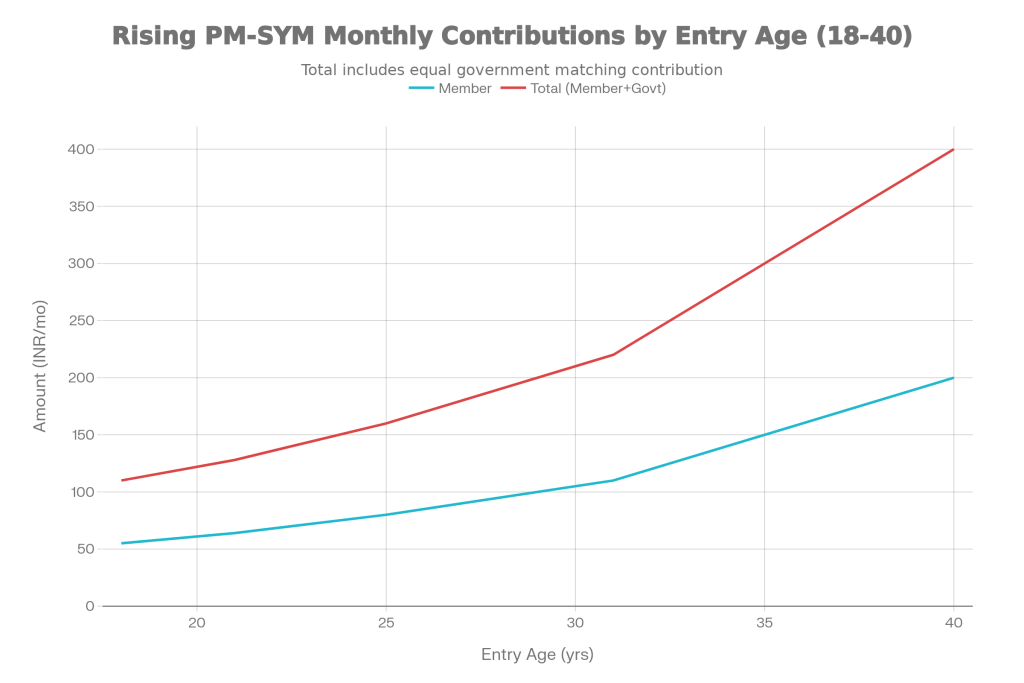
| Contribution model | Worker contributes monthly; government provides matching support |
| Contribution amount | Depends on entry age (younger entry usually means lower monthly contribution) |
| Where to apply | Common Service Centres and official scheme portals (varies by state/process) |
| Documents usually required | Aadhaar, mobile number, bank account/Jan-Dhan details |
| Family benefit | Spouse may receive family pension as per rules |
PM SYM Labour Card Scheme
PM-SYM is one of the main schemes linked with the popular “₹3,000 per month” claim. It is designed for people working in the unorganised sector workers who do not have a regular EPF-style retirement support. The scheme works on a contribution basis. That means you don’t just “apply and start receiving money.” You enroll, you contribute for years, and then you receive pension after 60. This is why many people get confused. They see posts saying “card holders will get ₹3,000 every month,” but the scheme is actually a pension pathway. If you join early, the monthly contribution is lower and the long-term benefit becomes easier to secure.
Features Of PM SYM
Here are the practical features that matter for real people:
- Fixed monthly pension: Once you reach the pension-start age, the benefit can be ₹3,000 per month.
- Shared contribution: Your contribution is not alone there is matching support from the government side (as per scheme rules).
- Unorganised worker focus: The scheme is aimed at daily wage workers, street vendors, domestic workers, construction labour, small job workers, and similar categories.
- Family pension support: If the subscriber passes away after pension starts, the spouse may receive a portion of the pension as family support.
The biggest takeaway is simple: it’s a retirement security plan. If someone is promising “₹3,000 monthly from next month,” treat that as a red flag unless it’s backed by an official notice clearly stating a direct monthly assistance program.
Contribution By The Subscriber
Your monthly contribution depends mainly on your age at the time of joining. This is a very common pension-style structure: the earlier you start, the less you need to pay monthly because you have more years to build the pension eligibility. In most cases, the contribution is taken through an auto-debit setup from your bank account. That’s why your bank details (and a working mobile number linked to your Aadhaar) become important during enrollment.
What to remember:
- Join earlier if you are eligible, because the monthly amount is usually lighter.
- Keep your bank account active and maintain enough balance around the debit date.
- Don’t ignore missed contributions small delays can become bigger issues later.
Matching Contribution By The Central Government
- A key strength of this route is the matching contribution model. Instead of making you carry the entire burden, the government adds a matching amount according to the scheme’s defined structure.
- This matters because it improves the long-term value of your monthly contribution. Many private savings habits fail because people stop midway due to low motivation, but when the government matches contributions, the scheme becomes more attractive and more sustainable for workers.
- Still, it’s important to understand: matching contribution doesn’t mean instant cash in hand. It supports the pension build-up and helps you qualify for the monthly pension later.
Enrolment Process Under PM SYM
The enrollment process is designed to be simple enough for workers who may not be comfortable with online forms. Generally, you can enroll through assisted centers where the operator verifies your details, helps fill the form, and guides you on the next steps.
Typical steps look like this:
- Check eligibility (age, income, and other conditions).
- Keep Aadhaar, mobile number, and bank account details ready.
- Visit an authorized enrollment center or use the official portal if self-enrollment is available.
- Submit details and complete authentication.
- Start contributions via auto-debit or as instructed.
After enrollment, the most important thing is consistency regular contributions and correct personal details.
Enrollment Agencies
- Enrollment usually happens through authorized service centers that help workers register without needing advanced digital knowledge. These agencies act as facilitators, not decision-makers. Their role is to help you complete the process correctly.
- If a person or office is charging unusually high fees, guaranteeing “instant ₹3,000,” or refusing to give any receipt or proof of registration, avoid it. Stick to official or authorized channels only.
Facilitation Centres for Labour Card Scheme
Facilitation centres exist to guide workers, answer questions, and support people who want clarity before enrolling. Many workers want to confirm whether they are eligible, whether they should join now, and what happens if their income changes later.
Use facilitation centres for:
- Eligibility confirmation
- Document correction guidance
- Understanding pension start rules
- Fixing name/mobile/bank mismatch issues
A small correction early can save you big headaches later, especially when the pension payout stage comes.
Fund Management
In government pension-style schemes, fund management is handled through the officially defined structure. This ensures the pension payout mechanism remains organized and consistent with scheme rules.
For a subscriber, the key point is not “who manages the fund daily,” but:
- Your enrollment is genuine and recorded
- Your contributions are happening correctly
- Your details match across Aadhaar and bank records
If these three things are correct, your long-term pension path becomes much safer.
Exit And Withdrawal
A real-life problem in the unorganised sector is irregular income. Some people may join and later struggle to contribute, or they may move to another job type. That’s why exit and withdrawal rules exist.
Generally, exit rules depend on how long you stayed in the scheme. The longer you remain and contribute, the more structured your benefit path becomes. Early exit may return part of the contributions under specific terms, while longer participation may offer better settlement rules.
Before exiting, it’s smart to check:
- Whether you can regularize pending contributions instead
- Whether a spouse can continue the account (if the scheme allows)
- What the long-term loss will be if you exit early
Default Of Contributions
Missing contributions doesn’t always mean your account is finished but it can create complications. Some schemes allow a worker to re-activate or regularize contributions by paying dues and applicable charges.
To reduce the risk of default:
- Keep your bank account active
- Update bank changes immediately
- Ensure auto-debit is not blocked
- Maintain minimum balance around the debit date
Default issues are one of the biggest reasons people later say, “I applied but I didn’t get benefits.” In many cases, the problem is not eligibility it’s irregular contributions or wrong bank linking.
Pension Pay Out
This is the stage everyone cares about. The monthly ₹3,000 benefit generally starts when the subscriber reaches the pension-start age (commonly 60). If the account is active, contributions were made as required, and your records are correct, the pension payout begins as per scheme process.
Important practical notes:
- Pension is not typically released just because you have a labour card.
- Pension starts because you enrolled in the pension scheme, contributed for years, and reached the required age.
- Keep your KYC clean name spelling mismatch between Aadhaar and bank can delay payouts.
If your goal is “₹3,000 per month,” the smartest approach is to treat this like a long-term pension plan and keep your records perfect from day one.
Grievance Redressal
If something goes wrong enrollment not reflecting, contribution not deducting, bank mismatch, mobile change, or pension delay use the official grievance and support channels linked to the scheme.
Before raising a complaint, keep these ready:
- Registration or acknowledgment number (if available)
- Aadhaar-linked mobile number
- Bank account details used during enrollment
- Date of enrollment and center details
FAQs on Labour Card Scheme Update
What does the ₹3,000 per month benefit actually mean?
It usually refers to a pension amount payable after reaching the scheme’s retirement age, not an instant monthly handout right after getting a labour card.
Can I get ₹3,000 every month immediately after making a labour card?
Most government pension-linked schemes do not work that way. You typically need to enroll, contribute, and then receive pension after reaching the eligible age.
What documents are generally required for enrollment?
Aadhaar, a working mobile number, and an active bank account (often Jan-Dhan or savings account) are commonly required.
What if my contribution gets missed due to low bank balance?
In many cases, you may be able to regularize missed payments, but repeated defaults can create problems. Keeping your account funded and active is crucial.