

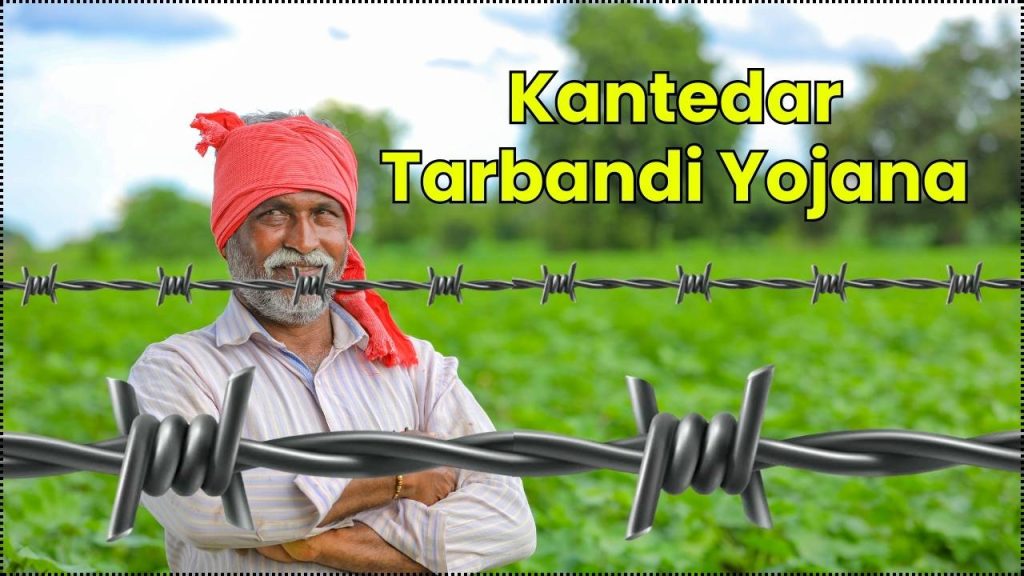
The Rajasthan government has expanded the Kantedar Tarbandi Yojana, offering farmers up to a 50 percent subsidy for installing barbed-wire fencing on their agricultural land. The initiative is part of the state’s broader effort to reduce crop losses caused by stray animals and wildlife, improve farm security, and support small and marginal farmers who face recurring challenges during each cropping season.
The updated scheme, introduced in the 2024–25 agricultural cycle, lowers the minimum land requirement and increases subsidy availability, making it more inclusive for farmers across Rajasthan’s diverse regions.
History and Evolution of the Kantedar Tarbandi Yojana
The Kantedar Tarbandi Yojana was first introduced more than a decade ago, with the goal of helping farmers protect their fields from animals such as cows, bulls, nilgai, and camels. Initially, the scheme was implemented on a limited scale and largely benefited farmers with larger land holdings.
In recent years, severe crop losses due to stray cattle have forced policymakers to revisit and expand the scheme. After consultations with agricultural scientists, district-level officers, and farmer unions, the state government revised the scheme’s guidelines. The minimum land requirement was lowered from one hectare to half a hectare, enabling marginal farmers—who make up the majority of Rajasthan’s farmer population—to participate.
The updated subsidy structure and improved application process mark the most significant expansion of the scheme in the last five years.
Why the Fencing Subsidy Matters Today
Farmers across Rajasthan have been struggling with increasing crop damage from stray cattle and wild animals. According to a 2023 survey conducted by the state agriculture department, crop losses from animal intrusion ranged from 8 percent to 15 percent in several high-risk districts. Many farmers reported having to sleep in their fields during the harvest season, risking personal safety to protect their crops.
Agricultural policy analyst Mahendra Singh from the University of Rajasthan said the fencing subsidy directly addresses a widespread challenge for rural communities. He explained that fencing reduces preventable losses, ensures better crop survival, and allows farmers to focus on regular agricultural activities without constant worry.
The rise in movement of animals like nilgai and the decline of formal gaushala (cow shelter) capacities have worsened the issue, making fencing a practical and immediate solution.
Cost of Barbed-Wire Fencing and What Farmers Typically Spend
Barbed-wire fencing is considered both durable and cost-effective, making it the preferred choice among most farmers. A standard fencing project typically includes cement poles, barbed wire of approved gauge, support wires, and installation labour.
On average, the cost of fencing one hectare ranges between 70,000 and 90,000 rupees. The exact cost depends on the quality of materials, distance from the market, soil hardness, and labour availability.
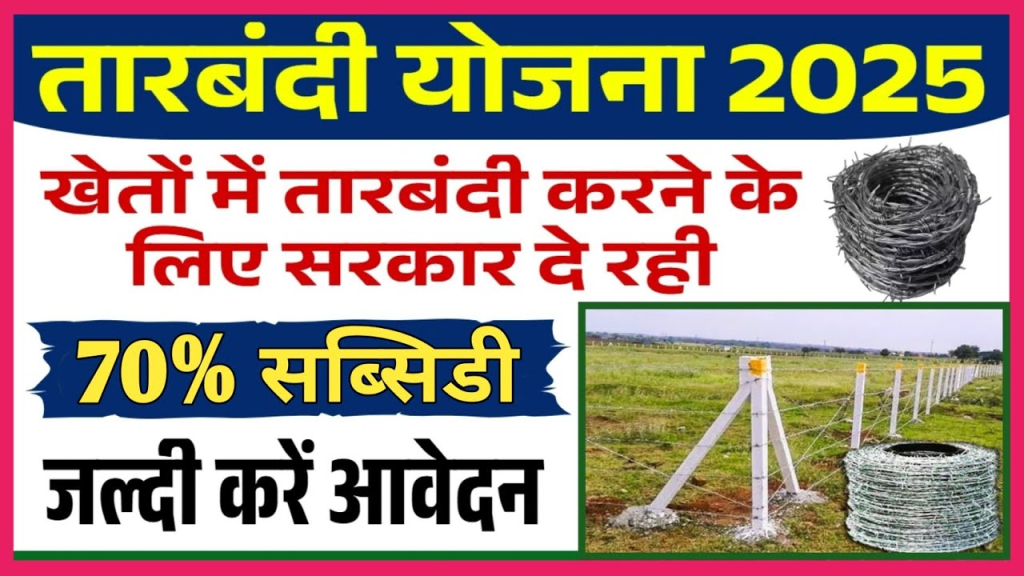
Under the updated Kantedar Tarbandi Yojana, farmers can receive up to a 50 percent subsidy on this cost, depending on the guidelines of the district agriculture department. Collective fencing projects involving three or more farmers may receive additional benefits, as they cover larger boundary areas and improve community-level protection.
Eligibility Criteria and Application Process for Kantedar Tarbandi Yojana
The Rajasthan Agriculture Department has outlined clear eligibility requirements for the scheme. Any registered landowner with at least 0.5 hectares of agricultural land can apply. Joint applicants or farmer groups with adjoining land parcels are also eligible.
Farmers must provide documents such as their Aadhaar card, Jan Aadhaar ID, land ownership papers, bank details, and a sketch of the field boundary. Applications can be submitted online through the RAJ-KISAN Portal, or offline through the local agriculture supervisor or district agriculture office.
Once approved, farmers must install the fencing within the specified period. After installation, government officials visit the field to verify the work. The subsidy is released directly to the farmer’s bank account through the Direct Benefit Transfer (DBT) system.
Digital Monitoring and Verification
To ensure transparency, the agriculture department has adopted digital verification methods. These include geo-tagged photos of the fencing before and after completion, GPS-based measurements of the boundary, mobile app–based inspection reports, and QR-coded bills to track purchases of materials.
Officials state that these digital measures have significantly reduced cases of inflated billing or improper material use, improving the overall credibility of the scheme.
Experiences From the Ground: Voices of Farmers
Many farmers who have already benefited from the scheme report noticeable improvements in crop safety and yield stability.
In Sikar district, farmer Ramesh Kumar said stray animals caused frequent damage to his green gram fields. After installing fencing with the help of the subsidy, he said he no longer had to spend nights guarding his fields. His crop yield increased, and post-harvest losses decreased dramatically.
In Udaipur, tribal farmer Kamla Devi installed fencing around her maize fields. She stated that earlier, the family would take turns staying awake at night, but the fencing reduced their labour burden and improved household security.
These testimonials reflect a larger trend across rural Rajasthan, where fenced fields are becoming a common sight, particularly in districts with high stray cattle movement.
Comparison With Similar Schemes in Other States
Several Indian states offer fencing subsidies, though the structure and benefits vary. Uttar Pradesh provides a capped subsidy of up to 40,000 rupees under its Kisan Fencing Scheme. Madhya Pradesh offers 30–50 percent assistance under the Mukhyamantri Khet Suraksha Yojana. Maharashtra provides 40 percent support but enforces stricter inspection norms.
Experts note that Rajasthan’s scheme stands out due to its lower eligibility threshold and wider coverage for small landholders. The introduction of digital monitoring makes it one of the more transparent and accountable models in the country.
Environmental Impact and Wildlife Considerations
While fencing helps farmers protect crops, environmental experts caution that large-scale fencing may disrupt wildlife movement if not planned properly. Wildlife researcher Tejasvi Rao notes that species like antelopes require open corridors, and poorly placed fences can obstruct their natural routes.
To address this issue, the agriculture and forest departments are coordinating to restrict fencing near wildlife reserves and protect forest buffer zones. In ecologically sensitive areas, alternative fencing solutions such as solar-powered electric fencing or micro-barrier designs are being explored.
PM-Kisan 2025: New Rules, Payment Dates & Secrets to Get ₹6,000 Without Delay!
Administrative Oversight and Budget Allocation
The Rajasthan government has increased funding for the scheme in the 2024–25 budget under agricultural protection measures. District collectors, deputy directors of agriculture, and block-level supervisors are responsible for implementation and oversight. Quarterly reports are submitted to the state headquarters detailing the number of applications, installations completed, and funds disbursed.
Officials emphasize that the primary goal is to ensure that subsidies are given to genuine applicants and that the quality of fencing meets durability standards.
Practical Challenges in Implementation
Despite the scheme’s success, certain challenges persist. Rising steel prices have increased material costs, affecting the overall affordability. Labour shortages during peak agricultural seasons can delay installation. In remote villages, inspection delays can slow the subsidy release.
Another common issue involves land disputes. Fencing cannot be installed unless boundaries are properly demarcated, and unclear land documentation leads to application rejection in some cases.
Future Plans: Solar Fencing, Smart Monitoring, and Community Corridors
Looking ahead, the Rajasthan government is exploring more advanced fencing technologies. Solar-powered electric fencing is being tested in districts such as Jhunjhunu and Rajsamand. These systems use mild electric pulses to deter large animals without causing harm.
Drone-based monitoring is also being considered to map high-risk intrusion zones and verify fencing installations. In some areas, community fencing corridors—where entire village boundaries are fenced collectively—are being discussed as a long-term solution.
Experts believe that combining traditional barbed-wire fencing with smart technologies could significantly enhance overall farm protection.
Conclusion
The expansion of the Kantedar Tarbandi Yojana marks an important step in Rajasthan’s efforts to protect its agricultural community. By providing a 50 percent subsidy for barbed-wire fencing, the scheme reduces crop losses, eases the burden on small farmers, and improves rural security. With the integration of digital monitoring and potential future upgrades such as solar fencing and drone inspections, the scheme is set to become an even more effective tool for supporting farmers across the state.