

Renting a home has become far more complex than it used to be. With rising property prices, limited housing supply, and growing demand in cities, tenants often feel they have little control once they enter a rental agreement. This is exactly why understanding Tenant Rights 2026 is no longer optional. Whether you are renting for the first time or renewing an existing lease, knowing what the law says can protect you from unfair treatment. Many tenants still believe that landlords can increase rent at will or ask them to vacate without a solid reason. In reality, Tenant Rights 2026 have brought stronger legal safeguards that restrict arbitrary rent hikes and enforce transparency. These updated rules are designed to protect tenants from sudden financial pressure, unclear agreements, and forced evictions. If you are about to sign a lease, being aware of these protections can save you from serious stress later.
Tenant Rights 2026 focus on fairness, accountability, and clarity in rental relationships. These laws aim to eliminate common disputes by clearly defining what landlords can and cannot do. From rent increases to eviction procedures, every major aspect of renting is now governed by stricter rules. Under Tenant Rights 2026, tenants are entitled to proper notice, written agreements, regulated security deposits, and legal protection against forced eviction. These rights are especially important in urban rental markets where tenants often face pressure due to high demand. Understanding these rules before signing a lease helps renters make informed decisions and avoid legal complications later.
Tenant Rights 2026
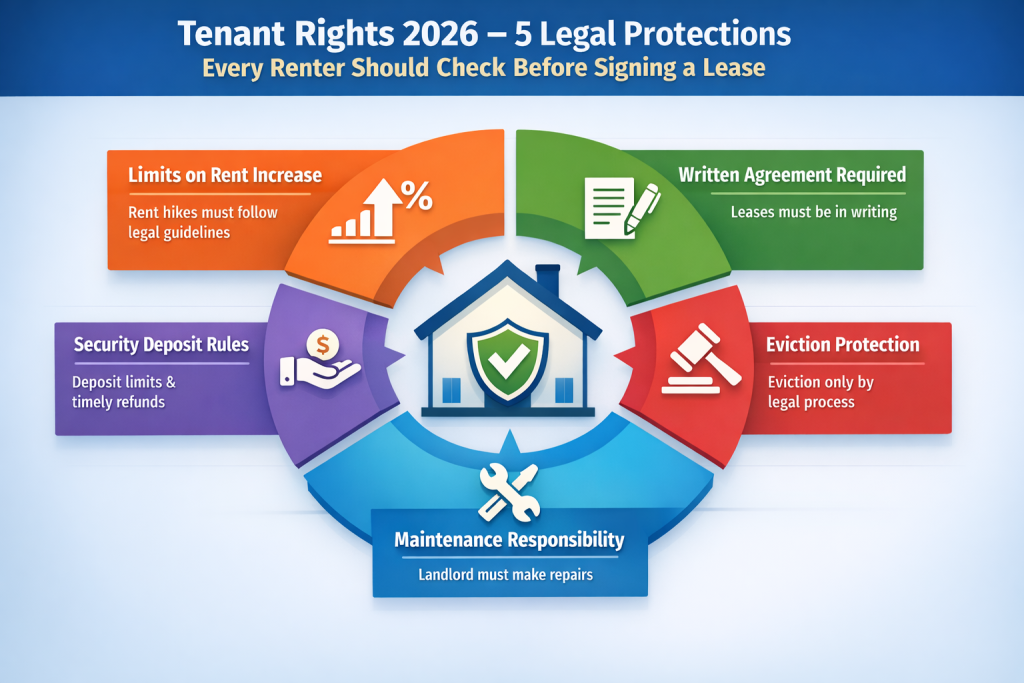
| Key Area | Legal Provision | How It Protects Tenants |
|---|---|---|
| Rent Increase | Must follow agreement and legal limits | Prevents sudden rent hikes |
| Rental Agreement | Written agreement is mandatory | Ensures clarity and legal proof |
| Security Deposit | Amount and refund timeline regulated | Protects tenant’s money |
| Eviction | Only through legal procedure | Prevents forced removal |
| Maintenance | Landlord responsible for essentials | Ensures safe living conditions |
Tenant Rights 2026 have significantly improved legal protection for renters by restricting arbitrary rent increases, enforcing written agreements, and regulating eviction and security deposit practices. These laws aim to create a balanced and transparent rental ecosystem where both tenants and landlords understand their responsibilities. Before signing any lease, take the time to understand your rights and obligations. Staying informed not only protects your finances but also ensures a more secure and stress free renting experience in today’s competitive housing market.
Landlords Cannot Arbitrarily Increase Rent
- One of the most important changes under Tenant Rights 2026 is the restriction on arbitrary rent increases. Landlords are no longer allowed to raise rent simply based on market demand or personal choice. Any increase must comply with the terms mentioned in the rental agreement and follow applicable laws.
- Typically, rent can only be revised after a fixed period and requires advance notice. This gives tenants time to plan their finances or consider alternative housing if needed. If a landlord attempts to increase rent without proper notice or justification, tenants have the legal right to challenge such actions. This provision has brought much-needed stability to renters who previously lived under constant fear of sudden rent hikes.
Written Rental Agreement Is Mandatory
Verbal agreements have been a major source of disputes between landlords and tenants. Tenant Rights 2026 strongly emphasize the need for a written rental agreement to avoid misunderstandings and exploitation. A written agreement should clearly mention the rent amount, duration of tenancy, terms for rent increase, security deposit details, maintenance responsibilities, and exit conditions. This document serves as legal evidence if conflicts arise. For tenants, it ensures that landlords cannot change terms midway or deny previously agreed conditions. Before signing, renters should read the agreement carefully and ensure it aligns with Tenant Rights 2026.
Security Deposit Rules Protect Tenants
Security deposits have often been misused, with tenants struggling to recover their money after vacating a property. Tenant Rights 2026 address this issue by regulating how much deposit a landlord can collect and how it should be refunded. The law allows deductions only for valid reasons such as unpaid rent or damage beyond normal wear and tear. The remaining amount must be returned within a specified timeframe. If a landlord delays or makes unjust deductions, tenants have the right to seek legal action. These rules ensure transparency and protect tenants from financial loss.
Eviction Requires Legal Process Under Tenant Rights 2026
- Under Tenant Rights 2026, landlords cannot evict tenants without following due legal process. Eviction must be based on valid reasons such as non payment of rent or violation of agreement terms and must follow proper notice requirements.
- This protection prevents tenants from being suddenly forced out of their homes. It also ensures that tenants have enough time to respond, correct issues if possible, or arrange alternative accommodation. If a landlord attempts eviction without following the law, tenants can approach legal authorities for relief.
Landlord Responsibility for Maintenance and Repairs
- Tenant Rights 2026 clearly define the landlord’s responsibility when it comes to property maintenance. Essential services such as water supply, electricity, sanitation, and structural safety must be maintained by the landlord.
- Tenants are only responsible for minor issues arising from regular use. Major repairs cannot be forced upon tenants unless damage is caused by negligence. This provision ensures that tenants live in safe and habitable conditions without bearing unfair maintenance costs.
Why Understanding Tenant Rights 2026 Is Important
- Many tenants face problems simply because they are unaware of their rights. Understanding Tenant Rights 2026 helps renters identify illegal rent increases, unfair eviction notices, and misuse of security deposits.
- Being informed also allows tenants to negotiate better lease terms and avoid signing agreements that violate the law. In a competitive rental market, knowledge is a powerful tool that helps tenants protect both their finances and peace of mind.
Common Mistakes Tenants Make While Renting
Despite stronger laws, tenants often make mistakes that weaken their legal position. One common error is agreeing to verbal terms without documentation. Another is failing to read the rental agreement carefully before signing. Some tenants also hesitate to question illegal rent hikes or delayed deposit refunds due to fear of eviction. Tenant Rights 2026 exist to protect renters, but these protections only work when tenants are aware and willing to assert them.
PNB Account Holder Update – Who Can Receive Up to ₹1 Lakh and How the Credit Works
How Tenants Can Protect Themselves Before Signing a Lease
Before signing a lease, tenants should always ask for a written agreement and review it carefully. Ensure that rent increase clauses, deposit terms, and notice periods are clearly mentioned. Tenants should also keep copies of all receipts, communication records, and agreements. Understanding Tenant Rights 2026 and maintaining proper documentation can make a significant difference if disputes arise later.
FAQs on Tenant Rights 2026
Can A Landlord Increase Rent Without Notice
No. Tenant Rights 2026 require landlords to give prior notice and follow the rental agreement before increasing rent.
Is A Written Rental Agreement Compulsory
Yes. A written agreement is strongly mandated to ensure transparency and legal clarity.
How Soon Must the Security Deposit Be Refunded
The security deposit must be refunded within the legally defined period after valid deductions, if any.
Who Is Responsible for Major Repairs
Landlords are responsible for major repairs and essential services under Tenant Rights 2026.