

Healthy soil is the real engine behind profitable and sustainable farming. No matter how advanced seeds or irrigation methods become, crop productivity ultimately depends on the condition of the soil. For many years, farmers applied fertilizers based on general advice, local practices, or trial and error. While this approach worked in the short term, it often resulted in rising input costs, declining soil fertility, and uneven crop yields. To overcome these challenges, a scientific and farmer-focused solution became essential. The Soil Health Card Scheme was introduced to help farmers understand their soil in a practical and meaningful way. Through accurate soil testing and clear recommendations, the Soil Health Card Scheme enables farmers to apply the right fertilizer in the right quantity. This not only improves crop yields but also protects soil health and supports long-term agricultural sustainability.
The Soil Health Card Scheme is a nationwide initiative that focuses on improving soil fertility and promoting balanced fertilizer use. Under this scheme, soil samples from farmers’ fields are collected and analyzed in laboratories. The findings are then provided to farmers in the form of a Soil Health Card that clearly explains nutrient levels and fertilizer needs. Unlike traditional fertilizer practices, this scheme promotes field-specific nutrient management. Farmers receive crop-wise guidance based on the actual condition of their soil. This leads to more efficient fertilizer use, lower input costs, and healthier crops.
Soil Health Card Scheme
| Particular | Details |
|---|---|
| Scheme Name | Soil Health Card Scheme |
| Launched By | Government Of India |
| Primary Objective | Improve Soil Health and Fertilizer Efficiency |
| Beneficiaries | Farmers Across India |
| Soil Testing Frequency | Once Every Two Years |
| Key Output | Soil Health Card with Nutrient Recommendations |
| Coverage | All States And Union Territories |
The Soil Health Card Scheme is a powerful initiative that promotes scientific and sustainable farming. By providing accurate soil information and practical fertilizer guidance, it helps farmers increase productivity while reducing costs. More importantly, it safeguards soil health and encourages responsible agricultural practices. With proper awareness and implementation, the scheme can play a vital role in shaping the future of agriculture.
Objective Of The Soil Health Card Scheme
- The main objective of the scheme is to encourage balanced nutrient use. Overuse of specific fertilizers over time has caused nutrient imbalances in many agricultural soils. This imbalance directly affects crop growth and reduces soil productivity.
- Another important objective is to reduce farming costs. Fertilizers represent a major expense for farmers. By applying only the nutrients required by the soil, farmers can avoid unnecessary spending and improve profitability.
What Is A Soil Health Card
- A Soil Health Card is a detailed report that reflects the physical and chemical condition of soil. It includes information on major nutrients such as nitrogen, phosphorus, and potassium, along with secondary and micronutrients. The card also shows soil pH and organic carbon levels.
- The most valuable part of the card is the crop-specific fertilizer recommendation. This helps farmers decide what type of fertilizer to apply, how much to use, and when to apply it for better results.
Parameters Covered Under The Scheme
- The scheme tests soil for several important parameters including soil pH, electrical conductivity, organic carbon, and essential nutrients. Both macronutrients and micronutrients are analyzed to identify deficiencies or excess levels.
- This detailed assessment helps farmers understand the reasons behind poor crop performance and guides them in correcting soil-related issues.
Soil Sampling and Testing Process
- Soil sampling follows a standardized procedure to ensure accurate results. Samples are collected from different points of a field and combined to represent the entire area. Proper care is taken during collection to avoid contamination.
- The samples are tested in approved soil laboratories using scientific methods. Once the analysis is complete, the Soil Health Card is prepared and distributed to farmers.
Role Of the Scheme in Fertilizer Management
The Soil Health Card Scheme plays a key role in improving fertilizer efficiency. Instead of applying fertilizers based on assumptions, farmers follow recommendations based on soil test results. This targeted approach reduces fertilizer wastage, improves nutrient absorption by crops, and enhances overall soil fertility. Balanced fertilization also leads to healthier plants and improved yields.
Benefits Of The Soil Health Card Scheme For Farmers
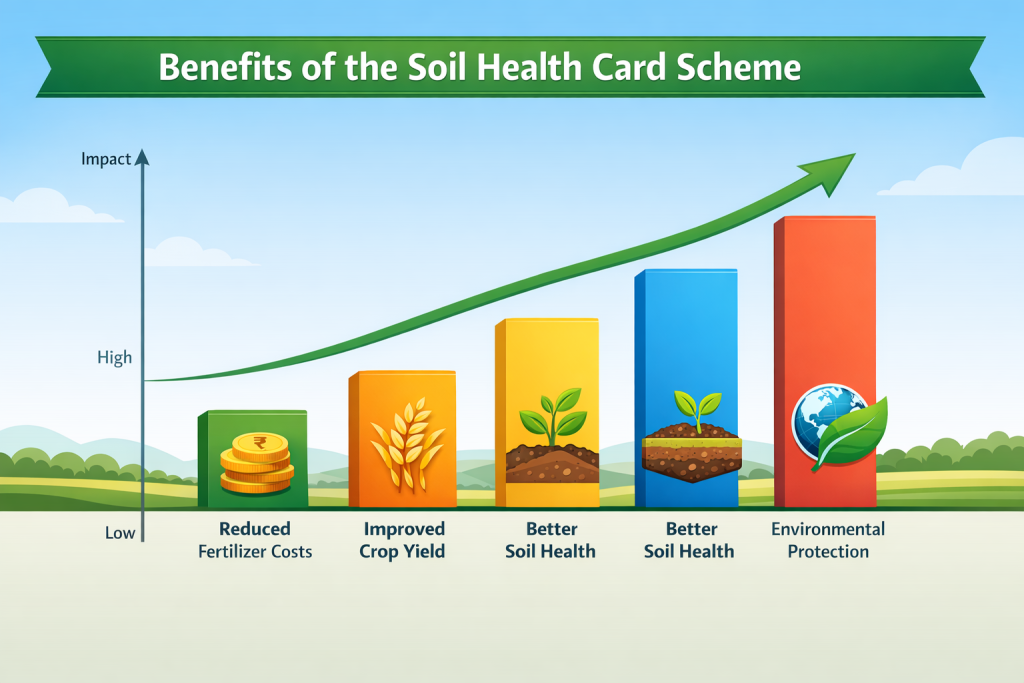
- One of the biggest benefits of the scheme is cost savings. Farmers can significantly reduce fertilizer expenses by applying only what the soil requires. This improves farm income and financial stability.
- The scheme also improves crop productivity. Balanced nutrient supply results in stronger plants, better resistance to stress, and more consistent yields over time.
Environmental Benefits Of The Scheme
- Excessive use of chemical fertilizers can degrade soil quality and pollute water sources. The scheme helps prevent these problems by promoting precise and balanced fertilizer application.
- Improved soil management increases organic matter, reduces nutrient runoff, and supports environmentally sustainable farming practices.
Implementation And Monitoring of The Scheme
- The scheme is implemented across the country with the support of central and state governments. Soil testing laboratories, mobile testing units, and agricultural extension officers work together to ensure smooth execution.
- Regular monitoring helps ensure timely soil testing and distribution of Soil Health Cards. Farmers are also guided on how to interpret and use the recommendations effectively.
Challenges In Adoption Of The Soil Health Card Scheme
- Despite its advantages, some farmers face challenges in understanding technical terms mentioned on the Soil Health Card. Limited awareness and delays in card distribution can also affect adoption.
- To address these issues, training programs and field-level support are being strengthened to help farmers use the card correctly.
Importance Of Farmer Awareness And Training
Awareness and training are critical for the success of the Soil Health Card Scheme. Farmers need to understand the link between soil health, fertilizer use, and crop productivity. Training sessions, demonstrations, and advisory services help farmers convert soil test data into practical field actions, ensuring better outcomes.
Impact Of The Scheme On Sustainable Agriculture
- By encouraging soil-based nutrient management, the scheme supports sustainable agriculture. Healthy soil improves long-term productivity and reduces dependency on excessive chemical inputs.
- This approach helps protect natural resources, improve food security, and support the livelihoods of farming communities.
Future Scope of the Soil Health Card Scheme
- With improvements in soil testing technology and digital tools, the scheme has strong potential for expansion. Digital Soil Health Cards and real-time advisory services can further enhance its effectiveness.
- Continued investment in farmer education and extension services will help maximize the benefits of the scheme.
FAQs on Soil Health Card Scheme
What Is the Main Purpose of the Soil Health Card Scheme
The scheme helps farmers understand soil nutrient status and use fertilizers efficiently.
How Often Is Soil Tested Under the Scheme
Soil testing is conducted once every two years.
Does The Scheme Help Reduce Farming Costs
Yes, it prevents unnecessary fertilizer use and lowers input expenses.
Is The Soil Health Card Useful for All Crops
Yes, it provides crop-wise fertilizer recommendations.