
Electricity bills don’t rise slowly anymore, they jump. If you’ve been thinking about rooftop solar but kept delaying it because of cost or confusion, PM Surya Ghar Yojana 2026 is meant exactly for you. Under PM Surya Ghar Yojana 2026, eligible homeowners can install rooftop solar and get a subsidy that can go up to ₹78,000, which seriously reduces the upfront burden. The best part is that PM Surya Ghar Yojana 2026 isn’t just a scheme announcement you read about and forget. It is a practical, step by step system where you apply online, select an approved vendor, get the plant installed, and then receive the subsidy directly in your bank account after inspection and commissioning. This article breaks it down in a simple, conversational way, so you can take action without getting stuck in jargon.
PM Surya Ghar Yojana 2026 is a rooftop solar subsidy program aimed at helping households shift to solar energy with financial support from the government. In simple words, it helps you install a grid connected solar plant on your roof so you can generate your own power and reduce your monthly bill. If your system produces extra electricity, net metering allows it to flow back to the grid and you receive credit based on your local utility rules. What makes PM Surya Ghar Yojana 2026 so popular is that it is built for real families, not just tech savvy people. The portal-based process, empanelled vendors, and inspection-based payout are designed to keep the process structured. If you’ve got a suitable roof, a valid electricity connection, and the basic documents ready, you’re already halfway there.
PM Surya Ghar Yojana 2026
| Item | Details |
|---|---|
| Scheme name | PM Surya Ghar Muft Bijli Yojana (Rooftop solar subsidy program) |
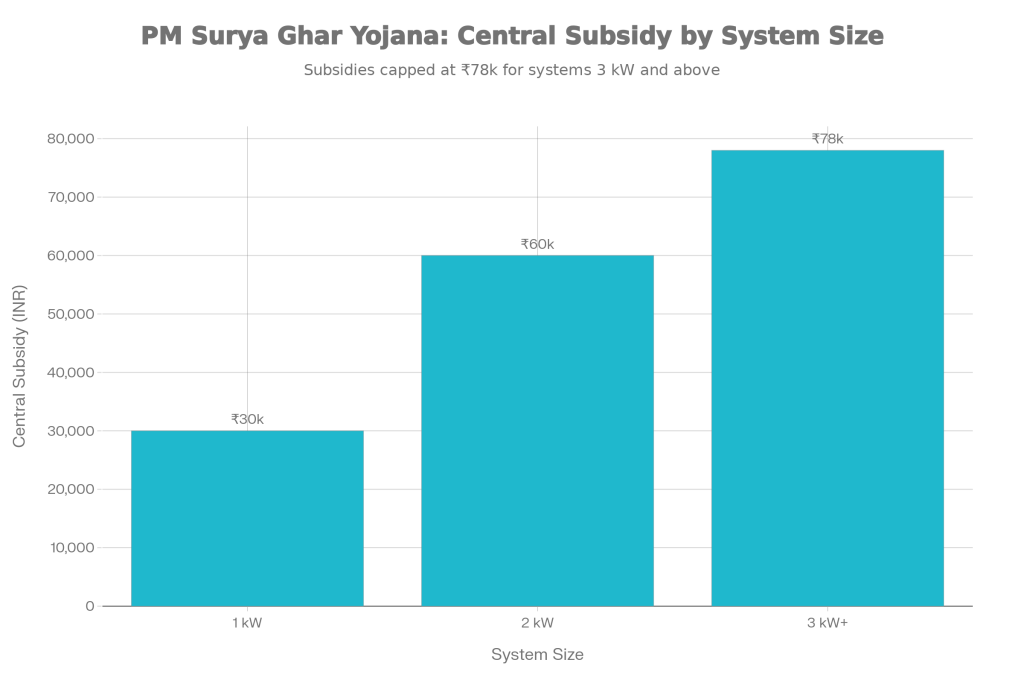
| Maximum subsidy | Up to ₹78,000 for 3 kW and above (capped) |
| Other subsidy slabs | ₹30,000 for 1 kW, ₹60,000 for 2 kW (as commonly listed in the scheme slab structure) |
| Who can apply | Residential homeowners with an eligible roof and electricity connection |
| Who cannot apply | Commercial or industrial properties, and homes that already received a subsidised rooftop solar system earlier |
| Application mode | Online through the scheme portal |
| Subsidy payment method | Direct Benefit Transfer to your bank account after inspection and commissioning |
| Key benefit | Lower electricity bills, long term savings, and ability to export surplus via net metering |
What Is PM Surya Ghar Muft Bijli Yojana?
PM Surya Ghar Muft Bijli Yojana is the national push to bring rooftop solar to homes at scale. The idea is simple: instead of depending only on grid electricity, households generate their own power using sunlight. This reduces the monthly bill and also supports cleaner energy. In practice, it works like this. You install solar panels and an inverter system on your roof. During the day, your home uses solar electricity first. If solar production is more than your consumption, the excess goes to the grid through a net meter. Later, you get credit for that exported power, depending on your DISCOM’s net metering policy.
Highlights Of PM Surya Ghar Yojana:
Here are the highlights that matter to a homeowner, not just on paper:
- Subsidy support that can reduce the upfront cost significantly, especially for 2 kW to 3 kW systems.
- A portal driven process that reduces offline confusion and improves transparency.
- Empanelled vendors for installation, making it easier to choose a reliable installer.
- Net metering support, so you can export surplus electricity and get credits.
- Long term benefit: a solar system is generally a multi decade asset, which means savings continue year after year.
Who Can Avail the PM Surya Ghar Yojana?
Eligibility is mainly focused on residential users. Generally, you can apply if:
- You are an Indian citizen.
- You own a residential property where the rooftop solar will be installed.
- You have an electricity connection in your name.
- Your roof has enough shade free space for the system you want.
- You have a bank account ready for subsidy transfer.
You are usually not eligible if the property is commercial or industrial, or if the property already installed a subsidised solar plant under earlier programs. If you’re in an apartment society or RWA, the scheme is also relevant because common area loads can be covered through society level installations.
Benefits Of PM Surya Ghar Yojana
This is where the scheme becomes real. The benefits are not only “green energy” benefits, they are daily life benefits.
Lower Electricity Bills
The obvious win is monthly savings. A properly sized rooftop system can bring your bill down drastically. In many homes, daytime power use like fans, AC, fridge, washing machine cycles, and water pumps can run directly on solar.
Subsidy Reduces Upfront Cost
With the subsidy slabs, the net price you pay becomes much more manageable. This is why PM Surya Ghar Yojana 2026 is a strong option for middle class households that want savings but don’t want to overspend upfront.
Net Metering Credits
Net metering is a big deal. If you produce more than you consume during peak sun hours, your surplus goes back to the grid. That export can be adjusted as credits in the bill, depending on local rules.
Long Term Value
Rooftop solar is not a one season benefit. It is a long term asset. Once you recover the investment through savings, the electricity you generate after that is basically “low cost power” for years.
Better Energy Security
Power cuts and voltage fluctuations are common in many areas. While a standard grid connected system shuts down during outages for safety, households can choose add ons like batteries or hybrid systems if their vendor and local rules allow it. Even without batteries, solar reduces dependency on the grid during normal supply hours.
How To Apply For PM Surya Ghar Yojana: A Step By Step Approach
If you want to avoid mistakes, follow a clean step sequence. Here’s the practical flow most applicants go through:
- Visit the official scheme portal and create your account using mobile number and OTP verification.
- Enter your electricity consumer number and basic details exactly as in your bill.
- Fill in your address, property details, and upload required documents.
- Select your preferred rooftop solar capacity. Many homeowners typically choose 2 kW or 3 kW depending on monthly units and roof space.
- Choose an empanelled vendor from the list available for your location.
- The vendor conducts a feasibility visit to confirm roof condition, shade, wiring route, and placement plan.
- You receive a quotation and system design. Confirm specifications, warranty, and timeline before proceeding.
- Installation starts after approvals. Many installations can be completed in a few days, depending on roof complexity and weather.
- Inspection is carried out to confirm system safety and compliance.
- Net metering is processed and commissioning is completed.
- Subsidy is credited directly to your bank account after the successful inspection and portal completion steps.
A small suggestion from experience: don’t rush system size selection. A slightly higher capacity often gives better savings, but only if roof space and consumption match.
Documents Required For PM Surya Ghar Yojana Application
Keep your documents ready in clear scanned format. Typically required:
- Aadhaar card
- Latest electricity bill
- Property papers such as registry or sale deed
- Bank details (cancelled cheque or passbook front page)
- Passport size photo
- PAN card
- Address proof if required
If your electricity bill name and property name don’t match, clarify ownership and documentation early. This is a common reason application slow down.
Key Factors To Consider
Before installation, take these factors seriously. They decide whether your system performs well for the next 20 to 25 years.
Rooftop Space and Shade
A simple thumb rule used widely is around 100 sq ft shade free area per 1 kW. Shade from water tanks, nearby buildings, trees, or parapet walls can reduce generation. Good vendors will check shade patterns before installation.
Roof Strength And Structure
Solar panels are not “heavy like construction material,” but the structure should be safe. If your roof is old or has seepage issues, fix them first. Also, consider wind load if you are in an open or high rise location.
Vendor Quality and Components
Always verify:
- Panel brand and warranty
- Inverter type and warranty
- Mounting structure quality
- DC and AC cabling standards
- Earthing and lightning protection
A cheap quote that cuts corners can cost more later through breakdowns and lower generation.
Timeline Planning
Many people assume subsidy means instant installation and instant payout. In reality, approvals, inspection, and net metering can take time. Plan with a 60 to 90 day mindset so you don’t get stressed.
Choosing The Right System Size
This is where most people go wrong. Your system should match consumption.
- If your monthly units are low, 1 kW may be enough.
- If you use AC regularly, 2 kW to 3 kW is often more practical.
- If you have high day time usage and good roof space, larger capacity may make sense.
A vendor should calculate expected annual generation based on your city and roof orientation before you finalise.
Why Choose Usha Shriram Solar For PM Surya Ghar Yojana?
If you’re selecting a partner for rooftop solar, the biggest value is not only installation. It is project handling: documentation support, portal steps, net metering coordination, and post installation service. A strong vendor also explains payback clearly and sets realistic expectations about timelines. The advantage of going with an experienced solar company is that they are used to handling inspection readiness. A clean installation with proper earthing, correct wiring, and clear documentation reduces the risk of delays during verification.
Bakri Palan Loan Scheme 2026 – How Farmers Can Apply for a ₹2 Lakh Goat Farming Loan
Start Your Journey To Free Electricity Pm
- If you’re serious about saving money long term, PM Surya Ghar Yojana 2026 is worth acting on now rather than “someday.” Electricity tariffs rarely go down, and solar generally becomes more valuable every year you delay. The right approach is simple: check eligibility, prepare documents, choose an approved vendor, and follow the portal steps without shortcuts.
- One practical tip: after installation, track your daily generation through the inverter app or monitoring system. It helps you confirm your system is performing as promised, and it also builds confidence that your investment is working.
FAQs on PM Surya Ghar Yojana 2026
1. What Is the Maximum Subsidy Under Pm Surya Ghar Yojana 2026?
The commonly listed maximum central subsidy is up to ₹78,000 for 3 kW and above systems, subject to the scheme’s cap and eligibility conditions.
2. How Much Roof Space Is Needed for A 3 Kw Rooftop Solar Plant?
A common planning rule is around 100 sq ft of shade free roof space per 1 kW, so about 300 sq ft for 3 kW, though actual design depends on panel wattage and layout.
3. How Long Does It Take to Get the Subsidy in the Bank Account?
The subsidy is generally credited after inspection and commissioning steps are completed. The exact time depends on processing and local utility workflow, so expect it to take a few weeks rather than a few days.
4. Is Net Metering Compulsory For This Scheme?
Net metering is typically part of the rooftop solar process so surplus power can be exported and credited, but the exact procedure depends on your DISCOM’s rules and the system type.