

The fresh update is in, and petrol and diesel price today remains broadly steady across major cities with a few city specific tweaks, thanks to India’s daily 6 AM dynamic pricing that syncs pump tags with overnight crude and currency moves. If you are planning a refill or a highway run, comparing petrol and diesel price today across nearby city boards can unlock small but real savings, especially where state tax differentials push prices apart within a short driving radius.

It shows why checking petrol and diesel price today is smart even when national headlines sound steady because local tax and freight math still moves the final board you pay. Top metros like Delhi, Mumbai, Chennai, and Bengaluru continue to print within a familiar band, while cities like Hyderabad and Thiruvananthapuram remain on the costlier side due to state VAT and add ons that elevate end consumer rates despite the same crude cycle underneath. For most drivers this means the best tactic is simple and repeatable, verify petrol and diesel price today after the 6 AM refresh and top up wherever the board looks friendlier along your route that day.
Petrol and Diesel Prices Drop Sharply
Today’s board is friendly for planners, with broad stability and a few localized reductions that reward a quick morning check before you refuel, particularly if your route crosses city or state borders with different VAT regimes. Keep a simple habit, confirm petrol and diesel price today after the 6 AM refresh and top up where the numbers work for you, because the surest savings in this market come from timing and location rather than waiting on headlines.
City Wise Highlights
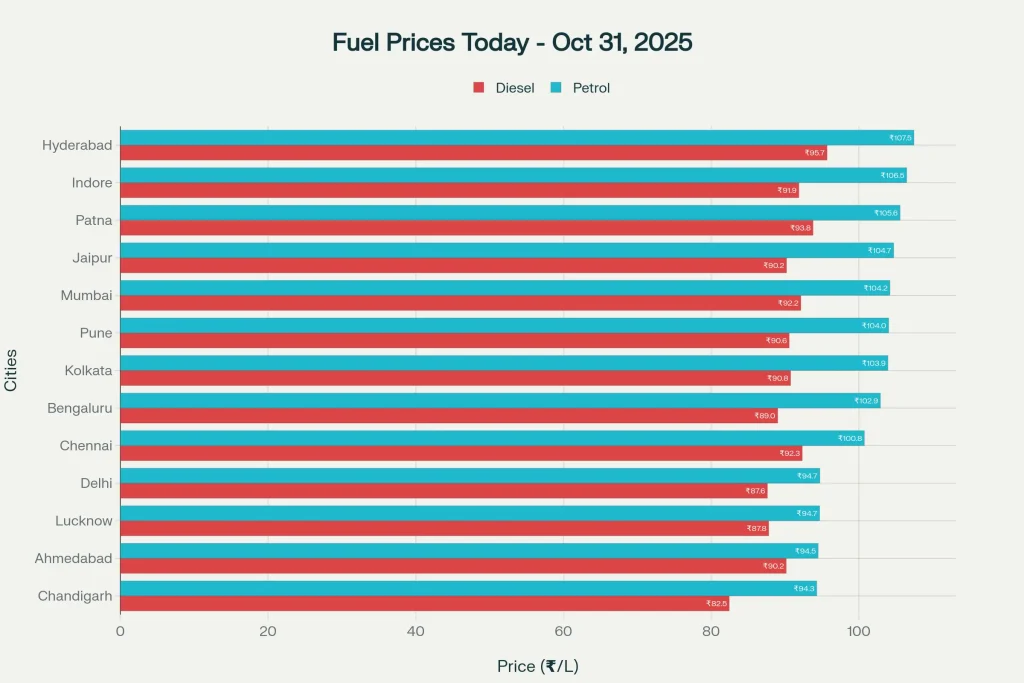
Delhi’s pair sits in the mid band for metros, with petrol near the mid ninety mark and diesel in the high eighties, a profile that continues to make the capital a useful benchmark for daily comparisons across North India. Mumbai stays higher than Delhi because of state VAT and local levies, which is why even on steady days the gap persists and reinforces the need to check petrol and diesel price today if you are crossing between NCR and Maharashtra on a road trip.
Southern metros show the familiar spread, with Chennai and Bengaluru clustered near the low hundreds for petrol while diesel sits around the ninety to ninety three zone, and Hyderabad continues to print among the priciest due to its tax structure. In the East and South, Kolkata and Thiruvananthapuram continue to hover on the higher side for diesel, with Thiruvananthapuram near mid nineties, a reminder that the city you choose for a tank up matters on long hauls.
What Changed Today
Under the dynamic pricing system, oil marketing companies revise retail tags every morning at 6 AM, so any overnight shifts in crude benchmarks or the rupee are picked up in the day’s board without waiting for weekly or fortnightly cycles that existed years ago. The recent pattern has been stability with marginal city specific adjustments, which means the biggest wins for consumers come from checking petrol and diesel price today and timing refills to the lower board among your nearby options.
Because the retail board is a composite of base price, taxes, dealer margin, and freight, it is normal for adjoining districts to show a difference of several paise to more than a rupee per litre, and that can add up across a month of commuting or delivery runs. This localized movement is also why some drivers experience a clear drop in their neighborhood even when the national narrative reads flat, a quirk of the decentralized tax and logistics structure.
Key Factors Behind Rates
Global crude benchmarks remain the anchor that sets the tone, and when international prices cool, it creates room for domestic stability or minor reductions depending on inventory cycles and margin buffers that OMCs carry from prior days. The rupee dollar rate is another swing factor because India imports most of its crude, and a softer rupee can blunt the benefit of cheaper oil while a stronger rupee can amplify relief at the pump over subsequent daily revisions.
Taxes are the largest slice of the nozzle price, with central excise and state VAT together deciding much of what consumers finally pay, which is why the same base fuel can land at very different numbers across two states on the same morning. On top of that come refining costs, dealer commission, and local freight, which together create the last mile price you see on the city board after the 6 AM push.
How Prices Update At 6 AM
India’s fuel pricing is now fully dynamic, and the 6 AM update is the daily heartbeat that aligns retail rates with global indicators and domestic tax inputs in near real time for consumers and businesses alike. That timing helps fleets and frequent drivers build a simple habit, check petrol and diesel price today before the commute or dispatch window and schedule fills when and where the board favors your route.
If you rely on station level precision, use the company channels offered by the OMCs or trusted aggregators that mirror the same dynamic feed, which provides location specific visibility to avoid surprises at the nozzle. This is especially useful across state borders where a quick glance can justify a short detour for a full tank that pays back over a week of driving.
State Taxes And Variance
State VAT policies drive much of the persistent gap between cities like Delhi and Mumbai, and this is why Maharashtra often trends higher while NCR typically reads lower on the same day despite similar crude conditions underneath. Kerala, Telangana, and parts of the East also tend to show elevated diesel prints compared to North Indian low tax clusters, a pattern that repeats even when international markets are quiet.
Even within a state, district logistics and surcharge elements can shift the board by more than a rupee, which is why the advice does not change, verify petrol and diesel price today and plan refills to the most favorable outlet along your path. Over a month of commuting or delivery duty cycles this small optimization turns into a tangible line item saving that compounds without effort.
Practical Tips For Motorists
Top up when your city posts a friendlier board in the morning rather than waiting for the weekend rush, because daily revisions can nudge prices and highway stations often run a little higher than urban outlets. For intercity and fleet operations, map refuelling to lower tax cities along trunk routes and use the morning dynamic to lock gains, a practice that adds measurable value on high mileage schedules.
Build a twostep routine that takes one minute, check petrol and diesel price today after 6 AM on a reliable dashboard, then confirm the station level tag through an OMC channel or at the point of sale before the nozzle clicks. Repeat this through the week and you will capture localized drops without chasing headlines or speculating on macro moves that may take days to filter through.
Outlook For November
Domestic fuel demand finished September on a stronger footing with diesel up over six percent and petrol up more than seven percent year on year, a sign that festive and freight activity remained supportive into the quarter. That demand pulse tends to keep retail boards stable unless global crude or the rupee make a decisive move, in which case daily dynamic pricing will reflect the change over successive mornings rather than in a single lurch.
International refined product indicators and FOB reference prices also matter for trend watching, and the latest updates suggest monitoring global prints along with currency to anticipate whether stability carries into mid-month. For everyday drivers the action item stays the same, keep an eye on petrol and diesel price today and refuel opportunistically when your city’s board softens relative to the week’s average.