

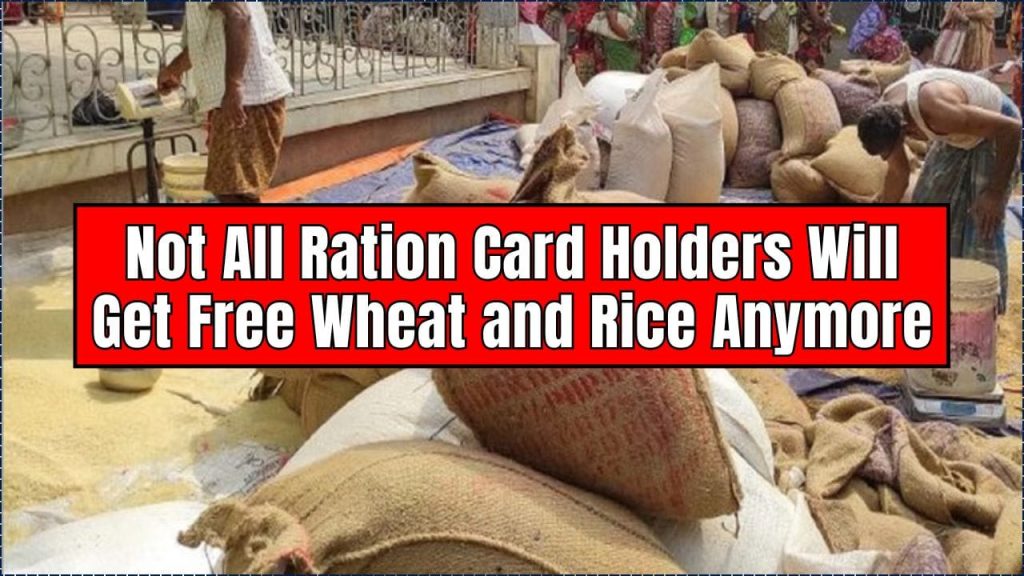
India has begun enforcing stricter eligibility norms for the ration card programme after the central government directed states to remove ineligible households from the free ration scheme. Officials from the Ministry of Consumer Affairs said the verification drive aims to ensure that subsidised wheat and rice reach only qualified beneficiaries under the Public Distribution System (PDS). The move has triggered reactions from economists, state authorities, and food rights groups across the country.
Why the Government Updated the Ration Card Rules
The tightening of eligibility norms comes after successive audits and state-level reviews showed large discrepancies in beneficiary databases under the National Food Security Act (NFSA). The Union Ministry of Consumer Affairs, Food and Public Distribution reported that several states had not updated their lists for years, despite changes in household income, migration patterns, and demographic shifts.
A senior official from the Department said during a press briefing that the overhaul was “necessary to prevent leakages and ensure resources are used responsibly.” The official noted that the Centre had urged states multiple times to revise lists but compliance remained inconsistent.
Rising Fiscal Pressures and Policy Rationale
India’s food subsidy bill remains one of the largest in the world. According to the Ministry of Finance’s latest budget documents, more than ₹2 lakh crore is allocated annually to food subsidies. Analysts at the National Institute of Public Finance and Policy (NIPFP) said the government is under pressure to ensure that the subsidy reaches the target population efficiently.
The revision of ration card norms is therefore part of a wider effort to streamline welfare spending, improve accountability, and reduce misallocation.
The Scale of Removal and Its Immediate Impact
More Than 2.25 Crore Beneficiaries Removed
State administrations have reported that over 2.25 crore names have been removed during verification drives. These include households with rising incomes, those owning property beyond specified limits, and families that did not complete Aadhaar-based authentication.
Officials in Rajasthan, Uttar Pradesh, Karnataka, and West Bengal confirmed to national outlets such as Reuters and PTI that further deletions are likely as verification enters its final phase.
Who Is Most Affected?
While the majority of deletions involve households above the income threshold, civil society groups say that some low-income families were removed due to documentation gaps. Migrant workers, people living in informal settlements, and families without digital access face the highest risk of exclusion.
Economist Dr. Reetika Khera told BBC News that even minor discrepancies—such as mismatched Aadhaar details—can result in loss of entitlement for vulnerable families.
How the Revised Rules Affect Households
The changes do not alter the existing entitlement structure under NFSA. Eligible households will continue receiving subsidised wheat, rice, and coarse grains. However, households must now pass updated eligibility filters to retain these benefits.
Mandatory Aadhaar Authentication
Beneficiaries must complete Aadhaar-based e-KYC at state centres. Fair Price Shops have also been instructed to use biometric e-PoS devices to authenticate transactions.
Income-Based Filters
States are applying income thresholds more strictly. Households with stable salaried employment, certain categories of vehicles, or multiple properties may be excluded.
Impact on Rural vs Urban Areas
Rural households dependent on seasonal work may face fewer exclusions, while urban poor populations—especially migrant workers—could see higher disruption due to documentation challenges.
State-Wise Implementation and Regional Variations
Northern States
Uttar Pradesh and Rajasthan have undertaken large-scale data cleanups. Officials in Uttar Pradesh reported to The Hindu that nearly 60 lakh ineligible entries were flagged.
Southern States
Tamil Nadu and Kerala maintain universal or near-universal coverage through state-funded supplements. Experts note that deletions in these states may be limited compared to others.
Eastern and Northeastern States
West Bengal has implemented a phased verification process. Assam is focusing on biometric updates due to widespread card duplication cases reported in remote areas.
Historical Context: How India’s Food Security System Evolved
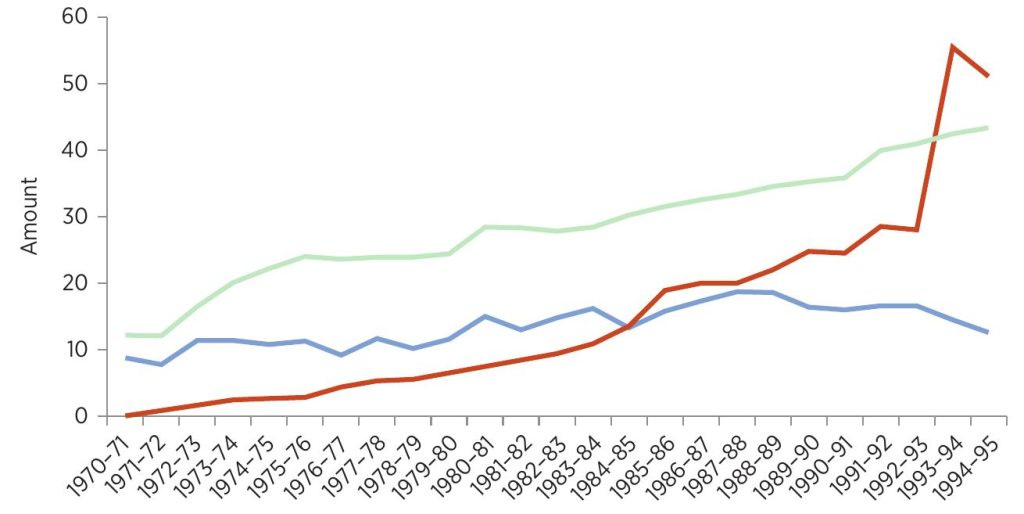
India’s PDS system has undergone several transformations since its inception in the 1940s. It expanded significantly during the 1970s and 1980s as part of the government’s commitment to ensure food availability for low-income households.
The introduction of the National Food Security Act (2013) marked a major policy milestone, legally entitling nearly two-thirds of the population to subsidised grains. Since then, experts such as researchers from the Indira Gandhi Institute of Development Research (IGIDR) have emphasised the importance of updating beneficiary databases regularly—something that states struggled to do consistently.
The COVID-19 pandemic further increased reliance on the PDS when millions lost jobs or income, prompting the government to provide free grains for several months. Analysts say this expansion increased the urgency to streamline lists once economic conditions stabilised.
Expert Opinions: Support, Concerns, and Recommendations
Support for the Cleanup
Former NITI Aayog advisor Dr. Bibek Debroy said in an opinion piece that rationalisation of beneficiary lists is essential for fiscal responsibility. He argued that “any welfare system must evolve to ensure accuracy, efficiency, and transparency.”
Concerns About Exclusion Errors
Food rights activists warn of unintended consequences. The Right to Food Campaign, a national coalition of researchers and activists, said in a statement that the verification process must avoid “over-exclusion,” especially of vulnerable households lacking documents or digital literacy.
Recommendations from Policy Experts
Experts suggest the following steps to ensure smoother implementation:
- Strengthening grievance redress systems.
- Allowing temporary inclusion of households during documentation delays.
- Increasing field-level verification rather than depending solely on digital data.
- Ensuring transparency through public dashboards.
Voices from the Ground: Human Impact
Families Adjust to New Requirements
In slum clusters across Delhi and Mumbai, local NGOs have reported confusion about eligibility rules. Many households with intermittent incomes fear losing access to subsidised grains.
Fair Price Shops Struggle to Adapt
Fair Price Shop owners in Bihar and Madhya Pradesh told reporters from The Indian Express that frequent authentication failures, network issues, and outdated e-PoS devices create operational challenges.
These accounts highlight the gap between policy design and real-world implementation—an issue frequently noted in academic analyses of welfare reforms.
Official Response and Government Guidance
A spokesperson for the Ministry of Consumer Affairs asserted that no eligible household will lose access due to technical lapses. The Ministry has urged states to conduct outreach campaigns to ensure clarity among beneficiaries.
Grievance Redress and Appeals
Households removed from the list may submit appeals through district supply officers or online PDS portals. Several states, including Maharashtra and Karnataka, have extended verification deadlines to avoid sudden exclusion.
What Beneficiaries Should Do Next
- Complete Aadhaar authentication at the nearest service centre.
- Verify income details if required by state authorities.
- Check ration card status regularly on state PDS portals.
- Submit appeals promptly if wrongly excluded.
- Retain all supporting documents, including address proof, income certificates, and Aadhaar.
State governments have also been instructed to maintain a transparent appeals process to ensure families are not deprived of essential entitlements.
Timeline of Key Changes to PDS Eligibility
2013: NFSA implemented; two-thirds of population entitled to subsidised food grains.
2017–2020: Roll-out of Aadhaar authentication and digital ration cards.
2020–2022: Pandemic expansion of free ration distribution.
2023: CAG highlights irregularities in beneficiary lists.
2024–2025: Nationwide verification and deletion of ineligible beneficiaries.
Swasthya Sathi 2025: New Features, Eligibility & How to Get ₹5 Lakh Health Cover Instantly!
Conclusion
India’s ration card reforms mark one of the most significant updates to the food security system in a decade. While the government argues that stronger verification ensures fairness and fiscal discipline, experts warn of the risk of excluding vulnerable households. The reforms’ success will rely on transparent implementation, robust grievance mechanisms, and continuous monitoring to protect beneficiaries who depend on subsidised grains for daily sustenance.