

If you have been eyeing a mid-ticket personal loan, the New CIBIL Rule has quietly tilted the odds in your favor by making credit data fresher, errors easier to fix, and lender decisions more transparent, which together can speed up approvals for amounts like ₹5 lakh when your income and EMI mix are in line with policy. Twice‑monthly score updates, mandatory alerts on credit checks, and clear reasons for rejections mean you no longer wait in the dark or guess what to fix before reapplying under the New CIBIL Rule, so your next application can land at the right moment with the right profile.

The New CIBIL Rule is a 2025 refresh of credit reporting norms that requires bi‑monthly score updates, visible one‑click access to a free annual report, real‑time notifications for credit pulls, standardized reporting across all major bureaus, and time‑bound dispute resolution with penalties for delays, improving fairness and speed for borrowers who prepare well. For practical eligibility, many lenders also map total EMIs to income using a 50 percent Loan‑To‑Income limit on unsecured credit, so aligning obligations and timing applications right after a positive update under the New CIBIL Rule can make a ₹5 lakh approval realistically within reach for a salaried profile with clean repayment behavior.
New CIBIL Rule
These reforms don’t lower the bar, but they remove friction faster updates, cleaner files, clear rejection reasons, and timed dispute closures so borrowers who plan well can move from borderline to approved more quickly under the New CIBIL Rule. Keep total EMIs within about half of income, time your application after a positive refresh, and use your free report to fix issues so your ₹5 lakh approval can land with fewer surprises and stronger pricing under the New CIBIL Rule.
5 RBI Rules Changing CIBIL Score
- The first big shift is frequency: score updates now run every 15 days, which means on‑time EMIs, lower utilization, or a closed small‑ticket loan can lift your standing within weeks rather than months, an advantage when you are planning a near‑term application. The second is transparency: you will get alerts whenever a lender pulls your report, and lenders must clearly state the reason for credit denial so you can target improvements with precision before you reapply.
- Third, standardization across bureaus reduces the age‑old problem of one file looking cleaner than another, helping ensure all lenders evaluate the same consistent data instead of conflicting snapshots of your history under the New CIBIL Rule. Fourth, one‑click access to a free annual credit report improves financial hygiene because you can spot outdated or incorrect entries without friction, then fix them in time for the next refresh.
- Fifth, dispute timelines now carry teeth: complaints must be resolved within firm windows, with penalties for delays and strict turnaround for lender data, which keeps legitimate corrections from lingering and affecting rate or approval outcomes under the New CIBIL Rule. Combined, these changes reward active credit management and responsible use, especially when a borrower is preparing for a mid‑ticket ₹5 lakh loan and wants to present the best possible version of their profile at decision time.
How Do the New RBI Rules Impact Borrowers?
For first‑time or thin‑file borrowers, the faster cadence means small but consistent positive actions start to count sooner, turning borderline profiles into acceptable ones more quickly for mainstream lenders under the New CIBIL Rule. For experienced borrowers, the combination of alerts, free reports, and standardized reporting reduces friction and uncertainty, letting you plan an application immediately after a favorable update cycle rather than waiting an extra month.
Clarity on rejection reasons also cuts the time spent guessing, because lenders must point to the exact risk factor such as high utilization, recent delinquency, or too many inquiries so you can correct course, wait for the next 15‑day refresh, and reapply with a stronger file under the New CIBIL Rule. When paired with the 50 percent LTI guardrail that many lenders use for unsecured credit, this transparency helps borrowers tune existing EMIs and timing to fit a ₹5 lakh approval window without breaching policy.
Tips For Borrowers to Leverage the New RBI Rules
- Pull your free annual credit report and clean up errors so the next 15‑day update reflects the correction before you file an application under the New CIBIL Rule.
- Space out hard inquiries and avoid shotgun applications, because bunched pulls can nudge scores down right when you need stability the most.
- Lower revolving utilization target under 30 percent and clear any lingering overdues so scoring models reward risk discipline in the next update under the New CIBIL Rule.
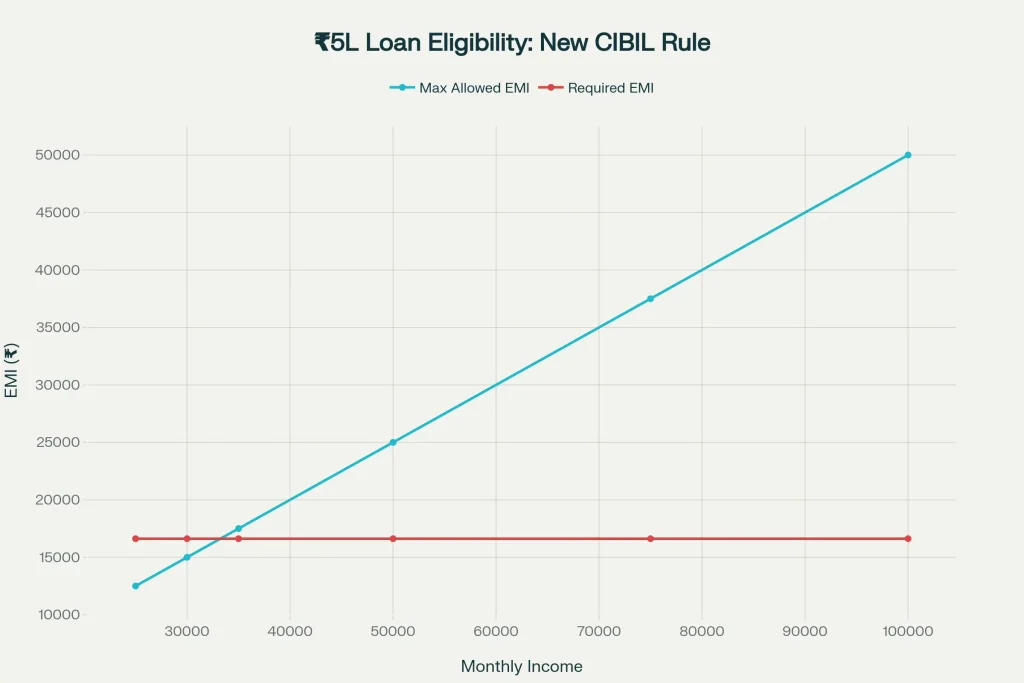
- Map your obligations to the 50 percent LTI limit and consider closing or prepaying a small loan to free EMI headroom for the ₹5 lakh ticket if your income allows it.
- Time your application in the week following a positive refresh so lenders see the newest, strongest version of your profile under the New CIBIL Rule.
How ₹5 Lakh Gets Easier
Frequent updates shrink the lag between improving behavior and seeing that improvement reflected in your credit file, which is precisely what matters when you need a decision on a mid‑ticket loan without waiting an entire billing cycle under the New CIBIL Rule. Pre‑default alerts also help you avoid accidental late marks that can knock eligibility at the worst time, preserving a clean record for underwriting when you are close to the LTI threshold. Because lenders now disclose the actual reason for rejection, you can turn feedback into an action plan reduce utilization, settle a disputed entry, or let earlier inquiries age and then reapply right after the next 15‑day refresh under the New CIBIL Rule. This disciplined sequencing often means the difference between approval at a competitive rate and a deferral due to small, fixable issues that used to stay hidden behind vague policy language.
What Lenders Still Check
A high score is necessary but not sufficient, because lenders also validate income, employment stability, bureau consistency, and how your total EMIs stack against monthly income under their risk appetite. Many institutions work with a simple rule of thumb on unsecured credit: keep total EMIs at or below about half of monthly income, a constraint that borrowers can simulate using the relationship LTI=Total EMIsMonthly IncomeLTI=Monthly IncomeTotal EMIs before applying under the New CIBIL Rule. If your current EMIs consume a large share of income, consider prepaying a small balance to create room, then apply after the prepayment reflects in the next bi‑monthly update, when your profile looks cleaner and better aligned to policy. Expect digital journeys to remain fast, but documentation standards to stay firm, with lenders using standardized bureau data to cross‑verify details for a fair but thorough decision under the New CIBIL Rule.
Common Mistakes To Avoid
- Submitting multiple applications across lenders in a short span can generate stacked inquiries that shave points off your score just when you need every advantage for a ₹5 lakh approval under the New CIBIL Rule. Ignoring dispute timelines is another error, since unresolved mismatches can linger past a critical application window and cost you both time and pricing.
- Equally important, failing to act on pre‑default warnings can turn a solvable cash‑flow hiccup into a reported delinquency, which weighs more heavily in underwriting than a temporary utilization spike under the New CIBIL Rule. Keep reminders for due dates, automate payments where possible, and verify closures to ensure accounts actually show as closed in the next cycle.