
If you feel like half your salary vanishes into kitchen expenses every month, a ₹300 cut on LPG cylinders is real, solid relief for your home. With every refill now effectively costing you less, the money you save can go straight into groceries, kids’ fees, small medical needs or even a bit of emergency savings. This change especially helps families already stretching a tight budget and relying completely on LPG for daily cooking. The move is not just a headline or a political announcement; it can genuinely soften your yearly financial load if you use LPG regularly. A household using one or more cylinders every month can end up saving a few thousand rupees over the year through this ₹300 support on each refill. In this article, you will see how this benefit actually works, who gains the most, and how you can use this relief smartly in your monthly and annual planning.
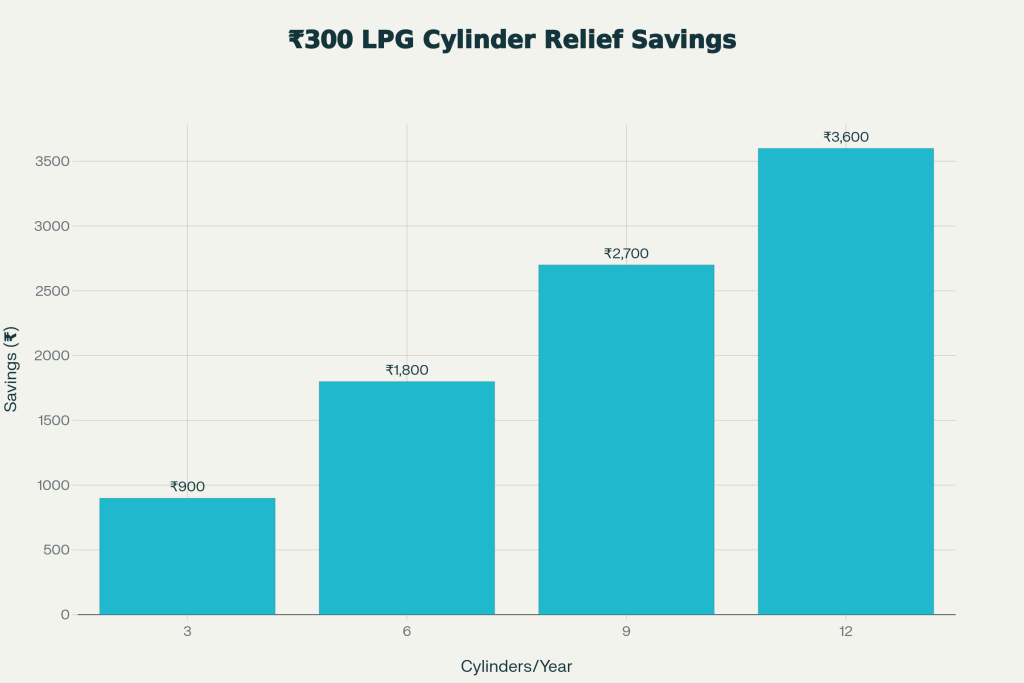
The easiest way to understand LPG Cylinders Get Cheaper By ₹300 What This Means for Your Household Budget is to connect it directly to your monthly numbers. Suppose your family refills one cylinder every month. Earlier, you had to bear the full price out of pocket. Now, with a ₹300 benefit on each cylinder, your yearly savings can be around ₹3,600. That is not a small amount when your income is fixed but your expenses keep rising. There is another angle as well. When LPG becomes relatively cheaper, it becomes easier and more comfortable for you to continue using gas as your primary fuel. In times of high prices, many families are forced to move back to wood, coal or kerosene. These fuels are not only inconvenient and time-consuming but also harmful for health. With LPG cylinders getting cheaper by ₹300, the pressure to switch back to smoky fuels reduces, which is good for both your pocket and your health.
LPG Cylinders Get Cheaper by ₹300
| Point | Details |
|---|---|
| Scheme / Year | LPG Cylinder Subsidy 2025, relief plan for domestic users |
| Relief Amount | Up to ₹300 financial support on every LPG cylinder |
| Target Group | Low-income and lower-middle-class families, and households under welfare schemes such as Ujjwala |
| Mode Of Benefit | Money credited directly to the bank account through Direct Benefit Transfer (DBT) |
| Approx. Annual Saving | Around ₹3,600 per year if you use one cylinder every month |
| Core Objective | Keep clean cooking fuel affordable and maintain strong reliance on LPG |
LPG Cylinder Subsidy 2025: How This Relief Reaches You
- The logic behind LPG Cylinder Subsidy 2025 is simple but effective. You continue to book your LPG cylinder as usual and pay the full amount at the time of delivery. After that, the subsidy amounts up to ₹300 per cylinder is credited back to your bank account. This way, the benefit reaches you directly, without needing any extra paperwork every time or depending on any middleman.
- For this to work smoothly, your gas connection must be correctly linked with your bank account and Aadhaar. Once that is done, you will see the subsidy amount getting deposited after each refill, usually within a few days. If you use LPG regularly, the total subsidy credited over the year can clearly be seen in your bank statement, and it quickly adds up to a noticeable saving.
New LPG Subsidy 2025: The Thinking Behind The Move
New LPG Subsidy 2025 has come at a time when families are dealing with rising fuel prices and general inflation. On one side, global energy prices affect domestic LPG rates, and on the other, households are already juggling rent, school fees, food, transport and medical costs. In such a situation, making sure that cooking fuel stays within reach becomes a key priority. There is also a strong social and health aspect behind this decision. When LPG remains affordable, fewer people are forced to use firewood, dung cakes or coal. These traditional fuels produce heavy smoke, which affects lungs, eyes and overall health, especially for women who spend more time in the kitchen and children who are often around them. By making LPG cheaper by ₹300 per cylinder, the policy pushes families toward cleaner kitchens and healthier indoor air.
LPG Cylinder Financial Relief: Impact On Your Monthly Budget
The biggest strength of LPG cylinder financial relief is how directly it touches your fixed monthly expenses. When you know a part of your cylinder cost is coming back to you, it becomes easier to plan your other bills. That ₹300 per refill can be consciously redirected to grocery items, milk and vegetables, transport cost, or small but important things like school notebooks and medicines. For families with higher consumption, such as joint families or homes where everyone is working and depends on LPG for quick cooking, this benefit becomes even more meaningful. The more cylinders you use within the eligible limit, the higher your total saving in a year. In smaller towns and semi-urban areas, where incomes are limited and irregular, this kind of monthly relief often makes the difference between just managing and managing with a bit of comfort.
Which Households Gain The Most
- LPG Cylinder Subsidy 2025 is most useful for homes that rely fully on gas for daily cooking and refill cylinders on time. For such families, LPG is not a luxury but a non-negotiable necessity. A consistent subsidy on each refill means a steady and predictable saving through the year.
- In rural and semi-urban regions, where many people depend on farming or daily wages, a ₹300 discount per cylinder can encourage more households to stay with LPG instead of going back to wood or coal. Women do not have to spend hours collecting fuel, and they can cook faster, safer meals. Elderly family members also benefit from a smoke-free environment. So, a straightforward financial support scheme ends up improving daily life for the entire household.
LPG Cylinder Financial Relief: How to Maximize the Benefit
- Receiving LPG cylinder financial relief is the first step; using it wisely is the next. To turn this into a real financial advantage, it helps to treat the subsidy as part of your yearly planning rather than just extra pocket money.
- Start by estimating how many cylinders your family uses in a year. Multiply that number by ₹300 and you will know roughly how much you save. Then decide a clear purpose for this amount such as building an emergency fund, paying off a small loan, covering school expenses or investing in basic health insurance. When you give that money a job, it stops getting casually spent and starts working for your long-term security.
- At the same time, reducing waste in your gas usage will multiply the benefit. Simple habits like using pressure cookers, keeping lids on pots, cooking on medium flame instead of high, and getting your burner serviced regularly can lower your overall gas consumption. If you manage to use fewer refills while still receiving subsidy on those you do use, your effective savings per year will be even higher.
Clean Cooking Fuel: Long-Term Gains For Your Family
The long-term effect of LPG cylinders get cheaper by ₹300 goes beyond just saving a few hundred rupees every month. It pushes more and more households towards clean, modern cooking fuel. As LPG adoption rises and dependence on smoky fuels falls, there is a gradual but meaningful improvement in health and living conditions. Clean flame cooking means far less indoor smoke, fewer complaints of cough, irritation and breathing problems, and less soot deposition on utensils and walls. Time saved in cooking also matters. Meals get prepared faster, leaving more time for work, rest or family. In the bigger picture, as more homes stay with LPG and later move to even cleaner technologies, the country slowly shifts towards a healthier and more sustainable energy pattern.
EPS-95 Gets a Major Boost — Monthly Pension Raised to ₹7,500 for Retirees
Future Planning: Linking This Relief To Your Financial Goals
- If you think a little ahead, LPG Cylinders Get Cheaper By ₹300 What This Means for Your Household Budget is not only about present comfort but also about future stability. Imagine you set aside the subsidy-linked savings every month into a dedicated account. Over a few years, that pool of money can become big enough to support a child’s higher education, a medical emergency, or seed money for a small side business.
- In that sense, the ₹300 per cylinder is more than just “less bill today”; it can be the starting point for a disciplined savings habit. Used thoughtfully, this support can help your family become more secure, more resilient and more prepared for the unexpected, while still enjoying the everyday benefit of affordable, clean cooking fuel.
FAQs on LPG Cylinders Get Cheaper by ₹300
1. How much can my family actually save with the ₹300 LPG cylinder benefit?
If your household uses one LPG cylinder every month, you can save around ₹3,600 in a year through the ₹300-per-cylinder relief. Families using more cylinders within the eligible limit will see even higher total savings over the year.
2. Do I have to pay the full LPG cylinder price first and then get the subsidy?
Yes. You continue to pay the full printed price at the time of delivery, and the subsidy amount (up to ₹300 per cylinder) is later credited to your linked bank account through Direct Benefit Transfer (DBT).
3. Who gets the maximum benefit from this LPG cylinder subsidy?
Families that depend entirely on LPG for daily cooking and regularly refill cylinders get the most out of this subsidy. Low-income, lower-middle-class and welfare-scheme households see a big difference because a larger share of their monthly budget goes toward essentials like fuel and food.
4. What should I do if the subsidy is not showing in my bank account?
First, check whether your LPG connection is correctly linked with your Aadhaar and bank account. If any detail is missing or outdated, update it through your gas distributor, official portal, or customer service. Once the linkage is fixed, future subsidy payments should start reflecting in your account.
5. How does this ₹300 relief help beyond just saving money?
Cheaper LPG makes it easier for families to stick to clean cooking fuel instead of switching back to wood, coal or kerosene. This reduces indoor smoke, improves health especially for women and children and saves time in cooking, leading to a better quality of life overall.