
For millions of women across India, earning an income from home is not just a preference but a necessity. Family responsibilities, lack of nearby job opportunities, and financial limitations often make regular employment difficult. This is where the Free Silai Machine Yojana 2026 becomes extremely valuable.
The scheme has been designed to help women turn a practical skill like stitching into a steady source of income. The Free Silai Machine Yojana 2026 focuses on empowering women by removing one of the biggest obstacles to self-employment: the cost of tools. Many women already know basic sewing but cannot afford a good-quality machine. Without proper equipment, their skills remain unused. This government initiative aims to change that reality by offering free sewing machines or financial assistance, allowing women to start or expand tailoring work from their own homes. It is a simple idea with a powerful impact: give women the means to work independently and improve their quality of life.
The Free Silai Machine Yojana 2026 is a women-centric welfare scheme created to support home-based employment through tailoring. Under this program, eligible women receive either a sewing machine free of cost or financial support to purchase one. The scheme primarily targets women from economically weaker backgrounds, including rural women, widows, and those with limited income sources. By encouraging self-employment, the initiative helps women become financially independent without stepping away from family responsibilities. This scheme is especially important in today’s economy, where flexible income options are in high demand. Tailoring is a skill that does not require large infrastructure, and demand for stitching services remains steady throughout the year. With the help of the Free Silai Machine Yojana 2026, women can take control of their earnings, build confidence, and contribute meaningfully to their household income.
Free Silai Machine Yojana 2026 Overview Table
| Scheme Name | Free Silai Machine Yojana 2026 |
|---|---|
| Purpose | Women empowerment through self-employment |
| Main Benefit | Free sewing machine or financial assistance |
| Eligible Age Group | Usually 20 to 40 years |
| Target Beneficiaries | Economically weaker women |
| Application Mode | Online and offline |
| Employment Type | Home-based tailoring work |
The Free Silai Machine Yojana 2026 is a meaningful step toward women’s empowerment and self-reliance. By enabling women to earn from home, the scheme addresses financial challenges while respecting personal responsibilities. Tailoring is a skill with consistent demand, and providing the right tools makes all the difference. For women seeking independence, dignity, and a stable income, this initiative offers a practical solution. With proper implementation and awareness, the Free Silai Machine Yojana 2026 has the potential to transform lives, strengthen families, and create lasting economic change across communities.
What Is Free Silai Machine Yojana
- The Free Silai Machine Yojana is a government initiative aimed at helping women earn a livelihood by providing them with sewing machines. The scheme recognizes tailoring as a reliable and accessible form of self-employment, especially for women who cannot leave home for work. Instead of offering temporary financial aid, this scheme focuses on long-term income generation by providing tools that enable continuous earning.
- Through this program, women can start stitching clothes for neighbors, take bulk orders, repair garments, or even begin small tailoring businesses. Over time, many beneficiaries expand their services, take custom orders, and increase their income. The Free Silai Machine Yojana 2026 acts as a foundation for women who want to build a sustainable livelihood using their skills.
Eligibility Criteria For Free Silai Machine Yojana 2026
- To ensure the benefits reach the right individuals, the scheme has specific eligibility requirements. Applicants must be women and Indian citizens. The general age limit falls between 20 and 40 years, though this may vary slightly depending on state guidelines. The applicant’s family income should be within the limits defined for economically weaker sections.
- Preference is often given to widows, differently abled women, and those living below the poverty line. While prior experience in tailoring is helpful, it is not always mandatory. Some states also offer basic training to help beginners learn stitching skills. Meeting the eligibility criteria is essential for approval under the Free Silai Machine Yojana 2026.
Benefits Of the Free Silai Machine Yojana 2026
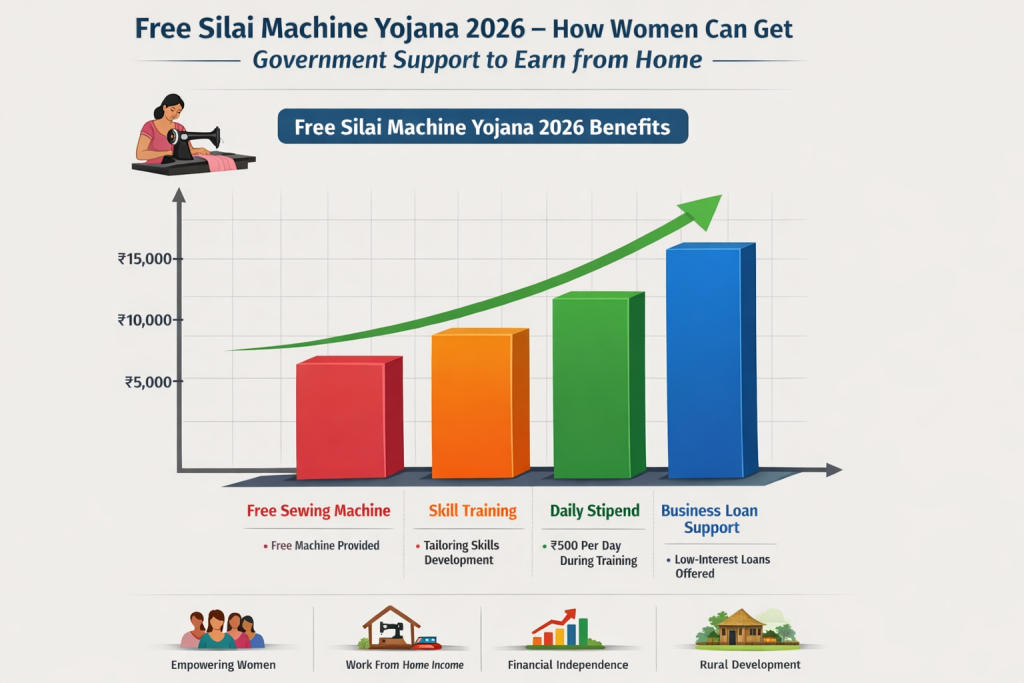
- The Free Silai Machine Yojana 2026 offers multiple benefits that go beyond just providing a sewing machine. The most obvious advantage is cost savings. Sewing machines can be expensive, and receiving one for free removes the financial burden entirely. This allows women to start working immediately without loans or debt.
- Another major benefit is income stability. Tailoring provides consistent earning opportunities, especially during festive seasons, wedding seasons, and school admission periods. Women can work at their own pace, manage household duties, and still earn money. In some regions, skill training is also provided, helping women improve stitching quality and customer satisfaction.
- Beyond financial benefits, the scheme boosts self-confidence. When women earn independently, they gain respect within their families and communities. The Free Silai Machine Yojana 2026 plays a key role in promoting dignity, self-reliance, and long-term empowerment.
Required Documents For Free Silai Machine Yojana 2026
- To apply for the scheme, applicants need to submit certain documents for verification. These typically include an Aadhaar card for identity proof, an income certificate, age proof, residence proof, passport-size photographs, and bank account details. In some cases, additional documents such as a widow certificate or disability certificate may be required.
- Ensuring that all documents are accurate and up to date helps prevent delays in approval. Proper documentation increases the chances of successful enrollment under the Free Silai Machine Yojana 2026.
Free Silai Machine Yojana 2026: How to Apply
- Applying for the scheme is simple and accessible. Women can apply online through official government portals or offline through Common Service Centres and local government offices. The application form requires basic personal details, income information, and document uploads or attachments.
- Once submitted, the application goes through a verification process. Authorities review eligibility and documents before approving beneficiaries. After approval, women are informed about machine distribution or financial assistance. The entire process is designed to be user-friendly so that even women with limited digital knowledge can apply under the Free Silai Machine Yojana 2026.
Kanya Sumangala Yojana ₹25,000 Grant – Installment Details, Eligibility & How to Apply
Why This Scheme Matters for Women
- The importance of this scheme goes beyond financial aid. It addresses a core issue faced by many women: lack of access to opportunities. By providing tools instead of temporary cash support, the scheme promotes long-term income generation. Women are not dependent on repeated assistance; instead, they gain the ability to earn whenever they want.
- The Free Silai Machine Yojana 2026 also supports local economies. When women earn locally, money circulates within communities, creating a positive economic cycle. Small tailoring businesses also reduce dependency on mass-produced clothing by encouraging local craftsmanship.
FAQs on Free Silai Machine Yojana 2026
Who Can Apply for Free Silai Machine Yojana 2026
Women from economically weaker sections who meet age and income criteria can apply.
Is The Sewing Machine Completely Free
Yes, eligible women receive a free sewing machine or financial assistance to purchase one.
Can Rural Women Benefit from This Scheme
Yes, rural women are one of the main target groups of the scheme.
Is Tailoring Experience Mandatory
No, basic experience is helpful but not always required, as some states provide training.