
Clean sanitation is one of the most important basic needs for a healthy life, yet many families still live without proper toilet facilities. To solve this gap, the government has continued its rural sanitation assistance program for 2026, offering direct financial help to households that need to build a toilet.
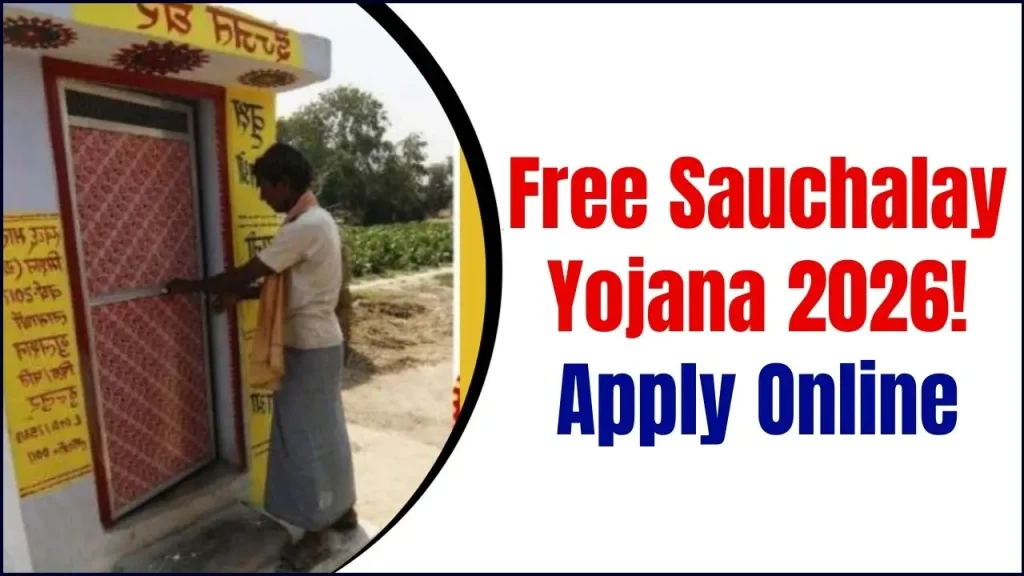
Under Free Sauchalay Yojana 2026: eligible families can receive ₹12,000 to construct a household toilet through a verified and structured support system. The purpose is simple and practical improve hygiene, protect health, and ensure dignity at the household level. If you are planning to apply, understanding the rules, eligibility, documents, and correct online steps is essential. Many applications get delayed or rejected because of small mistakes. In this complete guide, you will learn how Free Sauchalay Yojana 2026 works, who can apply, how registration is done, how approval happens, and how you can make sure your application succeeds on the first attempt.
Free Sauchalay Yojana 2026 is part of the national rural sanitation drive operated under the framework of the Swachh Bharat Mission. The scheme provides financial assistance to households that do not have an individual toilet. Instead of loans or reimbursements, the benefit is given as direct financial support after verification. Online registration has made the process more transparent and easier to track. Rural households, low-income families, and those listed in local body records are the primary target group. The scheme connects sanitation support with direct bank transfer, so beneficiaries receive funds without middlemen.
Free Sauchalay Yojana 2026
| Category | Details |
|---|---|
| Scheme Name | Free Sauchalay Yojana 2026: |
| Assistance Amount | ₹12,000 |
| Purpose | Household toilet construction |
| Target Beneficiaries | Rural and eligible low income families |
| Application Mode | Online |
| Fund Transfer | Direct Benefit Transfer to bank |
| Verification Method | Field inspection |
| Key Condition | No existing toilet at home |
| Approval Authority | Local sanitation officials |
Objective of the Free Sauchalay Yojana 2026
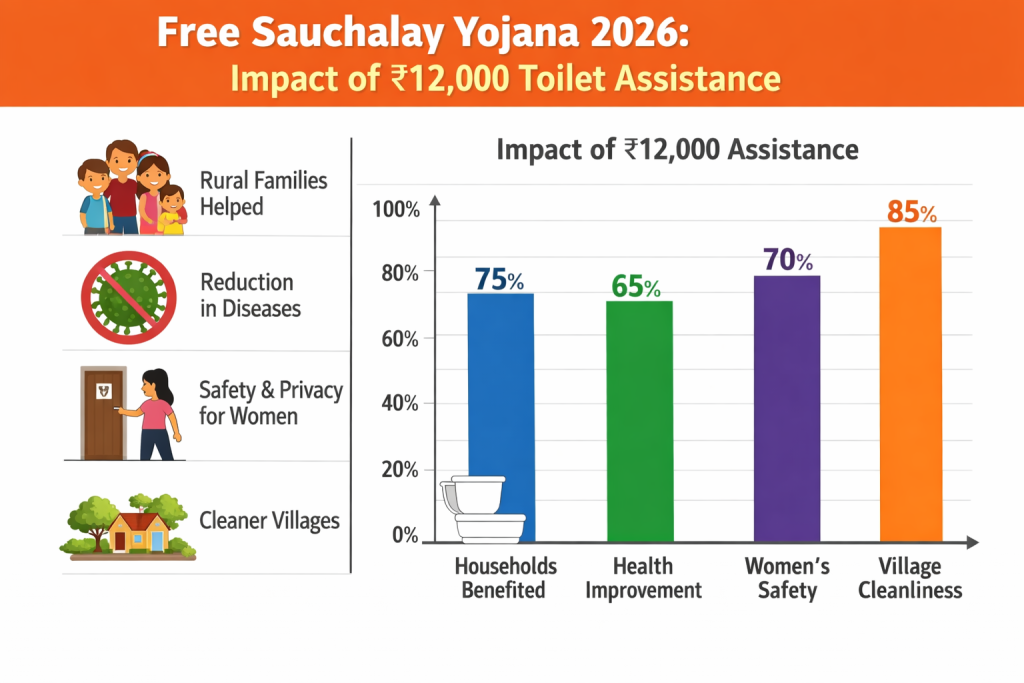
The main objective of Free Sauchalay Yojana 2026: is to ensure that every eligible household has access to a safe toilet facility. Lack of sanitation leads to disease spread, unsafe conditions for women, and environmental contamination. By supporting individual toilet construction, the scheme focuses on long term hygiene improvement rather than temporary solutions. Another important goal is reducing open defecation and strengthening village cleanliness standards. When more households build toilets, the overall health indicators of the area improve. Children face fewer infections, medical expenses reduce, and daily living conditions become safer and more comfortable.
Who Can Apply for Free Sauchalay Yojana 2026
Eligibility rules are designed to ensure that the benefit goes to families who truly need financial help for toilet construction. Free Sauchalay Yojana 2026 is not universal it is need based.
Typical eligible applicants include:
- Rural households without a toilet
- Low income families
- Households listed in local panchayat records
- Families not previously funded for toilet construction
- Residents with valid Aadhaar identification
- Applicants with active bank accounts
If a toilet already exists at the residence, the household is generally not approved under the scheme.
Financial Assistance Details
Under Free Sauchalay Yojana 2026 the approved beneficiary receives ₹12,000 for building a toilet. This amount is fixed and provided as support, not as a loan. Beneficiaries do not need to repay it.
Important payment points include:
- Amount is sanctioned per household
- Money is transferred through DBT
- Payment goes directly to beneficiary bank account
- Release happens after verification
- Some areas may release in stages based on construction progress
Applicants should ensure their bank account is active and correctly linked with identity details.
Required Documents For Application
Before starting the registration process, applicants should prepare all documents in advance. Missing or incorrect documents are one of the biggest reasons for delay.
Commonly required documents include:
- Aadhaar card
- Bank passbook copy
- Address proof
- Identity proof
- Mobile number
- Passport size photograph
- Residence certificate if required
- Local authority verification note if applicable
All documents should show matching name and core details to avoid rejection.
How To Apply Online for Free Sauchalay Yojana 2026
The registration process for Free Sauchalay Yojana 2026 is designed to be user friendly. Most applicants can complete it with basic digital access. Local offices also assist where needed.
Step by step online process:
- Visit the official sanitation registration portal
- Choose toilet assistance scheme option
- Select new registration
- Enter Aadhaar and personal details
- Fill household information
- Provide address and category details
- Upload required documents
- Submit the application
- Save the reference number
Always keep a screenshot or print of your submission details.
Verification And Approval Process
After submission, every Free Sauchalay Yojana 2026 application goes through a structured verification process. This step ensures fairness and prevents duplicate or false claims.
Verification normally includes:
- Record review by local office
- Panchayat level confirmation
- Field visit by assigned officer
- Household inspection
- Identity validation
- Confirmation that no toilet exists
If the inspection report is positive, the application is approved for payment.
How To Check Application Status
Applicants can track progress without repeated office visits. Status checking is available online using basic details.
You typically need:
- Application reference number or Aadhaar number
Status messages usually show stages like:
- Submitted
- Under review
- Verification pending
- Approved
- Payment processed
Registered mobile numbers often receive alerts as updates occur.
Common Reasons For Rejection
Many rejections happen due to avoidable errors. Knowing these helps applicants submit stronger forms.
Frequent rejection reasons include:
- Toilet already present at home
- Duplicate household application
- Incorrect bank details
- Document mismatch
- Incomplete uploads
- Failed field inspection
- Aadhaar verification issues
Careful data entry and document accuracy significantly improve approval chances.
Construction And Fund Usage Guidelines
Once funds are received under Free Sauchalay Yojana 2026: they are expected to be used specifically for toilet construction. Local bodies may provide basic design guidelines to ensure the structure is usable and safe.
General expectations include:
- Functional toilet structure
- Proper pit or septic arrangement
- Safe location within household boundary
- Usable water arrangement where possible
Some regions conduct a post construction check as well.
Benefits For Rural Households
The practical benefits of Free Sauchalay Yojana 2026 are immediate and long term. A toilet at home changes daily life more than many other small infrastructure upgrades.
Major benefits include:
- Improved hygiene
- Lower disease risk
- Better safety for women and elderly
- Increased privacy
- Cleaner surroundings
- Reduced medical expenses
- Higher dignity and comfort
It is one of the most impactful small investments in household well being.
UP Rajkosh Portal 2026 – Step-by-Step Guide for New Registration and Login
Tips To Increase Approval Chances
Applicants who follow best practices see faster approvals.
Useful tips:
- Apply only once per household
- Double check Aadhaar and bank details
- Upload clear document scans
- Ensure mobile number is active
- Inform local authority after submission
- Cooperate during field inspection
Small preparation steps prevent major delays.
FAQs on Free Sauchalay Yojana 2026
Who Is Eligible Under Free Sauchalay Yojana 2026
Rural households without an existing toilet and meeting income and record criteria are eligible.
How Much Money Is Given for Toilet Construction
Approved beneficiaries receive ₹12,000 as financial assistance.
How Is the Payment Sent
Funds are transferred directly to the beneficiary’s bank account through DBT.
Is Field Verification Mandatory
Yes, a local inspection is normally required before approval.