
If you’ve been hearing people talk about a “₹3,000 pension” linked with the eShram card, you’re not alone. A lot of workers search for E-Shram Pension Yojana because they want one clear answer: “Will I get a monthly pension after 60?” In everyday language, E-Shram Pension Yojana is the phrase many people use for the government’s pension pathway meant for unorganised workers, where you contribute a small, fixed amount and later receive a regular pension. Now, here’s what matters most: E-Shram Pension Yojana is not about instant free money. It works like a simple, disciplined pension plan. If you are eligible, enroll at the right time, and keep your contributions regular, the scheme is designed to support you with a stable monthly pension in old age. That stability is exactly why so many workers, especially those without PF, fixed salary, or retirement benefits, are actively looking up this scheme and its process.
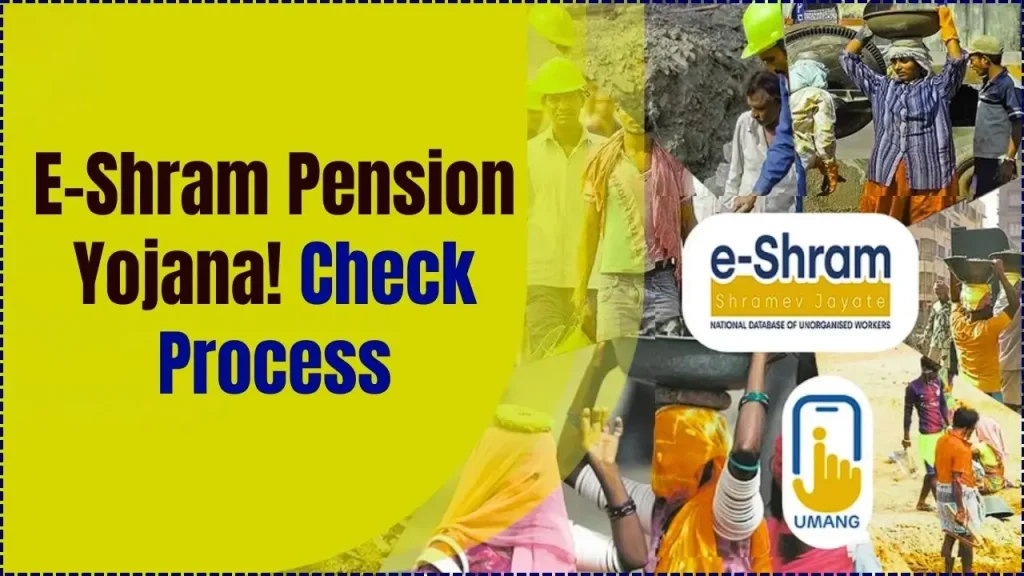
When people say E-Shram Pension Yojana, they are typically referring to the pension scheme that offers an assured pension benefit after the age of 60 for eligible unorganised workers. The idea is straightforward: you join during your working years, you pay a small monthly contribution, and after retirement age you get a fixed pension. This scheme is especially relevant for workers whose income is irregular and who don’t have any employer-backed retirement plan. Daily wage workers, street vendors, domestic workers, construction workers, delivery partners, helpers, small job workers, and many similar categories often fall into the “unorganised” group. For them, the biggest win is having a predictable pension amount that can help cover basics like groceries, medicines, and small household expenses in old age.
E-Shram Pension Yojana
| Point | Overview |
|---|---|
| Scheme Name | Pradhan Mantri Shram Yogi Maandhan (PM-SYM) |
| Common Search Name | E-Shram Pension Yojana |
| Pension Benefit | ₹3,000 per month after age 60 |
| Who Can Join | Unorganised workers meeting income and other conditions |
| Entry Age | 18 to 40 years |
| Income Condition | Monthly income up to ₹15,000 |
| Contribution Type | Monthly contribution based on age |
| Government Support | Matching contribution in many cases (as per scheme design) |
| Enrollment Mode | CSC and online pathway (where available) |
| Pension Starts | After turning 60 |
| Family Benefit | Spouse pension provision as per rules |
| Best For | Workers without EPF, fixed retirement benefits, or formal pension |
Key Features Of E-Shram Pension Yojana
This scheme is built for one purpose: a reliable income in old age for workers who otherwise retire with nothing fixed. Here are the features people usually care about before enrolling:
- Assured monthly pension after 60, so income doesn’t completely stop when you can’t work anymore.
- Contribution is small and linked to your age at entry, so joining early typically keeps it cheaper.
- It is meant for the unorganised sector, where most workers do not have employer-provided pension.
- There is also a family support angle, where spouse benefits may apply under defined conditions.
If you’re comparing options, think of it like a basic pension safety net. It’s not meant to make anyone rich. It’s meant to prevent a complete financial collapse in old age.
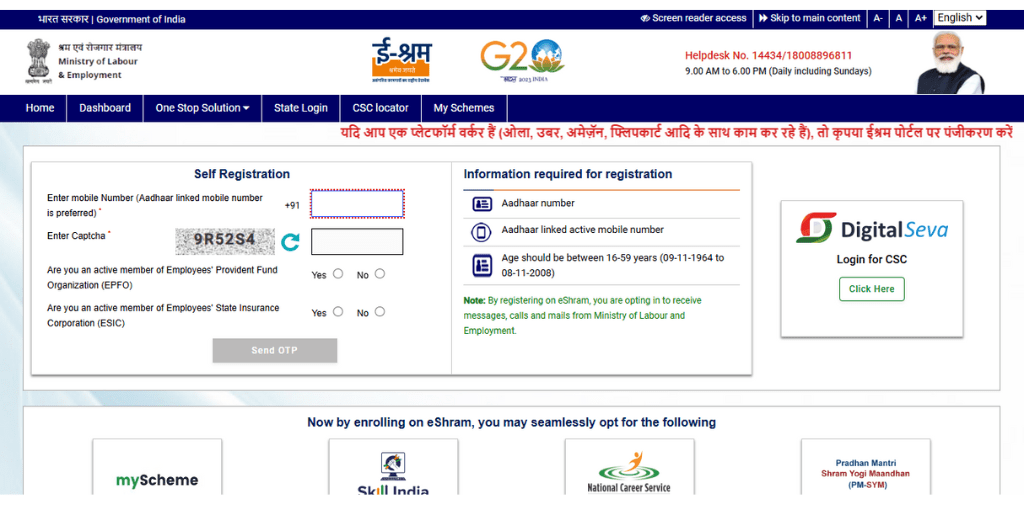
Eligibility Criteria for E-Shram Pension Yojana
Before you apply, check eligibility carefully because most confusion happens here. Typically, E-Shram Pension Yojana type pension enrolment is meant for workers who:
- Are in the unorganised sector
- Fall within the required age bracket at the time of joining
- Meet the monthly income condition
- Are not already covered under certain organised social security frameworks (depending on scheme rules)
As a quick self-check: if you earn a modest income, do not have a formal salary slip-based retirement plan, and your work is informal or unregistered in nature, you are likely the intended beneficiary group subject to the official conditions that apply at enrollment time.
Contribution Structure
This is the deciding factor for most families. Contribution generally depends on the entry age. The earlier you join, the less you usually pay per month because you have more years to contribute before pension starts. For example, younger entrants typically contribute lower monthly amounts, while those joining closer to the upper age limit contribute more. This is normal in pension-style schemes because the contribution period becomes shorter.
Practical advice:
- Join early if you’re eligible and stable enough to keep monthly deductions consistent.
- Keep a cushion in your bank account so auto-debit doesn’t fail.
- If your income is seasonal (construction, farming-related labor, migration work), plan contributions around your high-income months.
Enrolment Process for E-Shram Pension Yojana
Most people complete enrollment through nearby service centers because it’s simpler, especially if you’re not comfortable with online forms. In many places, Common Service Centres help with the full process verification, form filling, and initial steps.
Typical enrollment flow looks like this:
- Visit a service center (or use the official online route if you’re confident).
- Provide your basic identity and bank details.
- Complete verification as required.
- Choose or confirm the contribution plan (as per age).
- Start the contribution cycle through auto-debit or the accepted payment method.
- Receive confirmation or membership details for future tracking.
The important part is accuracy. A small mistake in name, date of birth, bank account number, or mobile number can create delays later—especially at pension claim time.
Implementation And Current Status
In 2025, awareness around worker welfare has increased because platforms like eShram have made it easier for workers to connect to schemes and benefits in one place. The reason people are searching E-Shram Pension Yojana more frequently is simple: access is improving, and information is reaching workers faster than before.
What has also changed is expectations. Many workers now want clarity on three things:
- Eligibility: “Am I included or not?”
- Contribution: “How much do I pay monthly?”
- Outcome: “When do I get pension and how much?”
So the “current status” in practical terms is that more people are looking at pension as a real need rather than an optional thing. And that’s a good shift because pension planning works best when started early.
Exit And Withdrawal Provisions
Not everyone can continue contributions smoothly for years. Jobs change, income breaks happen, migration happens, and emergencies hit. That’s why exit and withdrawal rules matter.
In many pension-style schemes, exit provisions generally depend on:
- How long you have contributed
- Whether you are exiting early or near retirement age
- Whether the exit is voluntary, due to disability, or due to death
If you’re part of the unorganised workforce and you don’t have PF or any employer-backed retirement plan, planning for old age is not optional it’s necessary. That’s why E-Shram Pension Yojana is getting so much attention: it speaks directly to workers who want a simple pension option with predictable benefits. The best approach is to treat it like a long-term commitment. Check eligibility, enroll correctly, keep contributions consistent, and store your membership details safely. Done properly, this scheme can become a practical support system when your working capacity reduces with age.
FAQs on E-Shram Pension Yojana
1. Is E-Shram Pension Yojana Different From PM-SYM
In common usage, E-Shram Pension Yojana is the term many people use while referring to the pension scheme pathway designed for unorganised workers, commonly linked with PM-SYM type pension benefits.
2. Who Can Apply for The ₹3,000 Monthly Pension
Workers in the unorganised sector who meet the age and income criteria, and satisfy other conditions at enrollment time, can apply.
3. How Much Do I Need to Contribute Every Month
The contribution generally depends on your entry age. Joining earlier usually means lower monthly contribution.
4. Can I Enroll Offline
Yes, in many cases enrollment is done through service centers, which makes it easier for workers who are not comfortable with online forms.