

India’s agriculture sector is standing at a turning point. For generations, farming has relied on experience, seasonal cycles, and manual processes. While this traditional knowledge remains valuable, modern challenges such as climate change, rising input costs, water scarcity, and unstable markets demand smarter solutions. This is where Digital Agriculture Mission 2026 becomes highly relevant.
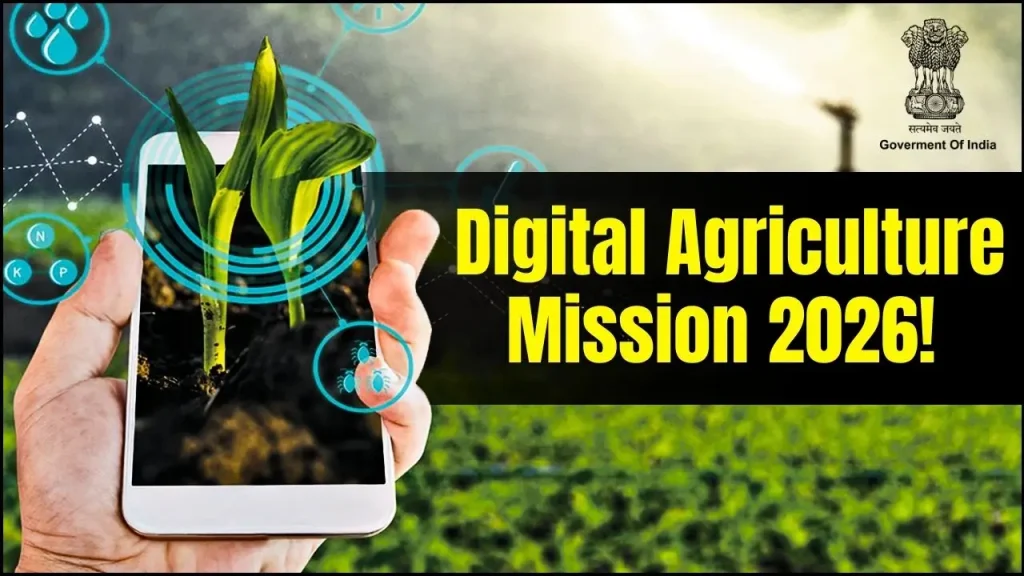
It represents a national effort to modernize farming by integrating technology into every stage of agricultural activity, from planning and cultivation to harvesting and marketing. The Digital Agriculture Mission 2026 is designed to bridge the gap between farmers and technology in a practical, inclusive way. Instead of overwhelming farmers with complex systems, the mission focuses on delivering useful, timely, and accurate information that supports everyday decisions. By combining digital records, data analytics, and advisory platforms, the mission aims to improve productivity, reduce risk, and increase farmer income while strengthening the overall agricultural ecosystem.
The Digital Agriculture Mission 2026 is a comprehensive government initiative focused on building a connected digital framework for Indian agriculture. Its core idea is simple but powerful: use technology to make farming more efficient, transparent, and resilient. The mission integrates farmer databases, land records, crop data, weather information, and market insights into unified digital platforms. This initiative moves agriculture away from fragmented systems toward a coordinated approach where data flows smoothly between farmers, institutions, and policymakers. By using tools such as artificial intelligence, satellite imagery, and geographic information systems, the mission supports informed decision-making at both farm and policy levels. The long-term vision is to create a farmer-centric digital ecosystem that adapts to local needs while supporting national agricultural goals.
Digital Agriculture Mission 2026
| Aspect | Details |
|---|---|
| Mission Name | Digital Agriculture Mission 2026 |
| Implementation Period | 2021 to 2026 |
| Primary Goal | Digital transformation of Indian agriculture |
| Key Focus Areas | Farmer data, land records, advisory services |
| Technologies Used | AI, GIS mapping, satellite data, analytics |
| Target Beneficiaries | Farmers, agri entrepreneurs, policymakers |
| Expected Outcomes | Higher yields, reduced risk, better incomes |
Digital Agriculture Mission 2026 represents a significant step toward the future of Indian farming. By combining technology with farmer-centric design, it addresses long-standing challenges while opening new opportunities. The mission is not about replacing traditional knowledge but enhancing it with data, insights, and connectivity. While implementation challenges remain, the focus on transparency, efficiency, and empowerment makes this initiative a strong foundation for sustainable and inclusive agricultural growth in India.
Objectives Of Digital Agriculture Mission 2026
- One of the central objectives of the mission is to enable data-driven farming. Traditionally, many farming decisions were based on assumptions or delayed information. The mission seeks to replace uncertainty with precision by providing real-time, location-specific insights related to crops, soil health, weather conditions, and pest threats.
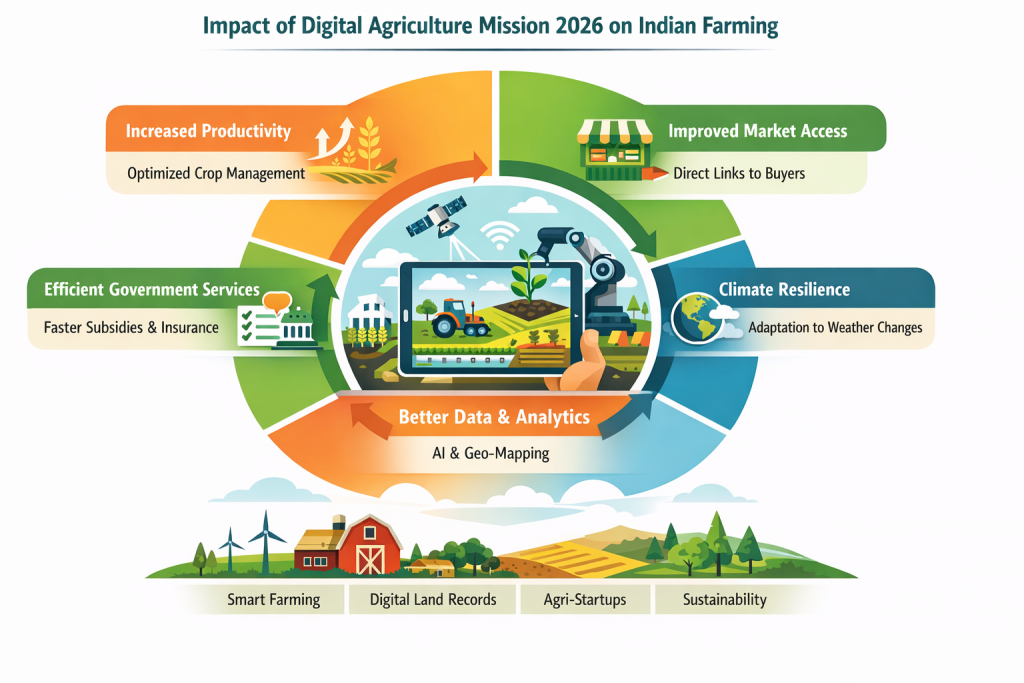
- Another major objective is improving the delivery of government services. By digitizing farmer identities and linking them with land and crop data, the mission ensures that subsidies, insurance benefits, and scheme support reach the right farmers without delays or leakages. This streamlined approach reduces administrative burden while improving trust and transparency.
- The mission also aims to support sustainable agriculture. By encouraging efficient use of water, fertilizers, and pesticides through advisory systems, it helps reduce environmental impact while maintaining productivity.
Creation Of Digital Farmer Database
A strong digital farmer database is the backbone of Digital Agriculture Mission 2026. This database brings together verified information about farmers, including identity details, land ownership, crop patterns, and location data. Each farmer is uniquely identified, which helps eliminate duplication and errors in service delivery. For farmers, this database simplifies access to benefits. Instead of repeatedly submitting documents, they can receive services through digital verification. For the government, it enables targeted planning, accurate monitoring, and better allocation of resources. Over time, this database also supports personalized advisories tailored to individual farmers and regions.
Digital Land Records and GEO Referencing
- Land ownership and boundary disputes have long affected agricultural growth. The mission addresses this challenge by digitizing land records and geo-referencing farm plots using GIS technology. Each parcel of land is mapped accurately, showing boundaries, size, and usage.
- These digital land records bring clarity and transparency. Farmers can more easily access institutional credit, crop insurance, and government schemes. Geo-referenced data also supports advanced applications such as satellite-based crop monitoring, yield estimation, and damage assessment during floods, droughts, or pest outbreaks.
Use Of Artificial Intelligence and Data Analytics
Artificial intelligence and data analytics play a transformative role in the mission. Large volumes of agricultural data collected from satellites, weather stations, soil surveys, and farmer inputs are analyzed to generate meaningful insights. AI-based models help predict crop stress, disease outbreaks, and yield trends. Data analytics supports policymakers by identifying vulnerable regions, monitoring scheme performance, and planning interventions more effectively. For farmers, these technologies translate into practical recommendations that improve decision-making and reduce uncertainty.
Weather Based Crop Advisory Services
Weather variability is one of the biggest risks faced by farmers today. The mission integrates real-time weather data with crop models to provide localized, actionable advisories. These advisories guide farmers on critical activities such as sowing time, irrigation scheduling, fertilizer application, and pest control. Unlike general forecasts, these advisories are crop-specific and region-specific. This precision helps farmers reduce losses caused by unexpected weather events. Better planning also leads to efficient use of resources, lower costs, and improved crop health.
Role Of Agri Startups In Digital Agriculture
- Agri startups are key partners in the success of Digital Agriculture Mission 2026. The mission encourages innovation by allowing startups to access standardized and anonymized agricultural data. This data enables them to build tools and platforms that solve real farming problems.
- Startups are developing mobile applications, decision-support systems, smart sensors, and digital marketplaces that improve productivity and market access. Their solutions often focus on simplicity and usability, making technology more approachable for farmers. This collaboration also boosts rural entrepreneurship and creates new job opportunities in the agricultural value chain.
Challenges In Implementing Digital Agriculture Mission 2026
Despite its strong vision, the mission faces practical challenges. Digital literacy among farmers varies widely, especially in remote and underserved regions. Limited internet connectivity and lack of access to smartphones can slow adoption. Data privacy and security are also critical concerns. Protecting farmer data while enabling innovation requires robust governance frameworks and clear guidelines. Additionally, coordination among multiple departments and stakeholders is essential to avoid duplication and ensure consistent implementation. Addressing these challenges through training, infrastructure development, and policy support will be crucial for long-term success.
E-Shram Card Payment Update – ₹3,000 Installment Released, Check Name in Beneficiary List
Future Impact On Indian Farming
- The long-term impact of Digital Agriculture Mission 2026 is expected to be far-reaching. As digital tools become part of everyday farming, agriculture will become more resilient to climate risks and market fluctuations. Farmers will have better control over inputs, improved access to information, and stronger links to markets.
- Over time, the mission can support a shift toward sustainable practices, diversified cropping, and value-added agriculture. Increased efficiency and transparency will not only raise farmer incomes but also strengthen food security and rural economies. India’s agriculture sector will be better positioned to meet future challenges while remaining competitive on a global scale.
FAQs on Digital Agriculture Mission 2026
1. What Is Digital Agriculture Mission 2026?
Digital Agriculture Mission 2026 is a nationwide initiative aimed at transforming Indian farming through the use of digital technologies.
2. How Does Digital Agriculture Mission 2026 Benefit Farmers?
The mission helps farmers by providing timely crop advisories, accurate weather updates, easier access to government schemes, and better market information.
3. Is Digital Agriculture Mission 2026 Useful for Small and Marginal Farmers?
Yes, the mission is designed to be inclusive. Small and marginal farmers benefit from simplified access to subsidies, crop insurance, and advisory services, even with limited resources or landholdings.
4. What Technologies Are Used Under Digital Agriculture Mission 2026?
The mission uses technologies such as artificial intelligence, satellite imagery, GIS mapping, data analytics, and digital platforms to collect and analyze agricultural data and deliver practical insights to farmers.