
Ayushman services in certain states due to unpaid dues, while the program itself continues nationally with stricter identity checks so complete a fresh Aadhaar eKYC and verify hospital participation before you go for cashless treatment. This single step keeps your card active at the counter and prevents last‑minute denial when authentication is enforced or when local service suspensions temporarily affect access.
Before your next hospital visit, redo your Aadhaar eKYC, make sure your Aadhaar‑linked mobile number receives OTPs, and call the empanelled hospital to confirm it is actively accepting Ayushman claims that day. Haryana’s suspension episode showed how state‑level disputes can disrupt services despite valid eligibility, so a quick phone check saves time and stress. Nationwide, Ayushman Bharat remains operational with tighter anti‑fraud controls and point‑of‑care Aadhaar authentication, which means accurate data and verified identity are non‑negotiable for cashless admission. If you recently corrected your name, age, or photo, perform a fresh eKYC so your card data and records align with current verification rules.
Ayushman Card Update
This Ayushman Card Update is about readiness: redo Aadhaar eKYC, keep your linked mobile active, confirm hospital participation before arrival, and rely on official channels to avoid avoidable denial at the counter. The scheme’s scale and new coverage groups make verification stricter, but a few proactive steps ensure you still get fast, cashless treatment when you need it.
What Exactly Shut Down Means Right Now
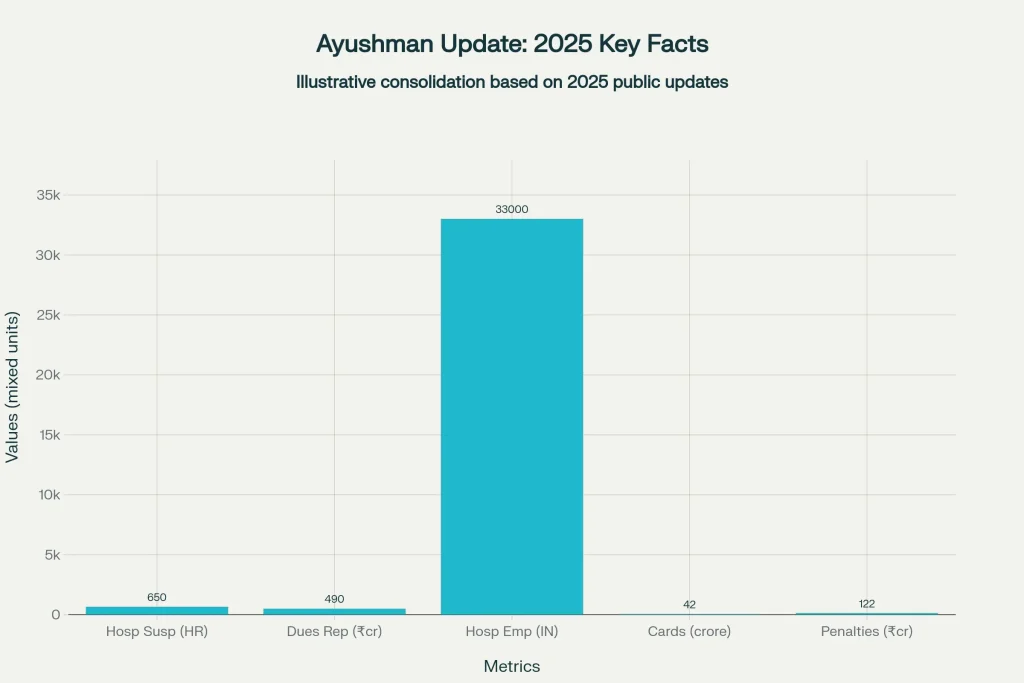
Service “shutdowns” have been localized pauses by hospital associations over unpaid reimbursements, not a nationwide halt of Ayushman Bharat. In August 2025, hundreds of private hospitals in Haryana suspended services, then moved toward resumption after negotiations, highlighting the need for same‑day checks by patients. During such standoffs, some hospitals continue accepting claims while others do not, so calling the facility remains the safest step.
The One Step You Must Not Miss
Redo your Aadhaar eKYC and confirm your Aadhaar‑linked mobile is under your control to pass point‑of‑care authentication without friction. PMJAY enforces identity checks at enrollment and at treatment to deter fraud and protect genuine beneficiaries, so mismatches can lead to denial or temporary deactivation until revalidation. If you suspect any compromise of your Aadhaar mobile linkage, update it with UIDAI first, then complete eKYC again within the Ayushman ecosystem.
How To Complete or Redo eKYC Without Friction
Use official NHA/PMJAY touchpoints or empanelled hospital desks only never agents promising instant fixes so that your record updates flow correctly. If your registered mobile receives OTPs reliably, complete OTP‑based eKYC; otherwise, ask for biometric authentication options where available. After any demographic correction (name, age, photo), redo eKYC so your Ayushman profile, ABHA, and hospital checks match perfectly at admission.
What To Check Before Heading To The Hospital
Confirm the hospital is currently accepting Ayushman claims, especially in states with recent dues‑related tensions. Carry Aadhaar, your Ayushman card, and any state add‑on scheme IDs to speed up counter verification. Keep a fallback plan another empanelled facility or provisional payment if local suspensions are still active on your visit date.
Why The Government Tightened Controls
The National Health Authority uses analytics, audits, and strict enforcement to reduce leakage and penalize misuse, protecting funds for genuine patients. Aadhaar authentication at the point of service ensures benefits reach the right person, reducing identity fraud and fake claims. In parallel, digital rails like ABHA and ABDM support secure record linkage, with service status published to increase transparency during any outages.
2025 Program Signals You Should Know
Ayushman Bharat reports more than 42 crore cards and over 33,000 empanelled hospitals, underscoring its national scale and reach. The program has saved beneficiaries an estimated ₹1.52 lakh crore in out‑of‑pocket costs since inception, reaffirming its financial protection role. Coverage expansions such as seniors aged 70+ and gig workers are broadening eligibility, so newly covered groups should enroll and complete eKYC early.
What Ayushman Covers And Why Eligibility Still Matters
PMJAY offers cashless treatment up to ₹5 lakh per eligible family per year for listed secondary and tertiary care across empanelled public and private hospitals. There is no family‑size or age cap and pre‑existing conditions are covered from day one for those who are eligible and properly enrolled. Even with strong entitlements, access at the counter depends on clean data and successful authentication, which is why Ayushman Card Update guidance emphasizes eKYC.
Your Quick Ayushman Card Update Checklist
- Redo eKYC if prompted or after any Aadhaar data correction to keep your card fully usable.
- Ensure your Aadhaar‑linked mobile receives OTPs; update with UIDAI if it doesn’t.
- Call the empanelled hospital to confirm active acceptance on the day of admission.
- Carry Aadhaar, Ayushman card, and relevant scheme IDs for faster processing.
- If verification fails unexpectedly, check the ABDM status page and retry later.
How This Ayushman Card Update Affects You
Practically, this Ayushman Card Update means identity proof will be checked more strictly at enrollment and care points, and hospitals under dispute may temporarily decline claims. Getting ahead with eKYC, keeping the right mobile number active, and verifying hospital participation prevents last‑minute surprises at the billing desk. If you’re newly eligible like seniors 70+ or gig workers act early to enroll, authenticate, and locate nearby empanelled hospitals.