

If you’ve ever felt uneasy handing over a photocopy of your Aadhaar card at a hotel check-in or for renting a place, the Aadhaar New Rules 2026 are about to make life a whole lot simpler and safer. These Aadhaar New Rules 2026 eliminate that hassle entirely, putting an end to photocopies that often end up in unsecured drawers or shared WhatsApp groups. Imagine checking into a hotel with just a quick QR scan instead faster, paperless, and with your full details protected from prying eyes. With over 134 crore Aadhaar users in India relying on this ID for everything from banking to subsidies, these changes couldn’t come soon enough. Fraud cases linked to leaked photocopies have spiked, especially in insurance claims and rentals, pushing UIDAI to act decisively in early 2026.
The Aadhaar New Rules 2026 are a game-changer designed to keep your personal data locked down tight. No longer can hotels, event organizers, landlords, or even small shops demand and store physical or digital copies of your Aadhaar card. Instead, they must register as Offline Verification Seeking Entities with UIDAI to access secure APIs or use a brand-new app for instant checks. This shift isn’t just about convenience; it’s a direct response to rising data misuse. Businesses verify your identity on the spot via encrypted QR codes or app-based scans, then the data vanishes no storage, no risk. For citizens, this means less worry about lost documents or identity theft. Picture traveling to a new city: scan, verify, done. No more arguing over just one photocopy. These rules align perfectly with India’s Digital Personal Data Protection Act, ensuring your 12-digit number stays yours alone. Over 16,000 crore successful authentications later, UIDAI’s database remains breach-free, but these updates add even more layers of security for everyday use.
Aadhaar New Rules 2026
| Key Change | Description | Impact on Citizens |
|---|---|---|
| Ban on Photocopies | No more physical or digital copies allowed for hotels, events, etc. | Safer personal data with no lost copies cluttering files |
| Entity Registration | Businesses must register with UIDAI for secure verification tools. | Quicker, hassle-free checks using QR or apps anywhere |
| New Aadhaar App | Beta version enables offline app-to-app verification without servers. | Easy address updates and family linking on the go |
| QR Code Scans | Encrypted codes share only essential info like name or age. | Selective disclosure keeps full details private |
| Mandatory Updates | Regular refreshes required for accurate banking KYC. | Avoid account freezes or subsidy delays with current info |
| Reduced Offline Tools | Limits QR/XML use in high-value financial transactions. | Shift to real-time auth ensures fraud-proof banking |
Why Aadhaar Rules Are Being Tightened Now
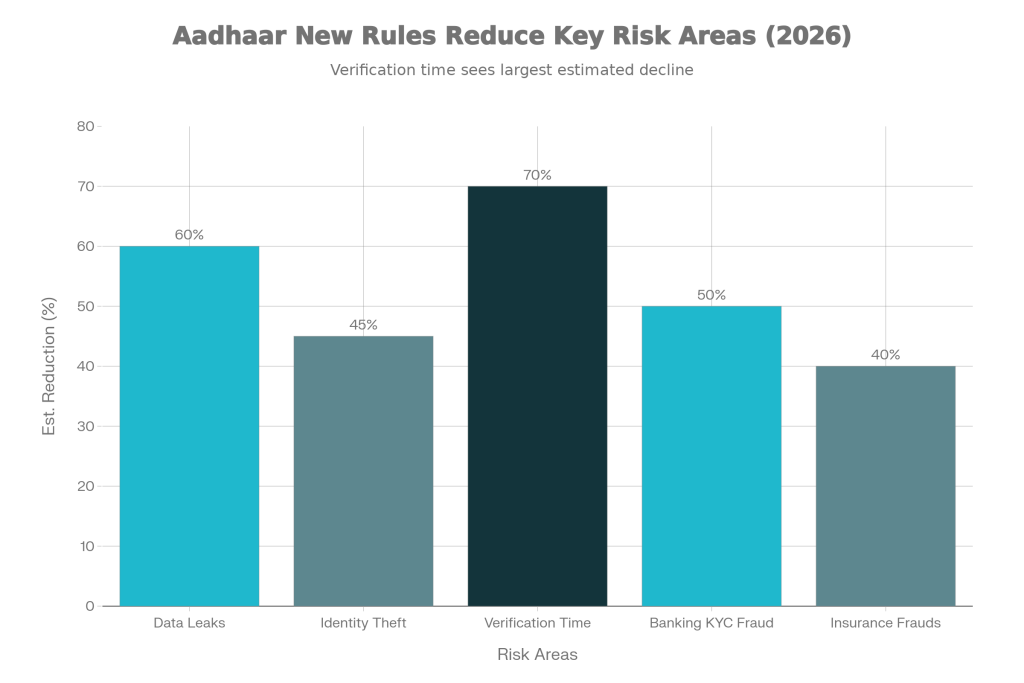
Think about it we’ve all grown used to flashing photocopies without a second thought, but those papers have been a goldmine for fraudsters. In sectors like insurance, fake Aadhaar details account for 10-15% of fraudulent claims, costing billions annually. Even simple rentals or event registrations have seen spikes in identity theft from unsecured copies. UIDAI’s Aadhaar New Rules 2026 tighten the screws because outdated practices clash with modern digital India. Your Aadhaar isn’t static anymore, it’s a living identity that needs periodic updates to match your current photo, address, or biometrics. This comes hot on the heels of exploding digital payments Aadhaar Enabled Payment System (AEPS) is projected to hit 3.5 billion transactions this year alone. Loose photocopies don’t cut it when biometric liveness checks and real-time auth are the global standard. By banning storage, UIDAI slashes risks while boosting efficiency. No more data floating around in dusty files or hacked chats just secure, instant verification that protects all 134 crore users.
No Photocopy of Aadhaar Card
Remember the last time a hotel receptionist insisted on just keeping a copy for records? Those days are over under the Aadhaar New Rules 2026. Photocopies, whether printed or scanned, are now illegal for storage by private entities. The reason? They’re prone to misuse think fraud rings in Uttar Pradesh busted last year for churning out fakes from stolen copies. Now, verification happens via masked Aadhaar numbers (showing only the first four and last four digits) or QR scans that reveal just what’s needed, like your name for check-in or age for an event. Landlords scan your QR, confirm you’re you, and that’s it no file stuffed in a drawer. This applies to rentals, PGs, gyms, even marriage halls. Citizens win big: less exposure, faster processes, and peace of mind knowing your full details aren’t lingering anywhere vulnerable. If someone’s still asking for a copy post-2026, politely point them to UIDAI’s guidelines they’re breaking the law.
New Aadhaar App and More
- Exciting part: UIDAI’s rolling out a dedicated app that’s already in beta, revolutionizing how we handle verifications. This isn’t your average update tool; it supports peer-to-peer checks without hitting central servers, making it ideal for remote villages with patchy internet.
- Download it alongside myAadhaar, and you can refresh your address, add family members as dependents, or even update biometrics right from your phone. Selective disclosure is the star feature prove you’re over 18 for a loan without sharing your DOB or photo. It builds on existing QR tech but goes offline-first, perfect for India’s diverse connectivity landscape. Rollout accelerates through 2026, integrating with banking apps for seamless KYC. For frequent travelers or NRIs, this means global compatibility without endless paperwork. Early testers report 90% faster verifications, proving these Aadhaar New Rules 2026 deliver real-world wins.
Aadhaar Updates May Become Mandatory for Banking Services
Banks are getting strict too. If your Aadhaar photo is from childhood or your address hasn’t budged since 2010, expect KYC red flags under Aadhaar New Rules 2026. Outdated cards could pause accounts, loans, or government subsidies like PM-KISAN. RBI mandates periodic refreshes, with free online updates available till June 2026. Head to uidai.gov.in or the app, upload a fresh photo, and link proofs done in minutes. This affects everything from UPI limits to insurance claims, where accuracy jumped 42% after similar fintech pilots. Pro tip: If fingerprints are worn (common for manual laborers), opt for iris scans early. Noncompliance might mean frozen funds, but staying proactive keeps services humming. Banks shift to real-time auth, minimizing static data risks.
Reduced Acceptance of Offline Aadhaar Verification
- QR codes and XML downloads were lifesavers, but fraudsters loved them for high-value scams. The Aadhaar New Rules 2026 curb offline tools in banking over ₹50,000, pushing live biometric or API checks.
- Rural areas get hybrid grace periods, blending QR with connectivity checks. This aligns with trends where 70% of fintech now uses liveness detection to spot deepfakes. For citizens, it means reliable high-stakes transactions without compromise think home loans or investments. Update your card’s QR via the app to stay compatible.
What Changes for Citizens
- Daily life transforms positively. Travelers: QR scan at airports or hotels. Renters App proof for leases. Eventgoers: Age verification without details shared. No more photocopy hunts or data leak nightmares.
- Banking smooths out with current Aadhaar, unlocking subsidies faster. Overall, Aadhaar New Rules 2026 empower you control your data, skip hassles, embrace digital speed. India’s 1.4 billion people get fraud-proof ID, fueling cashless growth.
Public Holiday List 2026 – Full Year Government Holiday Calendar Released State-Wise
Steps to Prepare
- Ready to gear up? Log into myAadhaar portal or app now. Verify details, update photo/address biometrics free till mid-2026.
- Test your card’s QR code. Link PAN-Aadhaar to avoid inactivations.
- Visit an Aadhaar center for hands-on help if online feels tricky.
- Download the new app from Play Store/App Store once live. These quick steps ensure zero disruptions.
FAQs on Aadhaar New Rules 2026
What exactly do the Aadhaar New Rules 2026 cover?
They ban photocopy storage, require entity registration, introduce a new app, limit offline tools, and mandate updates for banking KYC.
Do I need to update my Aadhaar right away?
Yes, if it’s outdated; free services run till June 2026 to prevent KYC blocks in banks or schemes.
How will hotels verify me without photocopies?
Quick QR scans or the new app after UIDAI registration instant and secure.
Is Aadhaar data safer now?
Absolutely, with zero central breaches and no-storage rules adding protection layers.