
Key Government Programs Supporting Child Welfare and Protection in India can be broadly grouped into three pillars: nutrition and health, education and rights, and protection and rehabilitation. The first pillar covers schemes that focus on nutrition, early childhood care and maternal health; the second focuses on schooling, learning, scholarships and equal opportunity; and the third pillar deals with legal protection, rescue, shelter, family‑based care and long‑term rehabilitation for children in difficult circumstances.
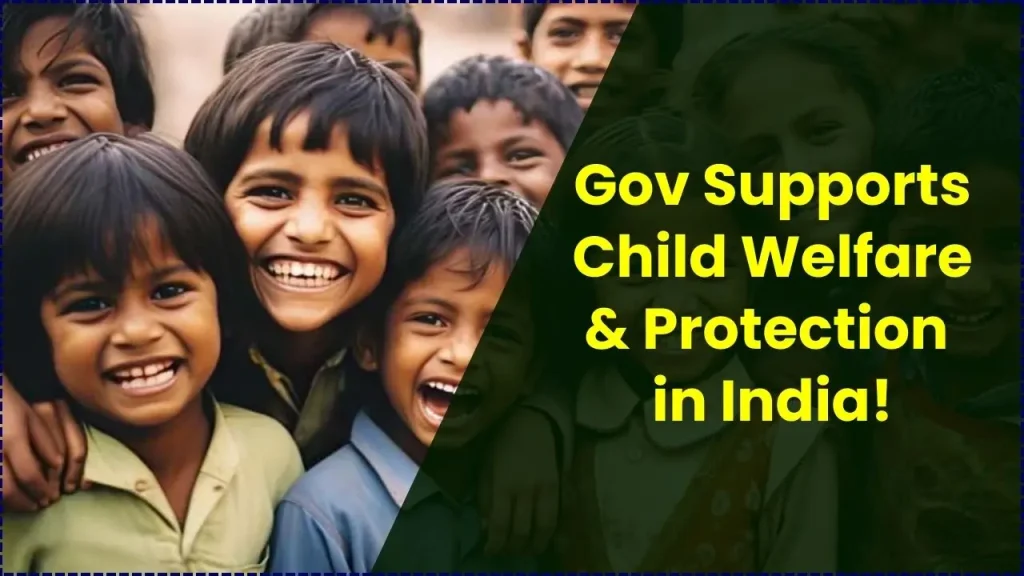
Although these programmes are designed separately, they are closely interconnected and follow a life‑cycle approach. A child may begin at an Anganwadi centre for nutrition and pre‑school activities, move through school with support for education and health, and, if needed, be protected by child protection laws, shelters, foster care, adoption or aftercare services. This joined‑up system helps ensure that if something goes wrong at any age, there is some form of safety net available for the child.
Child Welfare and Protection in India
Integrated Child Development And Nutrition
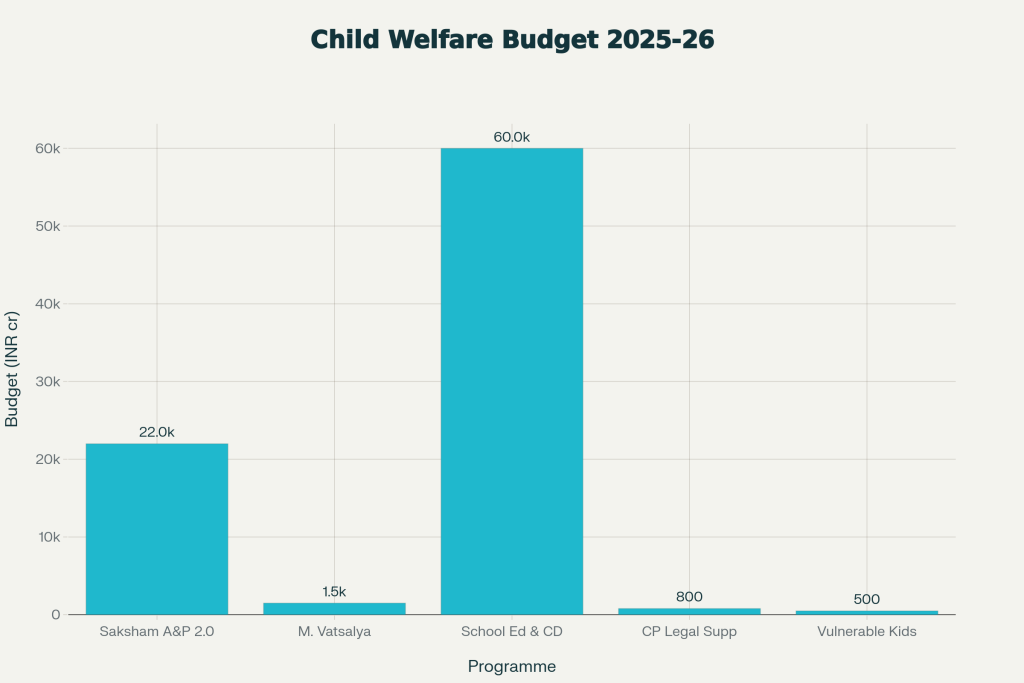
India’s flagship early childhood development and nutrition system is built around Anganwadi centres, now strengthened under Saksham Anganwadi & Poshan 2.0. The idea is that no child’s life should begin with hunger, weakness and preventable disease; instead, early years should be marked by good nutrition, health care and responsive care‑giving.
At Anganwadi centres, young children receive supplementary nutrition (hot meals or take‑home rations), regular weighing and height checks, linkage to immunisation and basic health services, and play‑based pre‑school activities. Pregnant and lactating women are counselled on diet, hygiene, breastfeeding and newborn care, helping to break the inter‑generational cycle of malnutrition. In many areas, digital tools and apps track children’s growth and service delivery so that those at higher risk of undernutrition or illness can be identified and supported in time.
Mission Vatsalya And Child Protection System
Mission Vatsalya is the backbone of India’s child protection ecosystem. Earlier known as the Integrated Child Protection Scheme, it has been reframed with a mission‑mode structure and clearer focus on children in need of care and protection and those in conflict with law. This includes children who are separated from families, living on the streets, trafficked, working in hazardous conditions, abandoned, orphaned, in conflict zones or caught in criminal activities.
Under Mission Vatsalya, support is provided to Child Care Institutions, shelter homes, open shelters, observation homes, special homes and specialised adoption agencies. Equally important are non‑institutional options such as sponsorship, foster care, kinship care, family reunification, adoption and aftercare for youth who turn 18 but still need guidance and support. District Child Protection Units, Child Welfare Committees and Juvenile Justice Boards work together to hear each child’s case, decide the safest and most suitable care arrangement, and ensure that the child is treated with sensitivity and dignity throughout the process.
Legal Framework Protecting Children
A strong child welfare system must rest on a firm legal foundation, and India has taken major steps on this front. The Juvenile Justice (Care and Protection of Children) Act provides a separate child‑friendly justice system for two broad categories: children in need of care and protection, and children in conflict with law. It emphasises rehabilitation and social reintegration rather than punishment, and lays down structures such as Juvenile Justice Boards and Child Welfare Committees.
The Protection of Children from Sexual Offences (POCSO) Act sets clear definitions of sexual offences against children, prescribes strict penalties and mandates child‑friendly procedures in investigation and trial. Alongside, services such as the Childline 1098 emergency helpline, special courts and dedicated child protection units give children and citizens accessible channels to report abuse and seek help. Together, these measures aim to ensure that a child facing violence or exploitation does not have to suffer in silence but can reach out for timely and effective support.
Education, Health and Emerging Trends
In recent years, indicators such as child mortality, undernutrition, school dropout and child marriage have generally shown improvement, though gaps remain between regions and social groups. Expanded immunisation coverage, stronger primary health care and nutrition‑focused schemes have played a significant role in reducing preventable deaths and illnesses among children.
In education, the Right to Education Act, free schooling in government schools, textbooks, uniforms, mid‑day meals, residential schools and scholarships form a package aimed at getting every child into school and helping them stay there. Special attention to girls’ education, children with disabilities and children from marginalised communities is slowly improving access and participation. At the same time, there is growing recognition that child welfare is not just about marks and enrolment numbers; mental health, life skills, safe school environments and prevention of bullying and abuse are beginning to receive more attention.
Role Of Special Support Schemes
Some situations leave children extremely vulnerable in a very short time, such as disasters, pandemics or accidents in which they suddenly lose parents or caregivers. For such cases, special schemes have been created that go beyond short‑term relief and aim to provide long‑term security in education, health and finances.
Typically, these programmes create a dedicated fund or deposit in the child’s name, which matures when the child reaches adulthood, along with guaranteed schooling support, health insurance, possible hostel facilities and assistance for higher education or skill training. The goal is to ensure that a child does not slip into chronic poverty, child labour, early marriage or exploitation just because of a family tragedy, but instead has a realistic chance at rebuilding life with dignity.
Ladli Behna Yojana Kist: 31वीं किस्त की तारीख पक्की! लाड़ली बहना योजना का पैसा इस दिन आएगा, देखें
How These Programs Impact Real Families
On the ground, the impact of Key Government Programs Supporting Child Welfare and Protection in India is most visible where the system and the community work in sync. In villages and urban settlements where Anganwadi workers, ASHAs, health staff, schoolteachers, panchayats and local NGOs coordinate actively, children are more likely to be immunised, better nourished and regularly attending school. There, parents are more aware of available schemes and more willing to seek help early when problems arise.
In contrast, in areas with low awareness, staff shortages, social discrimination or weak local administration, many families do not know what support exists or how to access it. Some do not realise that child labour, early marriage or harsh physical punishment are violations of child rights; others are afraid or unsure about approaching authorities. That is why community awareness and citizen participation are now seen as essential parts of child welfare, just like budgets or scheme design.
If you are a parent, teacher, social worker or simply a concerned citizen, one of the most powerful things you can do is to understand the basics of these key programmes and gently share that information with families around you. Helping a family connect to a nearby Anganwadi, government school, health centre or child protection authority can change a child’s life trajectory. When you notice worrying signs in a child – sudden fearfulness, withdrawal, injuries, dropping out of school, or long hours of work – taking it seriously and guiding them towards help can be the difference between prolonged harm and timely rescue.
FAQs on Child Welfare and Protection in India
1. Are these schemes only for children from poor families?
2. How does Mission Vatsalya support children?
3. What can be done if a child is being abused?
The child’s immediate safety comes first: move them away from danger if possible and ensure they are with a trusted adult. Then, cases can be reported through the 1098 child helpline, local police, Child Welfare Committee or trusted school and health authorities so that legal and protection processes can start.
4. Are children’s mental health needs being addressed?
Yes, though this area is still evolving. More schools and child‑focused programmes are beginning to include counselling, life skills education, emotional well‑being sessions and referral linkages for children facing stress, trauma or behavioural issues.