

The Ministry of Rural Development has officially released the new beneficiary list for Pradhan Mantri Awas Yojana Gramin (PMAY-G) for 2025. Rural households across India can now check whether they are eligible for the scheme by verifying their names on the newly updated list. This release is crucial for those seeking financial assistance for housing construction or upgrades under this significant national initiative.
PMAY-G, which aims to provide affordable, durable housing for all rural households without a pucca (permanent) house, is part of the government’s ongoing commitment to improving the living conditions of the poorest families in rural areas. With the new list published, eligible households can now access financial aid, with amounts of up to ₹1.20 lakh to build homes that comply with government standards.
What is PM Awas Yojana Gramin?
The Pradhan Mantri Awas Yojana Gramin (PMAY-G) is the rural arm of the Pradhan Mantri Awas Yojana (PMAY), designed to address housing needs in rural areas. Launched by the Indian government in 2016, the scheme aims to provide affordable, safe, and sustainable housing to families in rural India who do not have access to proper shelter.
PMAY-G provides financial assistance for the construction of pucca houses that come with basic amenities like sanitation, electricity, and water connections, improving both the living conditions and overall health of rural households. The program is aimed at households in the Below Poverty Line (BPL) category, with a focus on marginalized groups such as Scheduled Castes (SC), Scheduled Tribes (ST), and women-headed households.
Key Features of PMAY-G:
- Financial Assistance: PMAY-G provides ₹1.20 lakh to each eligible household in plain areas and ₹1.30 lakh in hilly, difficult, and LWE (Left Wing Extremist) areas for house construction.
- Housing Amenities: The houses constructed under PMAY-G come with essential amenities such as sanitation facilities, electricity, and drinking water.
- Eligibility Criteria: The scheme targets families without a pucca house and those who live in a kutcha or semi-pucca house.
- Time Frame: The aim is to provide 2.95 crore homes by 2024 under this scheme, ensuring that no family in rural areas remains without a proper house.
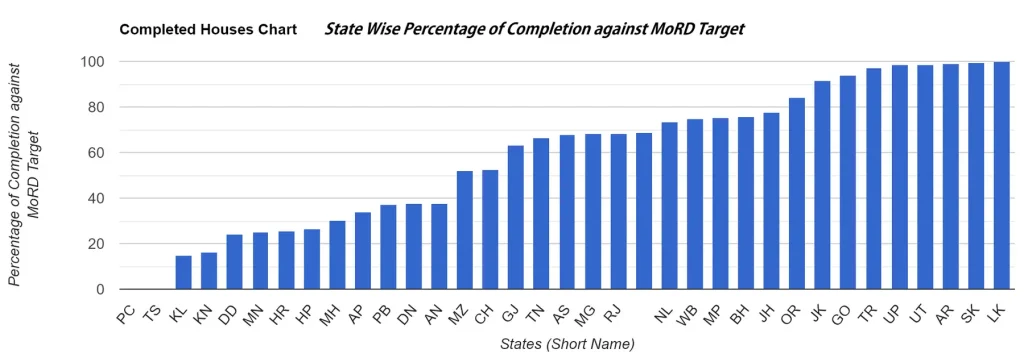
Check If Your Name Is on the New PMAY-G Beneficiary List
If you have applied for PMAY-G, it’s important to verify your inclusion in the 2025 beneficiary list. Below are the steps to check your name:
Visit the Official PMAY-G Portal
- Open the official PMAY-G portal: pmayg.nic.in
- On the homepage, navigate to the ‘Stakeholders’ section and select ‘IAY/PMAYG Beneficiary’ or ‘Search Beneficiary’.
Enter Your Details
- If you have a registration number, enter it in the required field and click Submit.
- If you don’t have a registration number, use the ‘Advanced Search’ option.
- Input State, District, Block, Gram Panchayat, and your Name.
- Alternatively, search using your Aadhaar number or mobile number linked with your application.
Check Your Status
- Once you submit the necessary details, the portal will display your PMAY-G ID, along with the current status of your application.
- The list will show whether you are approved as a beneficiary, and provide the housing subsidy amount and fund disbursement details.
What Does Being on the Beneficiary List Mean?
Being listed on the PMAY-G beneficiary list is a crucial step toward receiving financial aid to build your home. However, it’s important to note that inclusion on the list doesn’t automatically mean funds are disbursed immediately.
What Being on the List Means:
- Eligibility for Subsidy: Your family is recognized as eligible for government assistance in constructing a new house.
- Next Steps: Once you are listed as a beneficiary, you will need to follow through with the construction process and provide the necessary documents as required by local authorities.
- Fund Disbursement: The financial subsidy will be transferred in installments to the bank account linked with your application. These installments are tied to milestones in the construction process.
What Inclusion Does Not Guarantee:
- Immediate Payment: It may take time for the funds to be disbursed due to verification processes.
- Inspection and Verification: Local authorities will inspect the construction process to ensure the house is being built according to the scheme’s guidelines.
- Construction Delays: Some beneficiaries may experience delays depending on regional implementation or the availability of funds.
What to Do If Your Name Is Not on the List
If your name is not on the newly released beneficiary list, it’s important to address the situation promptly. Here are some common reasons why you might not see your name, and steps to resolve the issue:
Reasons for Exclusion:
- Incomplete or Incorrect Application: Your application might have missing or incorrect details.
- Eligibility Issues: Your household may not meet the criteria for BPL or other eligibility norms.
- Pending Documentation: If you haven’t submitted the required documentation, the authorities may not have processed your application.
- Non-compliance with Verification: Sometimes, applications are excluded if they haven’t passed all verification checks.
Steps to Take:
- Verify Application Details: Double-check the application information and ensure there are no discrepancies.
- Contact Local Authorities: Reach out to your Gram Panchayat or District Rural Development Agency (DRDA) to inquire about your application status and any missing documents.
- Correct Discrepancies: If any details are incorrect or incomplete, ensure they are corrected and resubmitted.
- Monitor Future Updates: Beneficiary lists are updated periodically, so your name may appear in the next round of updates.
Eligibility Criteria for PM Awas Yojana Gramin
To be eligible for PMAY-G, applicants must meet specific criteria that ensure the program benefits those most in need. Here are the general eligibility conditions:
- BPL Status: The applicant must belong to a Below Poverty Line (BPL) household.
- Housing Condition: The family must not have a pucca house and should either live in a kutcha or semi-pucca house.
- Priority Groups: Priority is given to vulnerable categories such as Scheduled Castes (SC), Scheduled Tribes (ST), women-headed households, and families with elderly or disabled members.
The government also uses the Socio-Economic Caste Census (SECC) of 2011 as the primary source of data for selecting beneficiaries, ensuring that the scheme reaches the most underserved communities.
The Broader Impact of PM Awas Yojana Gramin
The Pradhan Mantri Awas Yojana Gramin is more than just a housing initiative; it is a crucial element of India’s rural development strategy. The scheme addresses several key issues:
1. Improved Housing Conditions
By providing financial support for the construction of pucca houses, PMAY-G ensures that rural families no longer have to rely on flimsy, unsafe shelter. This also helps reduce the environmental impact of using biomass or kerosene for cooking, as the scheme promotes the use of clean energy.
2. Empowerment of Rural Women
The scheme specifically targets women-headed households, providing them with the financial means to own a secure home. This is a significant step toward gender equality, as it empowers women with ownership and autonomy over their living space.
3. Economic Upliftment
The construction of homes under PMAY-G stimulates the local economy, creating demand for building materials and providing jobs to local artisans, laborers, and construction workers.
4. Health and Sanitation
Each house built under PMAY-G comes with sanitation facilities, access to clean drinking water, and electricity, which directly contribute to improved public health. The Swachh Bharat Abhiyan (Clean India Mission) is also supported through this program by ensuring that rural families have access to toilets and clean cooking fuel.
Related Links
LPG Price Update — Latest Cylinder Rates and What Households Will Pay Now
PM Internship Scheme 2025 — Online Registration Opens for Students and Fresh Graduates
Challenges Faced by Beneficiaries
While PMAY-G has made significant strides in improving rural housing, there are still some challenges that beneficiaries might face:
- Delays in Fund Disbursement: Sometimes, funds may not be disbursed promptly, leading to delays in construction. This can be due to administrative bottlenecks, verification delays, or insufficient funds.
- Implementation Hurdles: In some cases, local authorities may struggle with the logistics of monitoring and verifying construction, particularly in remote or difficult-to-reach areas.
- Documentary and Procedural Delays: Incomplete documentation or errors in the application process may result in delays or exclusion from the beneficiary list.
Your Next Steps and Monitoring
If you are listed in the PMAY-G beneficiary list, take immediate steps to verify your application, follow up with local authorities, and ensure timely construction. If you are not listed, don’t lose hope — check your application details, complete any pending steps, and monitor future updates.
The Pradhan Mantri Awas Yojana Gramin is a key initiative to improve the living standards of millions of rural Indians, and for eligible households, it’s an opportunity to build a secure and dignified home. By checking your status and taking prompt action, you can ensure that you don’t miss out on this vital assistance.