


The Government of India has strengthened verification procedures under PM-Kisan 2025, introducing new rules aimed at improving accuracy ahead of the upcoming disbursement cycle. Officials said the measures respond to recent audits that flagged discrepancies in beneficiary records across several states. The updated process focuses on land documentation, identity verification, and Aadhaar-linked banking to ensure that income support reaches eligible farmers under the country’s largest direct benefit programme.
Understanding the Updates Under PM-Kisan 2025
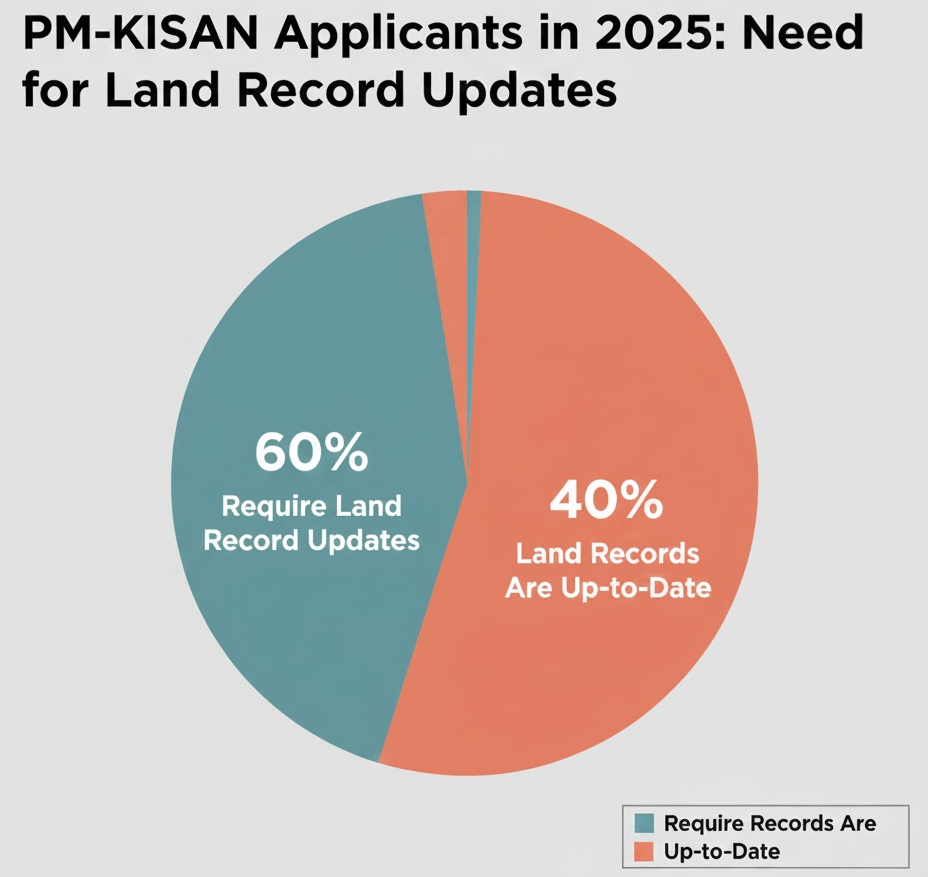
The Ministry of Agriculture and Farmers Welfare said in a statement in November 2025 that the latest verification reforms are part of a broader effort to update beneficiary records and improve transparency. Field surveys conducted in multiple states found outdated land data, duplicate names, and bank accounts not linked to Aadhaar, leading to rejected transactions.
A senior ministry official stated, “The objective is to ensure that every deserving farmer receives timely support. Strengthening verification is necessary for maintaining the integrity of the scheme.”
The Three New Verification Requirements
Land Ownership Validation:
State governments must upload updated land records to the central PM-Kisan database. Any entry with disputes, inheritance gaps, or missing details must be corrected before payment approval.
- Mandatory Aadhaar-Based Identification:
Aadhaar Enabled Payment System (AEPS) is now required for all beneficiaries. The Ministry reported that AEPS has significantly reduced fraudulent claims by ensuring identity validation. - Bank Account Seeding:
Farmers must verify that their bank accounts are correctly linked with Aadhaar. Government officers say that incorrect or mismatched bank details remain the most common cause of payment failures.
The Evolution of PM-Kisan Since 2019
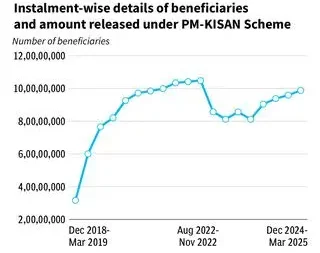
PM-Kisan was launched in February 2019 through the Interim Union Budget to provide income support to small and marginal farmers. Rising input costs, unpredictable weather patterns, and fluctuating crop prices prompted the introduction of a direct benefit transfer aimed at stabilising household incomes.
Initially limited to farmers with up to two hectares of land, the scheme was expanded later in 2019 to include all landholding farmers. According to data from the Economic Survey, PM-Kisan contributed to maintaining rural consumption levels during the COVID-19 pandemic when many households experienced labour shortages and lower earnings.
Since its launch, more than ₹3.70 lakh crore has been transferred to beneficiaries. Policy analysts note that PM-Kisan has become a central pillar of India’s rural support framework.
Dr. Anita Rao, Senior Research Fellow at the Indian Council for Research on International Economic Relations (ICRIER), said, “PM-Kisan provides predictable income support, especially in seasons affected by market fluctuations or weather-related stress. The recent verification measures are important for long-term efficiency.”
Current Payment Status and 2026 Installment Timeline
The 21st instalment was released in November 2025, covering over 11 crore farmers. While the government has not announced the date for the first instalment of 2026, officials have said that timely disbursement depends on state governments completing verification requirements before the next financial quarter.
A government spokesperson confirmed, “Farmers who update their details—including e-KYC, Aadhaar verification, and bank seeding—will receive payments without delay.”
State-Level Variations in Verification and Disbursement
Digital infrastructure plays a key role in the efficiency of the process.
- Karnataka and Telangana have completed nearly all land digitisation work and report smooth disbursements.
- Uttar Pradesh, Bihar, and West Bengal continue to face backlogs due to incomplete land mapping and administrative challenges.
- North-eastern states, such as Assam and Meghalaya, face additional hurdles due to geographical terrain and limited connectivity.
Dr. Raghav Menon from the National Institute of Agricultural Economics and Policy Research said, “The digital divide affects how fast states can verify records. A strong digital land system directly speeds up PM-Kisan payments.”
On-Ground Impact: How Farmers Use PM-Kisan Support
Despite operational hurdles, PM-Kisan remains a lifeline for millions of rural households, especially small and marginal farmers who depend on seasonal earnings.
Case Study: Maharashtra, Solapur District
Ganesh Patil, a cotton farmer, said the payments help him purchase fertilisers at the start of each cropping cycle. “It may not cover major expenses, but it helps with immediate needs,” he said.
Case Study: Odisha, Ganjam District
Savitri Naik, a widow managing a half-acre farm, said PM-Kisan instalments helped her avoid borrowing from informal lenders. “The money helps me buy seeds and transport produce to the local market.”
Case Study: Punjab, Moga District
Wheat farmer Baldev Singh uses instalments to manage rising irrigation costs. “Electricity and fuel prices have increased. Every instalment helps offset some of the burden,” he said.
Key Challenges and Criticisms of PM-Kisan 2025
While widely supported, the scheme continues to face several criticisms that policymakers are under pressure to address.
Exclusion of Tenant Farmers and Sharecroppers
Since eligibility depends on documented land ownership, tenant farmers—who represent a significant portion of India’s farming population—cannot benefit from the scheme. Advocacy groups have urged alternate verification methods.
Dependence on Aadhaar Authentication
Aadhaar-based verification has reduced fraud but occasionally leads to exclusion due to biometric failures or database mismatches.
Limited Annual Support
Several farmer organisations argue that the ₹6,000 annual support does not reflect the rising cost of seeds, fertiliser, and equipment. Some have demanded that the amount be increased to ₹12,000 or ₹18,000 to match inflation and input costs.
Administrative Delays
States with old land records or low digitisation face slower verification timelines, which can impact payment cycles.
How PM-Kisan Compares with Global Farm Income Support Models
Several countries operate income support programmes for farmers, but India’s PM-Kisan stands out due to its scale and frequency of payments.
- The United States Farm Bill provides subsidies linked to crop production and insurance.
- The European Union’s Common Agricultural Policy (CAP) offers direct payments based on land area and compliance standards.
- African nations, supported by global institutions, have tested targeted cash transfer systems for farmers.
Dr. Elena Brooks, an agricultural economist at the University of Leeds, said, “India’s PM-Kisan is one of the world’s largest income support schemes delivered through digital platforms, which makes it unique.”
What PM-Kisan 2.0 Could Look Like: Future Policy Options
As the scheme evolves, several policy experts have proposed improvements:
- Increasing the annual financial support to address inflation
- Creating a mechanism to include tenant farmers
- Linking payments to climate resilience programmes
- Integrating PM-Kisan with crop insurance and soil health card data
- Using artificial intelligence to detect duplicate entries or irregularities
A policy paper from NITI Aayog in 2024 suggested using climate-based triggers for emergency instalments during droughts or floods.
What Farmers Should Do Before the Next Payment Cycle
The Ministry advises farmers to complete the required steps ahead of the next instalment:
- Finish e-KYC using the official PM-Kisan portal
- Update land records at the local tehsil office
- Ensure bank accounts are Aadhaar-seeded
- Check beneficiary status regularly
- Visit the local agriculture office if listed as “pending” or “under verification”
E-Shram Card 2025 — Check Your Payment Status Online at eshram.gov.in
Conclusion
The updated verification rules under PM-Kisan 2025 reflect the government’s efforts to improve transparency and ensure accurate targeting within India’s most extensive rural income support scheme. While the reforms may lead to temporary delays in some regions, experts say they are necessary for the programme’s long-term credibility. As agricultural costs rise and climate challenges intensify, PM-Kisan’s role in stabilising rural income will remain important. Farmers who complete the required verification steps are expected to receive their payments on schedule in 2026, marking the beginning of a more robust phase of implementation.