

The Pradhan Mantri Matru Vandana Yojana 2025 is a central government maternity benefit programme that provides cash incentives to pregnant women and lactating mothers to promote healthier pregnancies and safer post-natal care. As of mid-2025, government data indicates that over 4 crore women have received assistance under the scheme. This article explains the objectives of PMMVY, outlines the application process, details how to check application status, and highlights important updates for 2025.
What is the Pradhan Mantri Matru Vandana Yojana?
The PM Matru Vandana Yojana , launched in 2017, is India’s flagship maternity benefit scheme administered by the Ministry of Women and Child Development (MWCD).
Its core purpose is to compensate women for wage loss during pregnancy, support nutritional needs, and promote timely healthcare practices.
According to official data, PMMVY plays a central role within Mission POSHAN 2.0, a broader national effort to improve maternal and child nutrition.
Why the Scheme Was Introduced
Before PMMVY, India faced several persistent maternal health challenges:
- High maternal mortality rate (MMR), with India recording 130 deaths per 100,000 live births in 2014–16 (Registrar General of India).
- Limited awareness about antenatal care across rural, tribal, and marginalised communities.
- Loss of income in the unorganised labour sector, leading many women to skip essential medical check-ups.
- Inadequate financial support for nutrition during pregnancy.
The government introduced PMMVY to address these gaps and encourage early pregnancy registration, institutional deliveries, and consistent post-natal care.
Eligibility Criteria for PM Matru Vandana Yojana 2025
PMMVY supports:
- Pregnant women and lactating mothers for their first living child.
- Women pregnant with a second child, but only if the child is a girl, under revised PMMVY 2.0 guidelines.
Key Requirements
- The applicant must be an Indian citizen.
- Aadhaar number is mandatory.
- The applicant’s bank or post-office account must be Aadhaar-seeded.
- Pregnancy registration must occur early to qualify for the first instalment.
Women employed in the central or state government, or receiving similar maternity benefits, are usually not eligible.
Benefits Under PM Matru Vandana Yojana 2025
Cash Benefits Structure
- ₹5,000 for the first living child (given in two instalments).
- ₹6,000 for the second child, but only if the newborn is a girl.
Instalment Breakdown
| Instalment | Requirements | Amount |
|---|---|---|
| First Instalment | Pregnancy registration + at least one antenatal check-up | ₹3,000 |
| Second Instalment | Childbirth registration + early immunisation | ₹2,000 |
For the second girl child, the ₹6,000 amount is transferred in a single instalment after documentation and verification.
How to Apply for PM Matru Vandana Yojana in 2025
Applicants can choose between online and offline methods.
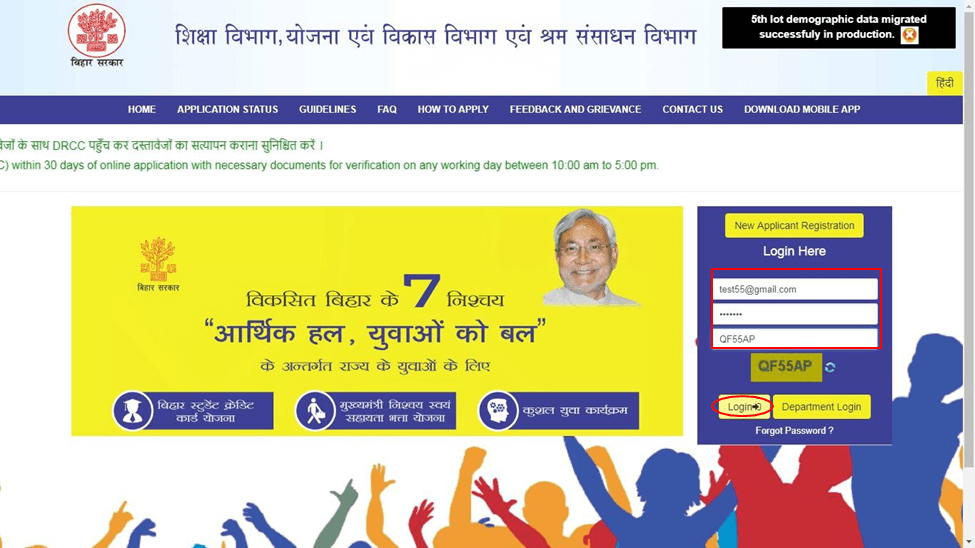
Online Application Process
- Visit the official portal: pmmvy.wcd.gov.in
- Register using your mobile number.
- Verify the application with an OTP.
- Fill in details such as Aadhaar number, bank account information, and LMP date.
- Upload required documents, including Aadhaar and the Mother & Child Protection (MCP) Card.
- Submit the application for verification by state authorities.
Offline Application (Through Anganwadi Centres)
Applicants may submit their forms through:
- Anganwadi Centres
- ASHA workers
- Auxiliary Nurse Midwives (ANMs)
These frontline workers provide support with form filling, document preparation, and submission.
Required Documents for PM Matru Vandana Yojana 2025 Application
- Aadhaar card of the mother
- Aadhaar or birth certificate of the child (post-birth)
- Bank passbook showing account details
- MCP card
- Registered mobile number
- Passport-sized photographs (as required)
How to Check PMMVY Application Status
Applicants can track their application status through either the PMMVY portal or the UMANG app.
Through the Official Portal
- Visit pmmvy.wcd.gov.in
- Click on Track Application Status.
- Enter your registered mobile number or application ID.
- Check whether the status shows Pending, Approved, or Disbursed.
Through the UMANG App
The app provides a dedicated PMMVY section where users can view their status after logging in with their registered mobile number.
If No Status is Shown
Contact your Anganwadi Centre, ASHA worker, or the national PMMVY helpline (14408) for further guidance.
Implementation Challenges and Ground Realities
While PMMVY has reached millions of beneficiaries, on-ground challenges persist.
Aadhaar and Bank-Link Issues
Many applicants face delays due to Aadhaar-bank mismatches or inactive accounts.
Low Awareness in Rural Areas
ASHA and Anganwadi workers often report that first-time mothers are unaware of the scheme’s benefits or documentation requirements.
Connectivity Problems
In tribal, hilly, and remote areas, weak internet connectivity slows down digital verification.
Official View
A senior official from the Ministry of Women and Child Development stated in a 2025 briefing:
“We are strengthening verification systems and expanding outreach to ensure no woman is left out due to technical issues.”
Regional Variations in Implementation
The effectiveness of PMMVY differs across states:
- Madhya Pradesh has high enrolment levels due to proactive Anganwadi campaigns.
- Delhi uses an integrated digital dashboard for quick tracking and disbursal.
- Odisha’s own maternity programme sometimes overlaps, leading to dual policy considerations.
Such variations highlight the need for better coordination between central and state-level systems.
Voices from the Field: A Beneficiary’s Experience
A 24-year-old mother from rural Maharashtra shared her experience with a local volunteer:
“The first instalment helped me buy nutritious food. The Anganwadi worker guided me through the application and showed me how to check my status.”
Frontline health workers emphasize that such personalised assistance plays a crucial role in ensuring the scheme’s success.
Expert Opinions on PMMVY
Public health specialists view PMMVY as a positive step but highlight areas for improvement.
According to Dr. Rani Rao, a maternal health researcher at the Public Health Foundation of India:
“Incentives guide behaviour, but robust healthcare systems ultimately determine outcomes. PMMVY works best when supported by strong community health infrastructure.”
Economists argue that Direct Benefit Transfers (DBT) have improved transparency, but timely disbursement must remain a priority.
India’s Maternal Health in a Global Context
Globally, India has made significant progress but continues to face challenges.
WHO data shows India improving steadily, yet it still trails countries like Sri Lanka in maternal health outcomes.
PMMVY, alongside programmes under Mission POSHAN 2.0, forms part of India’s strategy to close this gap.
Budget Allocation and Funding Trends
The scheme is funded under the broader Mission Shakti programme.
Over the years, the Union Government has allocated substantial funds to PMMVY, with notable increases between 2023 and 2025 to strengthen digital systems, support Aadhaar authentication, and improve state-level outreach.
Budget analysts note that sustained funding is essential to maintain momentum and expand coverage.
What’s New in 2025?
Key updates introduced this year include:
- A nationwide registration drive extended until 15 August 2025.
- Enhanced biometric authentication using facial recognition.
- Tighter integration with the Poshan Tracker app.
- Multilingual call centre for grievance redressal.
- Strengthened coordination with frontline health workers for better rural outreach.
Future Outlook
Policy experts expect PMMVY to evolve further, with possible enhancements such as:
- Unified digital health IDs for mothers and children
- Faster AI-supported verification
- Expanded coverage in districts with high maternal mortality
- Better integration of nutrition, vaccination, and financial data
These changes could enhance efficiency and improve health outcomes for millions of women.
Planning a Property Deal? Two New Documents Now Mandatory for Land Registration
Conclusion
The Pradhan Mantri Matru Vandana Yojana remains a cornerstone of India’s maternal health policy. The 2025 improvements aim to strengthen digital efficiency, expand enrolment, and reach underserved populations. Despite operational challenges, PMMVY continues to deliver meaningful support to pregnant women and lactating mothers across India. As the country works to reduce maternal and infant mortality, schemes like PMMVY will remain crucial in shaping long-term health outcomes.