
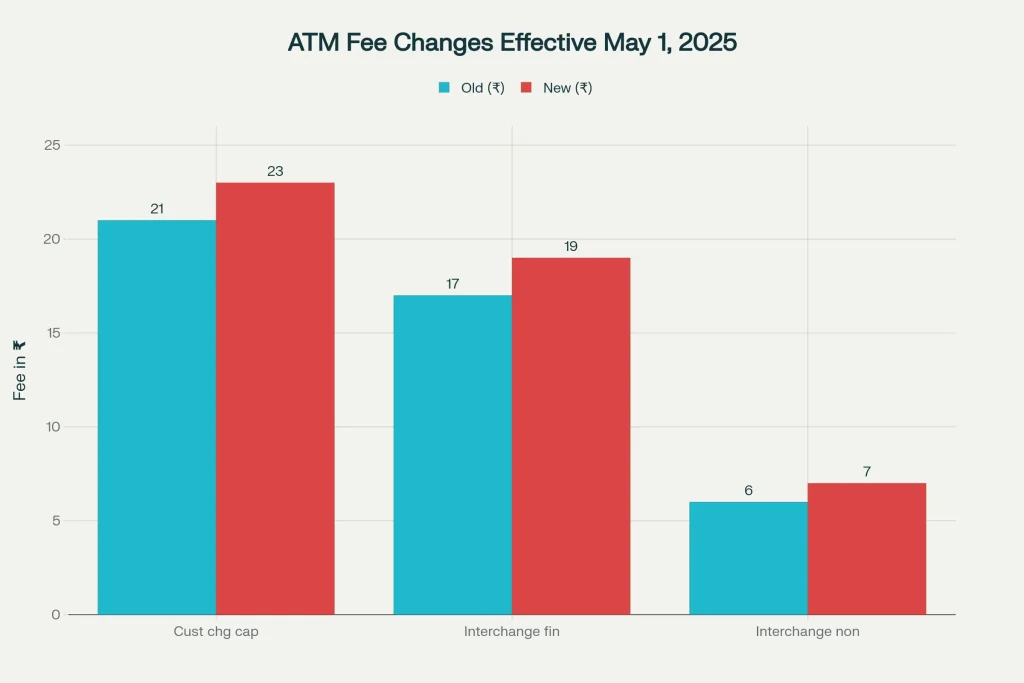
ATM cash withdrawals are getting a little more expensive in 2025, and the headline change is simple: once you cross your monthly free ATM limit, you can be charged up to ₹23 per transaction from May 1, 2025. This small hike from ₹21 to ₹23 may not seem like much on a single swipe, but it adds up quickly if you rely on ATMs frequently especially other-bank machines where you burn through your free quota faster. The ground rules around free transactions remain in place, so the real cost pressure begins only after you cross those limits. Plan ahead, consolidate withdrawals, and shift balance checks to your phone to keep fees at bay. ATM fees set to rise in 2025 and yes, it will touch both withdrawals and non-financial uses after your free limit ends. Interchange fees in the background have also been revised, which is one reason banks are aligning customer-facing charges at the ₹23 cap. Free transactions still include both financial and non-financial uses, and the allowances differ between metro and non-metro centers.
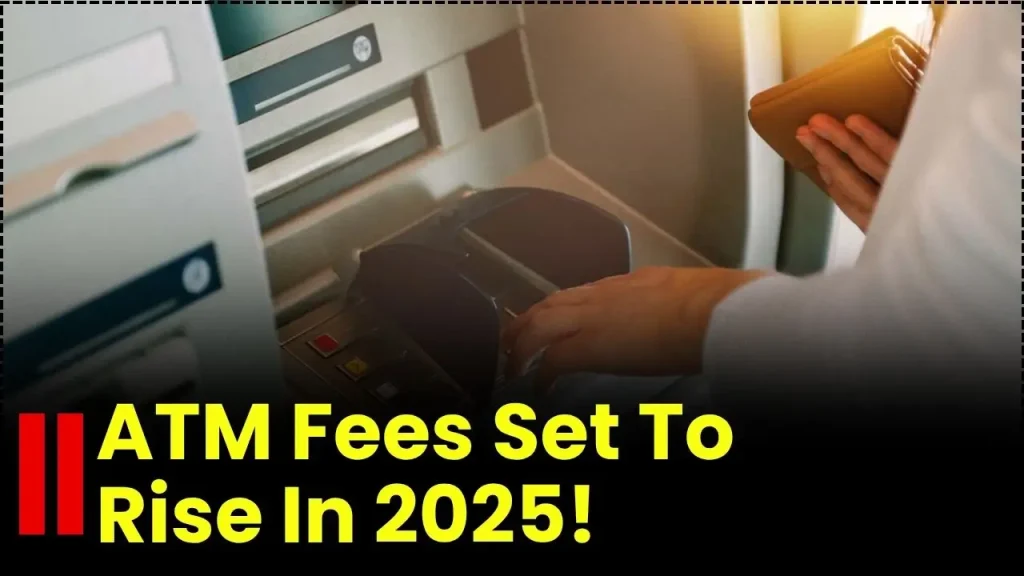
Think of this as a nudge to use your free swipes wisely. The “ATM fees set to rise in 2025” update keeps the free framework intact but raises the ceiling afterward, which mostly affects people who cross their quota or depend on other-bank ATMs. If you’re in a metro, you typically have fewer off-us free swipes than non-metro users, so planning matters more. A couple of end-of-month runs can be the difference between paying nothing and paying multiple per-transaction fees with taxes. Prioritize on-us ATMs, combine cash needs into fewer visits, and move quick checks to mobile banking. The most practical playbook: favor your own bank’s ATMs, batch your cash needs, and use digital channels for mini statements, balance checks, and routine inquiries.
ATM Fees Set to Rise in 2025
| What’s Changing | Old | New | Who It Affects | Effective |
|---|---|---|---|---|
| Customer fee cap beyond free transactions | ₹21 | ₹23 per transaction (plus taxes) | Anyone exceeding free monthly limits | May 1, 2025 |
| Interchange fee (financial transaction) | ₹17 | ₹19 | Banks/WLA operators; indirect impact on users | May 1, 2025 |
| Interchange fee (non-financial transaction) | ₹6 | ₹7 | Banks/WLA operators; indirect impact on users | May 1, 2025 |
| Free transactions at own bank ATMs | Minimum 5 | Minimum 5 (unchanged) | All customers | Ongoing |
| Free transactions at other-bank ATMs (metro) | 3 | 3 (unchanged) | Metro customers | Ongoing |
| Free transactions at other-bank ATMs (non-metro) | 5 | 5 (unchanged) | Non-metro customers | Ongoing |
| Applicability to cash recycler machines | Limited | Applies to CRM transactions except cash deposits | All customers using CRMs | May 1, 2025 |
The big picture is unchanged: your free transactions are still there; the cost rises only after you exhaust them. The difference in 2025 is that each extra swipe stings a bit more. If you adapt consolidate withdrawals, favor on-us ATMs, and push non-cash checks to your phone you’ll barely feel the change. If you don’t, the ₹23 line will show up on your statement more often than you’d like.
Why The Hike Now
Operating an ATM network is significantly more expensive than it was a few years ago. Cash handling, logistics, consumables, cybersecurity, camera and DVR upgrades, software compliance, and physical security standards have all become costlier. White-label ATM operators who run machines in areas where bank ATMs aren’t always viable depend on interchange revenue, and their costs have been under pressure. The fee update is billed as a calibrated move to keep the infrastructure viable while maintaining free usage at current levels. In short, the economics of running ATMs have shifted, and the pricing is catching up.
How Many Free Swipes You Get
The free bucket remains the same in structure. Most customers get a minimum of five free transactions a month at their own bank’s ATMs, covering both financial and non-financial uses. At other-bank ATMs, the minimum free allowance is three in metro centers and five in non-metro centers. Banks can, and often do, offer more than the minimum. Once you exhaust these free transactions, charges kick in capped at ₹23 per transaction along with applicable taxes.
What Counts as a Chargeable Transaction
After your free quota is used, both financial transactions (withdrawals) and non-financial transactions (balance checks, mini statements, PIN changes in some cases) can attract fees. The same logic applies at cash recycler machines for anything other than cash deposits; deposits typically follow separate rules. Some banks differentiate the fee level for non-financial overage, but they stay within the cap. Be mindful that each quick balance peek at an ATM counts against your free bucket save those for digital channels to preserve your free swipes.
Bank-Specific Signals
Banks have updated their schedules to reflect the new ceiling. Large private and public sector banks have aligned to ₹23 plus taxes beyond free limits, and some have also published separate non-financial rates where relevant. The translation for users: expect consistency in the headline cap, with minor variations in how non-financial overages are priced. Always scan your bank’s tariff page or in-app schedule; it takes a minute and can save you multiple paid swipes a month.
Interchange Fee the Hidden Driver
Interchange is the fee your bank pays when you use another bank’s ATM. The revision ₹19 for financial and ₹7 for non-financial does not hit you directly but influences how banks price over-limit usage, especially off-us. It’s the reason off-us swipes feel costlier once free limits are gone. This is also why the smartest strategy is to finish your on-us free quota before you rely on other-bank machines.
Urban Vs Non-Urban Users
City users typically get fewer off-us free transactions (three) than non-metro users (five). If you live in a metro and rely on the nearest ATM regardless of the logo, you’ll hit the overage zone faster. Non-metro users have a wider buffer but face another challenge: fewer ATMs, making it harder to stick to on-us machines. In both cases, a little planning knowing where your own bank’s ATMs are and grouping withdrawals helps prevent fee creep.
Strategies To Avoid Paying More
- Use your own bank’s ATMs first to consume the on-us free quota before tapping other-bank machines.
- Batch your cash needs withdraw a larger amount once rather than small amounts repeatedly during the month.
- Shift routine checks balance inquiries, mini statements, last transactions to mobile banking or UPI apps.
- Track your free transaction count in the bank app or SMS alerts to avoid accidental overage.
- Know your bank’s tariff schedule; some list lower non-financial over-limit fees, which can influence your monthly tactics.
- Prefer ATMs at branches or high-footfall locations to combine errands and reduce multiple trips.
- If you routinely exceed limits, consider a premium account variant that offers higher free ATM caps.
What It Means For 2025
For many users, this is a ₹2-per-transaction increase after the free limit. The real impact depends on behavior. If you usually stay within the free quota, little changes. If you regularly cross it especially on other-bank machines costs will add up across a month. The broader message is clear: preserve free transactions for genuine cash needs and push non-cash interactions to digital. With UPI and mobile banking ubiquitous, it’s easier than ever to save those free swipes.
Quick Examples
- Metro user who crosses limits: After five on-us and three off-us transactions, each additional withdrawal or non-financial use can be billed up to ₹23 plus taxes. Two late-month withdrawals can add roughly ₹50 to the bill.
- Non-metro user: You have five off-us free swipes; the sixth becomes chargeable even if it’s just a mini statement. If your bank offers a lower non-financial overage, it will still count as a paid transaction.
- Frequent traveler: Map your own bank’s ATM network in the cities you visit most. Even one extra on-us visit can avoid an off-us overage.
- Cash-heavy small business: Switch to fewer, larger withdrawals and maintain a buffer to reduce emergency trips that trigger fees.
Bank Locker Users Beware — RBI Introduces a New Rule System That Every Locker Holder Must Know
Impact On Different Customer Segments
- Salaried professionals with predictable cash cycles can plan a single withdrawal near payday and avoid multiple trips.
- Gig workers and cash-first micro businesses may feel the increase more; a weekly or bi-weekly withdrawal plan helps restrain costs.
- Students should favor campus or branch ATMs of their own bank and rely on UPI for small spends.
- Rural customers using white-label ATMs should keep an eye on their free count; a simple ledger or notes app reminder works.
FAQs on ATM Fees Set to Rise in 2025
Q1. When do the new ATM fees start?
A. From May 1, 2025, banks can charge up to ₹23 per transaction after you exhaust your free monthly limit.
Q2. How many free ATM transactions do I get?
A. A minimum of five free transactions at your own bank’s ATMs every month, plus three at other-bank ATMs in metros and five in non-metro areas. Banks may offer more.
Q3. Do non-financial transactions count toward free limits?
A. Yes. Balance inquiries, mini statements, and similar non-financial uses count toward your free quota and can be charged after you cross it.
Q4. Will GST apply on these fees?
A. Yes. Applicable taxes are levied over and above the per-transaction fee.
Q5. How can I avoid paying higher ATM fees?
A. Use your own bank’s ATMs first, batch withdrawals, move routine checks to mobile or net banking, and monitor your free count so you don’t overshoot late in the month.