
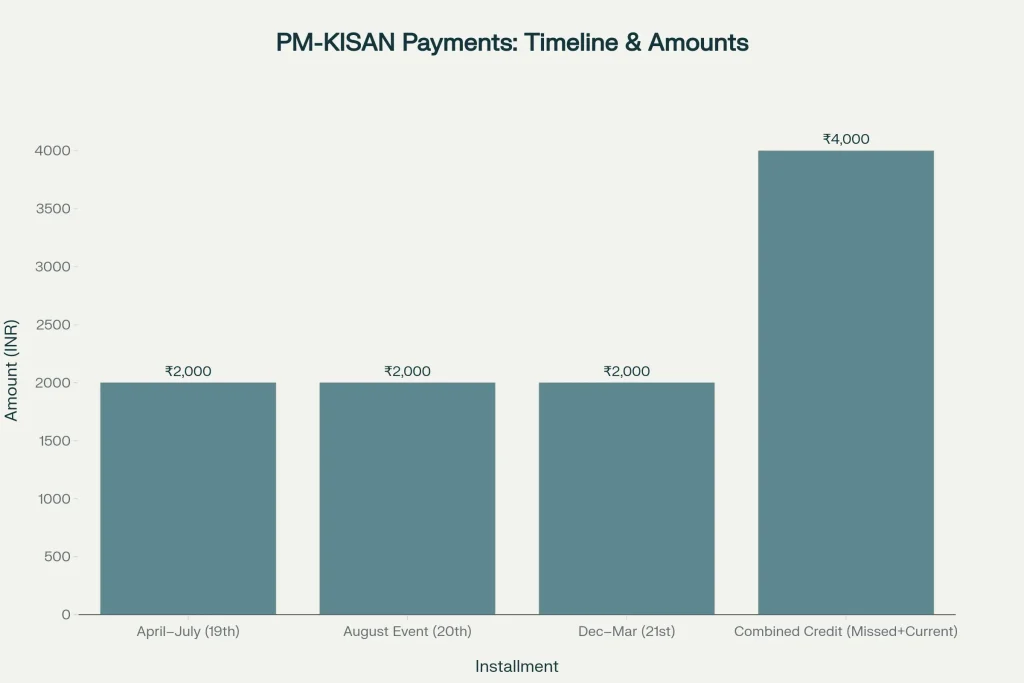
Farmers have a practical reason to stay alert this season: the PM-KISAN 21st installment is lined up, and many beneficiaries may see ₹4,000 land together if the previous ₹2,000 was held and is now cleared with the current tranche. This happens when pending eKYC, Aadhaar-bank seeding, or land record verification issues are resolved and both cycles get processed in one go. The scheme continues to credit ₹6,000 annually via Direct Benefit Transfer in three equal installments of ₹2,000 each, with releases occurring in phased batches across states as verifications complete.

This PM Kisan 21st Installment Alert matters because the current disbursal aligns with the December–March window while credits are being staggered for districts based on data readiness and state-level validations. Some regions received early credits due to local exigencies and flood-linked relief measures, while others will see funds in the broader cycle as records clear. Beneficiaries who had a prior tranche withheld can receive a cumulative ₹4,000 once KYC and land record issues are fixed, reflected as two separate entries in bank/portal history for different cycles.
PM Kisan 21st Installment Alert
| Item | Key Details |
|---|---|
| Scheme | PM-KISAN Samman Nidhi — ₹6,000 per year in three installments of ₹2,000 via DBT |
| 21st Installment Window | December–March cycle; staggered credits for many districts within this window |
| Expected Credit Phases | Early releases observed in select states; broader credits continue as verifications complete |
| ₹4,000 Together | Possible if previous installment was withheld and later released with the current tranche |
| Status Check | Farmer’s Corner → Beneficiary Status/Know Your Status (KYS); mobile app and chatbot options |
| Beneficiary List | Farmer’s Corner → Beneficiary List to confirm village-level inclusion |
| Requirements | eKYC completion, Aadhaar–bank seeding, active bank account, land record verification |
What ₹4,000 Means For You
When a prior installment is held due to incomplete KYC, bank mismatch, or land record discrepancies, the system does not forfeit the amount; it waits for corrections. Once your data is updated and verified, the previously held ₹2,000 can be credited alongside the current ₹2,000. In your passbook and on the PM-KISAN portal, these typically appear as two distinct credits tied to their respective cycles. This is why staying on top of your KYS status and ensuring biometric/OTP-based eKYC completion matters before the cycle’s processing window closes.
Who May Face Delays
Delays commonly affect profiles flagged for exclusions, duplication, or mismatched records. If both spouses are shown as beneficiaries, if land ownership dates fall outside admissible windows, or if a beneficiary is otherwise ineligible under the scheme rules, payments can be paused pending review. State verification queues also slow disbursals where land data integrations are midstream. Ensuring your Aadhaar is correctly seeded with your bank, your account is active, and your land details match records prevents these routine holds.
How To Check Your Status for PM Kisan 21st Installment
- Use Beneficiary Status/KYS in Farmer’s Corner: This shows installment history, payment readiness, and whether a hold exists.
- Verify inclusion in Beneficiary List: Confirm the correct village and beneficiary mapping before expecting a credit.
- Track credits: Keep SMS alerts active and regularly check your bank passbook; DBT entries show reference/UTR details.
Expected Timeline and What to Anticipate
The 21st installment falls within the December–March cycle, with many districts seeing phased credits as their data clears. Some states received earlier support due to local conditions, but a uniform date for all beneficiaries was not announced. For those who corrected KYC or land mismatches recently, do not be surprised to see cumulative posting totaling ₹4,000 for two cycles.
Common Reasons For Hold
- eKYC not completed or failed OTP/biometric verification.
- Aadhaar not linked to the beneficiary bank account, or account inactive.
- Land record mismatch or ownership date beyond scheme cut-offs.
- Duplicate or ineligible cases under review at the state or central level.
What To Do If You Didn’t Receive ₹2,000
- Complete eKYC now: Try OTP-based on the portal; if it fails, visit a CSC for biometric KYC.
- Fix Aadhaar-bank linkage: Ensure your account is active and correctly mapped; update portal records if details changed.
- Verify land records: Resolve name, survey number, or date discrepancies through local authorities, then recheck KYS.
- Revisit status in 48–72 hours after updates; cleared cases often move into the next batch run of credits.
Recent Scheme Context
The previous nationwide milestone set the stage for this cycle’s verifications and releases across states. After the 20th installment, departments intensified record cleansing and beneficiary validation to reduce leakages and ineligible credits. This heightened scrutiny is why some beneficiaries receive two credits together post-correction, while others remain temporarily on hold until data aligns.
Key Takeaways for Farmers
- Keep data clean: Aadhaar, bank details, and land records must be correct, current, and verified.
- Track proactively: Use KYS and Beneficiary List tools to confirm your eligibility before expecting a credit.
- Expect phased credits: District-level processing causes staggered timelines; cleared cases can see combined ₹4,000 postings.
How To Complete eKYC And Fix Bank/Aadhaar Issues
- OTP eKYC: Available through the portal; ensure your mobile number is linked to Aadhaar.
- Biometric eKYC: Visit a nearby CSC if OTP fails or your number isn’t updated with Aadhaar.
- Bank seeding: Ask your bank to confirm Aadhaar mapping and account status; request immediate seeding if pending.
- Reconcile names and details: Ensure your name and date of birth match across Aadhaar, bank, and PM-KISAN records.
How To Read Your Payment History
- On the portal, the installment section shows each cycle’s status (success, pending, or failed).
- Bank passbooks or statements list individual credits; cumulative ₹4,000 typically appears as two entries with separate dates.
- If a payment fails, it often reprocesses after bank/Aadhaar corrections; keep tracking KYS for updated status.
State-Level Variations You Should Know
- Early support: Flood- or disaster-affected states sometimes get priority credits as a policy response.
- Data sync timing: States with faster land record digitization and integration usually see quicker approvals.
- Local advisories: Agriculture departments issue district notices on camps, document drives, and CSC support—watch for those updates.
Registration And Inclusion Tips For New Beneficiaries
- Ensure land ownership records are updated in your name and reflect correct dates.
- Register on the portal or through your local CSC; provide Aadhaar, bank account, and land details.
- Track your Beneficiary List entry to confirm inclusion; only included beneficiaries are processed for credits.
- If rejected, check the reason in KYS and resolve it then reapply or get your data corrected by local authorities.
Big Benefits for 2025 — Ration Card Holders Get 8 New Perks from Free Food to Full Health Coverage
Avoiding Common Mistakes
- Do not keep multiple bank accounts active without ensuring the designated account is Aadhaar-seeded.
- Avoid name mismatches across Aadhaar, bank, and land records; small spelling differences can trigger holds.
- Complete eKYC before the batch run; late KYC can push your credit to a subsequent batch even within the same cycle.
- Keep your mobile number updated with Aadhaar to receive OTPs and SMS credit alerts.
Treat this PM Kisan 21st Installment Alert as your checklist moment: finish eKYC, seed Aadhaar with your active bank account, verify land records, and monitor your Beneficiary Status and List. If a previous installment was missed, your account can reflect a combined ₹4,000 once everything is in order. Credits are moving in phases through the December–March window, so stay proactive, keep documents aligned, and use official channels to track your exact status in real time.
FAQs on PM Kisan 21st Installment Alert
Can I get ₹4,000 at once under the 21st installment?
Yes, if your previous ₹2,000 was withheld for KYC or record issues and is cleared with the current cycle, you can receive two credits together totaling ₹4,000. These appear as separate entries for each cycle when processed.
What is the official window for the 21st installment?
The 21st installment aligns to the December–March window. Credits roll out in phases across states and districts as eKYC, Aadhaar seeding, and land records pass verification.
How can I check if I am included for this cycle?
Open Farmer’s Corner and use Beneficiary Status/Know Your Status to see payment readiness and verify your name in the Beneficiary List for your village.
Why is my payment on hold even after eKYC?
If eKYC is done but Aadhaar-bank seeding, account activity status, or land record synchronization is pending, the installment can still be held until the system confirms all validations.
How fast do corrections reflect in payments?
After biometric/OTP eKYC and bank/Aadhaar fixes, recheck KYS in 48–72 hours. Cleared profiles typically move into the next processing batch; timing depends on district/state schedules within the cycle.