

Delhi’s Atal Canteen Scheme is a simple promise delivered with clarity: hot, clean, nutritious meals for ₹5, served twice daily across 100 locations to ensure no one goes to bed hungry in the capital. Launching on December 25, aligned with the birth anniversary of Atal Bihari Vajpayee, the scheme focuses on workers, slum clusters, and low-income families facing high food inflation and unstable incomes.
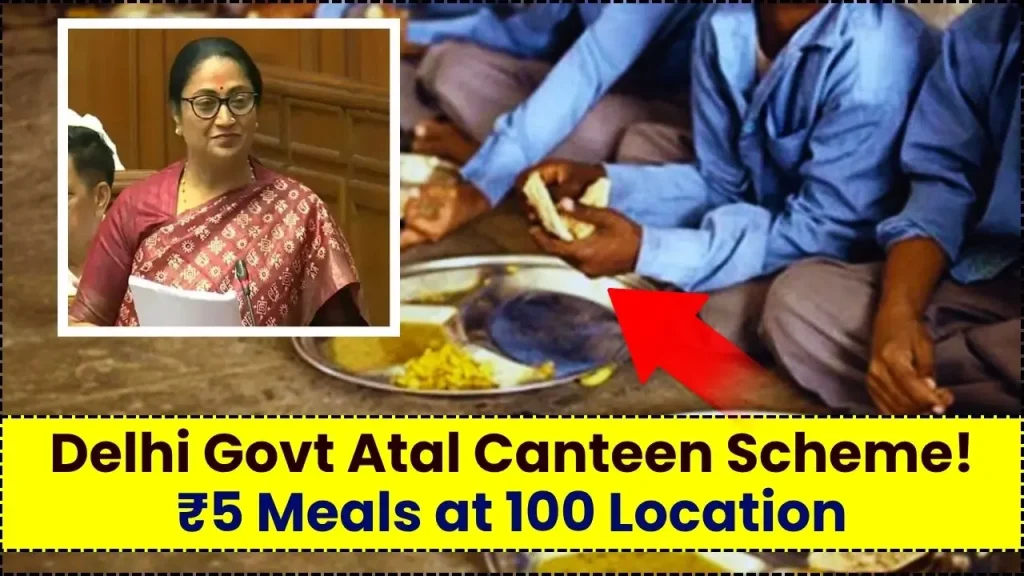
The Atal Canteen Scheme in Delhi will operate through 100 canteens in the first phase, each serving 1,000 plates per day 500 in the morning and 500 in the evening, so service remains fast and predictable. The thali will be simple and complete: dal-chawal, roti, and seasonal vegetables, designed for consistent nutrition and quick service without compromising hygiene. Canteens will use digital tokens to manage crowds, with CCTV monitoring for real-time oversight, while kitchens are planned with LPG cooking, RO water, and cold storage to maintain safety and quality.
Atal Canteen Scheme
| Key Detail | Information |
|---|---|
| Launch Date | December 25 |
| Locations In Phase 1 | 100 canteens across Delhi |
| Price Per Meal | ₹5 per plate |
| Meals Per Centre | 1,000 per day (500 morning, 500 evening) |
| Standard Menu | Dal, rice, roti, vegetables |
| Access System | Digital tokens; CCTV-enabled monitoring |
| Quality Assurance | Accredited lab testing; monthly compliance reports |
| Kitchen Infrastructure | LPG cooking, RO water, cold storage |
| Budget Signal | ₹100 crore allocation for rollout |
| Target Users | Workers, slum clusters, low-income residents |
The Atal Canteen Scheme brings a focused, dignity-first solution to Delhi’s most urgent urban challenge: affordable, reliable nutrition within walking distance for those who need it most. With a simple ₹5 thali served twice daily across 100 locations, the model marries scale with predictability fixed menus, clear service windows, digital tokens, and live monitoring to keep queues orderly, food safe, and quality consistent. Placing canteens near slum clusters, construction hubs, markets, and transit nodes meets real demand patterns while cutting the hidden costs of time and travel for daily wage earners.
Why This Matters Now
A ₹5 plate with protein, carbs, and vegetables can meaningfully improve daily nutrition for wage earners and migrant families without stigma or paperwork. By placing canteens near slums, construction corridors, bus stands, and busy markets, the scheme reduces time and travel costs while meeting demand where it naturally exists.
How The System Will Work
A digital token system will streamline service windows, prevent crowding, and improve transaction transparency. CCTV-connected sites will be monitored centrally for uptime, safety, and grievance redressal, helping maintain standards and accountability across all 100 locations.
What’s On the Plate
The core thali dal, rice, roti, and vegetables keeps nutrition balanced and operations efficient. A uniform menu simplifies procurement and testing, helps vendors maintain speed at scale, and ensures predictability for daily visitors.
Where The First 100 Canteens Will Open
Sites have been prioritised in and around JJ clusters, construction hubs, transit nodes, and dense market areas to maximise reach from day one. The first phase aims for a synchronous launch to ensure citywide access and clear, predictable service patterns.
Quality And Safety Controls
Food and raw material samples will undergo accredited testing, while operators submit monthly reports covering food standards, staff health certification, and safety compliance. Layered controls tokens, CCTV, audits are built in to minimise leakages and keep quality consistent.
Governance And Funding
A dedicated implementation framework handles site selection, vendor onboarding, menu and hygiene standards, and monitoring protocols. Budgetary support signals sustained commitment to subsidised nutrition as core urban welfare infrastructure.
What Citizens Should Expect On Launch Week
- Look for your nearest canteen near slums, construction sites, markets, or bus stands.
- Collect a digital token at the counter during morning or evening service windows.
- Expect a clean, standard thali at ₹5 with orderly queues and monitored service.
How The Atal Canteen Scheme Compares
Delhi’s model mirrors the strengths of successful state community kitchens affordable, fixed-price meals, high-frequency service, and predictable menus while adding digital tokens and live monitoring to tighten transparency and scale responsibly. The fixed ₹5 price point is intentional: low enough to be accessible, not free to discourage misuse, and backed by subsidies to maintain quality.
Potential Impact And Next Steps
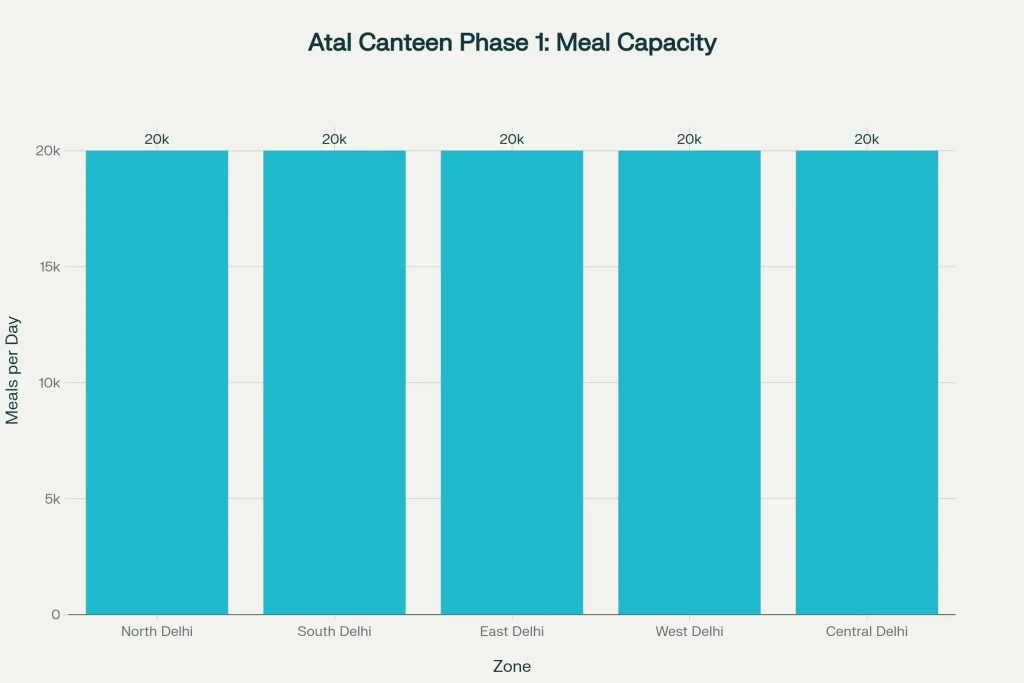
The first 100 canteens can collectively serve around 100,000 plates per day, generating clear, measurable outcomes against hunger and malnutrition in dense urban pockets. Expansion beyond 100 sites will likely follow demand patterns, performance audits, and community feedback, with scope for partnerships with self-help groups and local kitchen operators.
RBI Issues New Rules for All Bank Account Holders — Effective from November 15, 2025
User-Focused Guidance
- If you’re a daily wage worker or live in a JJ cluster, check for the nearest canteen and keep your mornings and evenings free for quick token collection and meal time.
- Carry a small water bottle and reusable container if you prefer, though dining will be set up for on-site service.
- Expect consistent taste, portion sizes, and hygiene, as uniformity is key to scale.
If Delhi sustains the ₹5 price point, holds hygiene lines, and keeps service punctual, the Atal Canteen Scheme can do more than feed people; it can restore a rhythm of certainty to lives lived on uncertain incomes. That is how a policy becomes a habit, a habit becomes trust, and trust becomes the quiet foundation of a healthier city. Partnerships with self-help groups and community kitchens can deepen capacity and resilience, while periodic menu reviews within cost and nutrition guardrails can keep meals both wholesome and acceptable to local tastes.
FAQs on Atal Canteen Scheme
Who can eat at the Atal Canteen?
The canteens are designed as walk-in community kitchens with subsidised plates, targeted at workers, slum residents, and low-income families. No complex paperwork is expected at the point of service.
What are the meal timings?
Each centre offers two windows morning and evening serving 500 plates per window. Local timings will be displayed at each canteen; arriving early helps during high demand.
How is food quality ensured?
Meals and raw materials are tested by accredited labs. Operators provide monthly compliance reports and maintain staff health and safety certifications, with CCTV-monitored sites for oversight.
Will the scheme expand beyond 100 sites?
A phased approach is expected. Performance, demand, and audit findings will inform the next set of locations after the initial rollout.