
In many Indian villages, women quietly run the real economy managing livestock, stitching clothes, preparing food items for sale, and handling household budgets. Yet their work often stays invisible in formal income records. The Lakhpati Didi Yojana 2026 aims to change that reality by turning hardworking rural women into recognized earners and entrepreneurs.
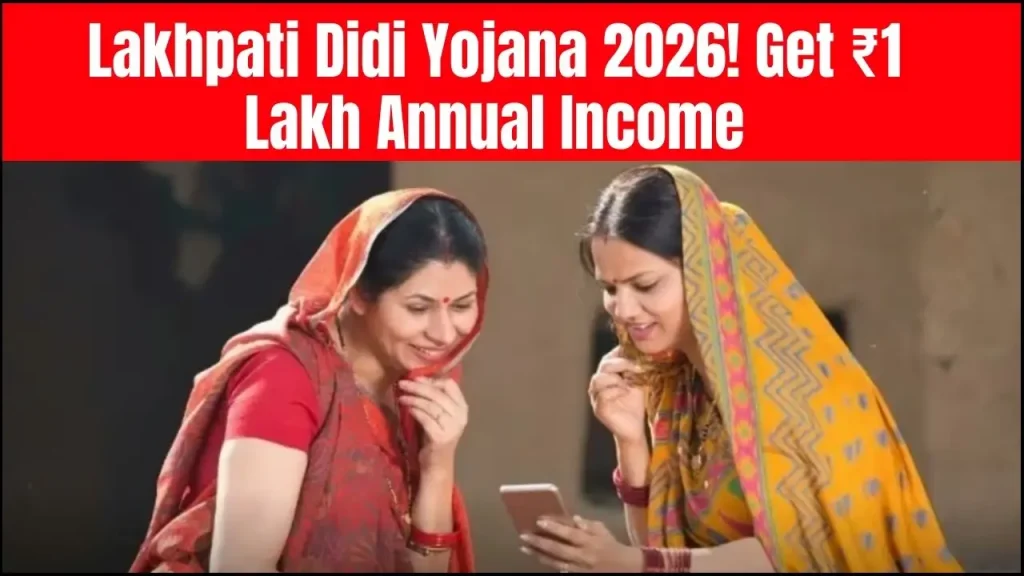
Through organized Self-Help Groups (SHGs), training, and access to credit, the Lakhpati Didi Yojana 2026 focuses on helping women build stable businesses instead of depending only on seasonal wages. This initiative is not a short-term grant scheme. It is a structured livelihood program designed to build confidence, skills, and sustainable income. The real idea is simple: when women earn regularly, the entire household’s financial condition improves children stay in school longer, nutrition improves, and families avoid debt traps from informal lenders. As more villages adopt collective enterprise models, the scheme is also encouraging savings habits, digital payments, and better financial planning inside homes.
The Lakhpati Didi Yojana 2026 works through existing Self-Help Groups, so women do not have to start from zero. Instead of creating new systems, the program strengthens community networks that already exist in villages. SHG members receive skill development training, business guidance, and support in choosing profitable activities such as dairy, tailoring, food processing, poultry, handicrafts, or small retail work. The aim is clear: each participating woman should gradually reach a yearly income of at least ₹1 lakh. The program also focuses on financial literacy teaching savings habits, digital payments, and record keeping so earnings become long-term and dependable. Many groups now learn how to price products correctly, calculate profit, and avoid losses, which is often the difference between a hobby and a real business.
Lakhpati Didi Yojana 2026
| Description | Information |
|---|---|
| Scheme Name | Lakhpati Didi Yojana 2026 |
| Coverage | Across India |
| Target Group | Women members of Self Help Groups (SHGs) |
| Main Objective | Annual income up to ₹1 lakh and financial empowerment |
| Key Benefits | Training, loan facility, subsidy support, self-employment |
| Mode of Application | Online through NRLM portal |
Lakhpati Didi Yojana 2026 is more than a government welfare effort it is a structured pathway to entrepreneurship. By combining training, affordable finance, and group cooperation, the program gives women the tools to earn steadily. The ₹1 lakh income target becomes achievable when women select suitable businesses and work collectively. With patience and consistent effort, these small enterprises can grow into reliable livelihoods, helping families build financial security, confidence, and dignity for the future.
Objectives of Lakhpati Didi Yojana
- The main objective of the scheme is financial independence for women. Many rural families rely on a single income source, usually agriculture or daily wage labor. During crop failure or off-season months, households struggle. The program helps women add a second steady income stream. Under Lakhpati Didi Yojana 2026, women are encouraged to operate small enterprises so family finances do not collapse during emergencies.
- Another purpose is social empowerment. When a woman contributes to household earnings, her participation in family decisions increases. Communities also begin to treat women entrepreneurs with respect, which gradually changes traditional attitudes. Over time, families start trusting women with savings, banking work, and even investment decisions.
What is Lakhpati Didi Yojana?
This is a livelihood support program for women already associated with Self Help Groups. SHGs generally start as savings groups, but this initiative converts them into business groups. Women receive technical training, production support, and help with marketing their products locally. Lakhpati Didi Yojana 2026 emphasizes practical skills rather than theory women learn by doing, not by classroom lectures. The income goal of ₹1 lakh annually may seem ambitious at first, but through collective production and proper planning, many groups have already begun approaching that figure by combining multiple activities. For example, a member may earn from milk sales in the morning, tailoring in the afternoon, and seasonal food products during festivals.
Lakhpati Didi Yojana Benefits
Participants receive several direct benefits that support real earning opportunities.
1. Regular Income Creation: Women are guided to choose activities with continuous demand such as milk supply, snack preparation, tailoring services, and home-based shops. Instead of depending on one product, many SHGs consider two or three small income streams to maintain steady cash flow.
2. Skill Development Training: Training includes production methods, pricing, packaging, and customer handling. Women learn how quality affects repeat customers and why proper packaging increases sales value.
3. Affordable Loan Access: A major barrier for rural entrepreneurs is capital. Through the scheme, SHG members can obtain loans at lower interest rates and repay gradually. This allows them to buy sewing machines, livestock, storage containers, or raw materials without borrowing from moneylenders.
4. Subsidy Support: Financial assistance reduces startup risk and allows women to stabilize their business during the initial months when profits are small.
5. Self-Employment Opportunities: Work can be done from home or nearby centers, making it easier to manage family responsibilities along with earning. This flexibility is one of the main reasons the program is successful.
6. Market Linkages
Some groups are connected to local fairs, weekly markets, cooperative stores, and bulk buyers to improve product sales under Lakhpati Didi Yojana 2026. A few SHGs now even accept digital payments and supply goods to nearby towns.
Eligibility Criteria for Lakhpati Didi Yojana
To apply, applicants must fulfill these conditions:
- Must be an Indian woman
- Must be a member of a Self Help Group (SHG)
- Age between 18 and 60 years
- Family annual income below ₹2.5 lakh
- Should not be a defaulter in previous government loans
These eligibility rules ensure that the support reaches women who genuinely need livelihood assistance. Priority is often given to low-income households and women without formal employment.
Documents for Lakhpati Didi Yojana 2026
Applicants typically need the following documents:
- Aadhaar card or other identity proof
- Address proof (ration card or utility bill)
- SHG membership certificate
- Income certificate
- Age proof
- Bank account details
Correct documents help authorities verify applicants quickly and transfer funds directly to bank accounts, reducing delays and middlemen problems.
How to Apply for Lakhpati Didi Yojana 2026
The application process is simple and mostly digital.
- Visit the official NRLM portal.
- Choose the scheme application option.
- Enter personal and SHG details carefully.
- Upload documents.
- Submit and track status online.
Village-level facilitators and livelihood mission staff often help women fill the form if they are unfamiliar with online procedures. Many applicants under Lakhpati Didi Yojana 2026 complete registration through local community centers or panchayat offices.
How SHG Women Can Reach ₹1 Lakh Annual Income
Reaching ₹1 lakh income requires planning and consistency rather than luck.
- Select High-Demand Activities: Milk supply, vegetable cultivation, spice grinding, papad making, tailoring, and beauty services often generate stable income. Choosing products with daily demand ensures regular cash flow instead of seasonal earnings.
- Work as a Group: One member produces goods, another manages sales, and another handles accounts. Shared effort reduces risk and increases output. Group purchasing of raw material also lowers cost and increases profit margins.
- Maintain Simple Accounts: Tracking daily expenses and profits helps women understand whether the business is growing. Even a simple notebook can reveal which product earns more.
- Reinvest Early Profits: Instead of immediate spending, buying better tools or raw material helps expand production and earnings. Many successful groups first buy a second machine or additional livestock before taking personal profit.
- Use Local Markets: Weekly markets and nearby towns can double income when products are marketed properly through SHGs supported by Lakhpati Didi Yojana 2026. Displaying products neatly and maintaining quality encourages repeat customers.
Women are also slowly learning digital selling. Some groups now take orders through WhatsApp groups, accept UPI payments, and supply pickles, snacks, or stitched garments directly to customers. These small steps significantly improve monthly earnings.
Senior Citizen Pension 2026 – How to Get ₹9,000 Monthly Pension, Eligibility & Steps Explained
Why The Scheme Matters
The biggest impact of the program is confidence. Women who once hesitated to speak in public meetings now negotiate prices with customers and suppliers. Families that depended on borrowing during emergencies now manage expenses through savings. Lakhpati Didi Yojana 2026 also reduces migration because families can earn within their village itself. Local economies benefit as well. Small businesses create demand for raw materials, transportation, and local services, multiplying income opportunities within the community. Over time, these networks form village-level micro economies led by women entrepreneurs.
FAQs on Lakhpati Didi Yojana 2026
1. Who can apply for Lakhpati Didi Yojana 2026?
Any woman who is a member of a registered Self-Help Group and meets the income criteria can apply.
2. What income does the scheme aim to achieve?
The program aims to help each participant earn at least ₹1 lakh annually through small business activities.
3. Is training provided under the scheme?
Yes, participants receive skill development, business guidance, and financial literacy training.
4. Is there any loan facility available?
Yes, SHG women can access low-interest loans and subsidy support to start or expand businesses.