
If you still pay people through cheques, this Cheque Bounce Law Update matters more than ever in 2025, because a bounce is no longer a “small bank issue” you can fix later. With faster cheque processing and tighter bank level controls, one missed balance check can trigger charges, payment disputes, and in some cases a legal route that becomes stressful and expensive. This Cheque Bounce Law Update is not only about courts or punishment talk. It’s also about what your bank can do after repeated cheque returns, how quickly a bounced cheque is reported, what memo reason is recorded, and how much time you actually get to respond before the other person loses trust and moves toward legal action.
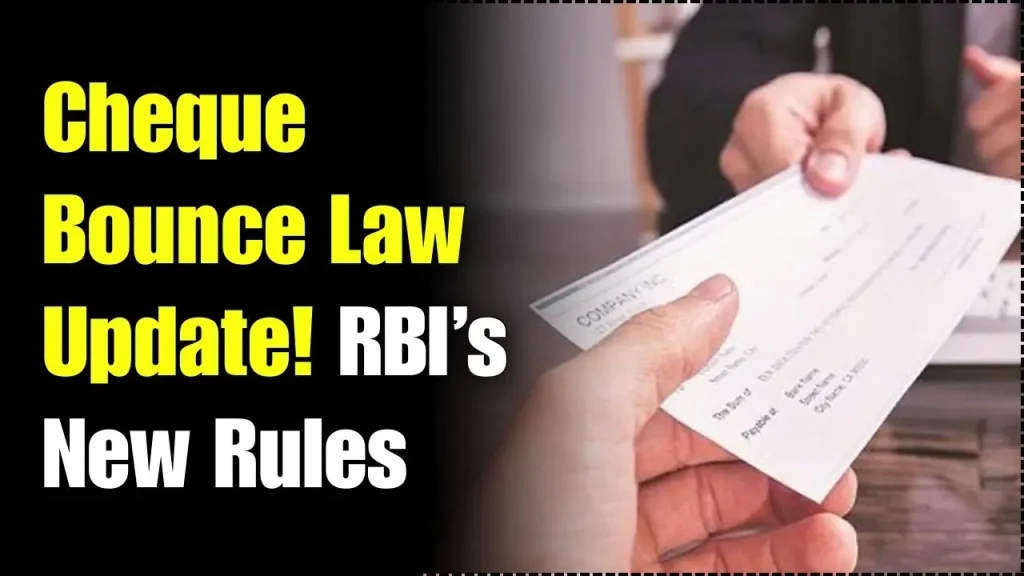
This Cheque Bounce Law Update is best understood in two layers. The first layer is the legal side, where cheque dishonour can lead to a formal demand, a notice, and a case under Section 138 if the issue is not resolved in time. The second layer is the banking side, where RBI driven customer service rules push banks to handle dishonour quickly, communicate clearly, and create board approved policies for frequent cheque bounces. The combined effect is simple: mistakes get flagged faster, and repeated bounces can change how your account is treated.
Cheque Bounce Law Update
| Topic | What it means for you | Practical impact |
|---|---|---|
| Cheque returns and memo | A bounced cheque comes back with a written reason. | The reason recorded can influence how seriously the payee reacts. |
| Common bounce reasons | Insufficient funds, signature mismatch, overwriting, stale cheque, stop payment. | Some reasons look like “careless,” others look “intentional,” and perception matters. |
| Bank charges | Banks usually apply cheque return charges as per their schedule. | Your cost increases even before any legal step starts. |
| Frequent dishonour policy | Banks may apply restrictions if cheque bounces happen repeatedly. | You may face cheque book limits, warnings, or stricter monitoring. |
| Faster clearing trend | Clearing timelines are becoming faster with continuous clearing rollout. | Less buffer time to “arrange funds later.” |
| Legal action risk | If dues aren’t settled after notice and timelines, legal route may start. | Bigger financial and mental cost than the original payment issue. |
Procedure For Dishonour Of Cheques
- When a cheque is presented and it cannot be paid, the bank returns it and a return memo is generated with a reason. That reason is not a casual remark; it becomes the official record of why your payment failed. In day to day life, this is why “insufficient funds” bounces often create immediate tension, while a technical bounce like signature mismatch still creates trouble but is easier to explain.
- In 2025, the smarter approach is to treat cheque writing like a checklist task, not a casual habit. Before signing, confirm the date, amount in words and figures, and payee name. If it is a business cheque, confirm if any large auto debits or sweep instructions might reduce available balance on the same day. A lot of bounces happen not because people are broke, but because money moved out earlier than expected.
- Also remember that stop payment is not a magic escape. People often assume “stop payment” avoids consequences, but to the payee it can still look like a refusal to honour liability, and it can still escalate into disputes and legal arguments depending on facts. If there is a genuine dispute, put it in writing and communicate early, instead of letting the cheque bounce become the first signal.
Dealing With Incidence Of Frequent Dishonour
This is where most “new rules” confusion happens. Readers hear that RBI has made strict punishment rules, but the real shift is more practical: banks are expected to prevent misuse and manage repeated dishonour through a clear policy rather than random actions. That means your bank may have internal thresholds and steps, such as warning messages after a certain number of cheque bounces, closer monitoring of the account, or restrictions on issuing fresh cheque books for a period. What does “frequent dishonour” look like in real life. It is when cheque bounces are not a one-off accident but a pattern. If a pattern shows up, banks can treat it as a risk signal, because repeated cheque returns create operational issues, customer complaints, and reputational risk for the banking channel.
To stay safe, use these practical controls.
- Keep a buffer balance that you never touch, especially if you issue rent cheques, supplier cheques, or EMI related cheques.
- Avoid giving multiple cheques with the same presentation week if your cash flow is uncertain.
- If you made an error, proactively call the payee and replace the cheque with a safer mode like IMPS, NEFT, or UPI.
- If you are running a business, maintain a payment calendar so you know when cheques may be deposited.
This Cheque Bounce Law Update is basically pushing people toward more responsible cheque behaviour, because repeated bounces can lead to restrictions that affect daily operations, especially for small businesses that still depend on cheque payments.
Continuous Clearing And Settlement Of Cheques
- Here is the biggest “2025 trend” that changes the ground reality: cheque clearing is moving from older batch style processing toward continuous clearing and settlement on realisation in phased rollout. That sounds technical, but the impact is very human. The cheque can get processed sooner, the outcome can be known sooner, and if it bounces, the other person finds out sooner.
- In the past, some people relied on the float time mindset: issue the cheque today, arrange funds later, hope it clears. That behaviour becomes riskier when the system speed increases. The practical takeaway of this Cheque Bounce Law Update is that the day the cheque is likely to be presented is the day your account must be ready, not the day after.
- If you issue postdated cheques, treat the due date like a hard deadline. If your income cycle is uncertain, consider switching to automated mandates where you can track upcoming debits, or use digital transfers that give instant confirmation. Cheques still have value in business documentation, but they demand discipline.
E Labharthi eKYC 2025 – Bihar Pensioners Must Update eKYC or Risk Payment Delay
What Changes For Account Holders
For most account holders, the change is not about sudden new “jail rules” from RBI. The real change is faster consequences and stricter bank level hygiene around dishonour.
Here’s what can change for you after this Cheque Bounce Law Update.
- Faster bounce visibility
The payee may learn about the bounce quicker, which shortens your time to manage the relationship calmly. - Higher chance of disputes
When people get bounce alerts fast, emotions rise fast. A single bounce can damage trust with landlords, suppliers, or clients. - Bank level restrictions become more likely if you repeat
Even if the first bounce is forgiven, repeated bounces may lead to cheque book restrictions or other account controls as per bank policy. - Costs add up quietly
Dishonour charges, late fees in the underlying contract, and the indirect cost of strained relationships can easily exceed the original amount you tried to delay. - Stronger need for documentation
If you are the payee, you should keep the cheque copy, return memo, messages, invoices, and delivery proof. If you are the drawer, keep proof of payment attempts and communication to show good faith.
If there is one golden rule, it is this: never let the payee discover the bounce before you speak to them. The moment you suspect funds may be short, communicate early and offer an immediate alternative payment option. This is also where account holders should be careful about casual habits like signing blank cheques, leaving overwriting corrections, or letting someone else fill details. Many technical bounces look like negligence, and negligence creates suspicion.
FAQs on Cheque Bounce Law Update
What Is the Latest Cheque Bounce Law Update In 2025
The latest Cheque Bounce Law Update is that bank side handling is becoming faster and more policy driven, with emphasis on clear dishonour procedure, proper memo reasons, and bank level action for repeated bounces based on board approved policies.
Can A Bank Stop My Cheque Book After Multiple Bounces
Yes, banks may restrict cheque book issuance or apply other controls if bounces become frequent, depending on the bank’s internal policy and risk assessment. If your livelihood depends on cheques, avoid reaching that stage by keeping buffer funds and using digital payments when cash flow is tight.
Does Cheque Bounce Always Mean a Court Case
No. Many cheque bounce situations get resolved after the parties talk and the drawer pays quickly. The legal route usually becomes more likely when there is silence, delay, repeated dishonour, or a clear refusal to pay.
What Should I Do Immediately After a Cheque Bounce
Act the same day. Confirm the bounce reason, inform the payee, and clear the dues via a safer mode like UPI or bank transfer if possible. Then document the payment and communication so the matter doesn’t spiral into a trust crisis.