
If you’re searching for Matru Vandana Yojana 2025 details, the biggest doubts are usually about the ₹5,000 benefit and when the instalments actually come. The key thing to understand is that PMMVY payments are not released on a single fixed nationwide “date”; they are released after you complete specific milestones like pregnancy registration, ANC check-ups, childbirth registration, and the baby’s immunization stage, followed by verification. If your registration is timely and your documents match correctly, the process typically moves faster with fewer hold-ups.
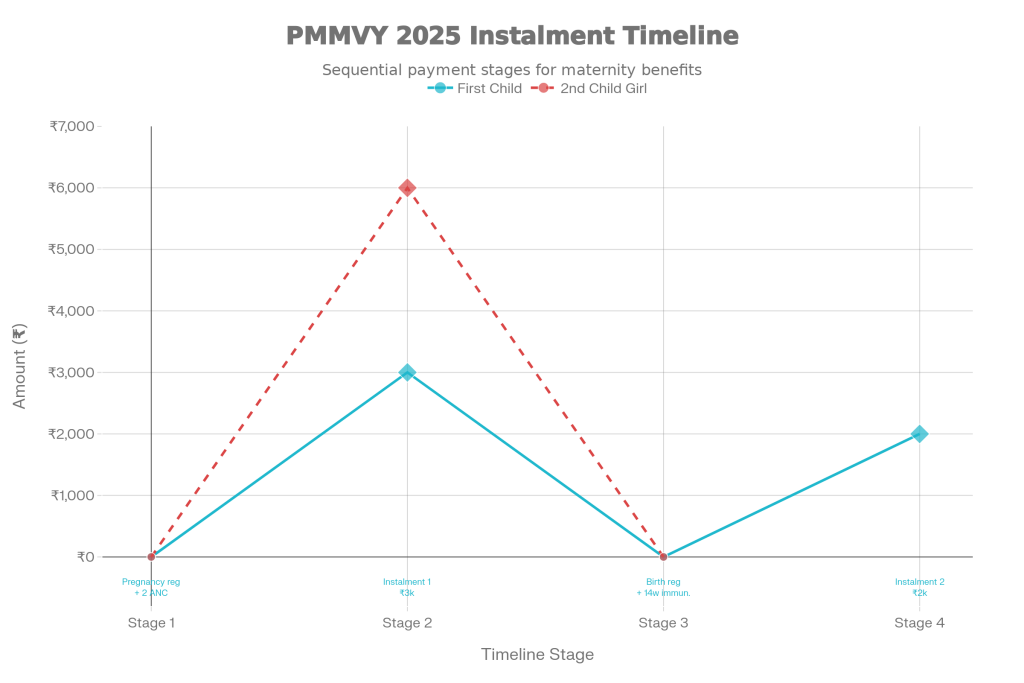
Under Matru Vandana Yojana 2025 (PMMVY 2.0), the benefit for the first living child is ₹5,000, paid in two instalments. PMMVY 2.0 also includes a benefit for the second child, but that benefit is ₹6,000 and it applies only when the second child is a girl, with milestones and verification still required. The scheme is designed to support maternal and child health, nutrition, and to help partially compensate wage loss, which is why it is tied to health check-ups and immunization conditions.
Matru Vandana Yojana 2025
What Is Matru Vandana Yojana 2025
PMMVY works like a conditional cash incentive: money is released only after the beneficiary completes the required steps and the system verifies them. That’s exactly why people ask for “instalment dates,” but in reality the timeline depends on when you complete each milestone and how fast verification happens. The official FAQ also highlights Aadhaar-based identification and DBT as core parts of the scheme’s delivery system.
Who Gets ₹5,000 Under Matru Vandana Yojana 2025
The ₹5,000 benefit is for the first living child and is meant for eligible pregnant women and lactating mothers, especially those covered under defined categories. Official scheme FAQs list eligibility categories such as SC/ST, Divyang (40%+ disability), NFSA ration card holders, PMJAY beneficiaries, e-Shram card holders, MGNREGA job card holders, and income threshold-based eligibility (where applicable), among other notified groups. In practice, approval depends on whether your category proof and personal details match and pass verification at the local/system level.
₹5,000 Instalment Dates And Timeline
PMMVY does not work on a single “everyone gets paid on this date” model; it works on a milestone model. For the first child, ₹5,000 is split into two instalments: the first is linked to pregnancy registration plus at least two ANC check-ups, and the second is linked to childbirth registration plus completion of the baby’s first immunization cycle at 14 weeks. If a milestone entry is missing or updated late (ANC or immunization records), the instalment can get delayed even if you are eligible.
Eligibility Rules For Matru Vandana Yojana 2025
Aadhaar is stated as mandatory in the scheme’s official FAQs, and benefits are routed through Aadhaar-based DBT, so Aadhaar and bank mapping accuracy matters a lot. Another important rule is the registration/claim window: the official FAQ mentions that registration can be done up to 270 days from childbirth, so delaying beyond the window can create complications. Many rejections and pendencies happen not because someone is ineligible, but because the eligibility proof, identity details, or milestone records don’t match correctly during verification.
Documents Required For Matru Vandana Yojana 2025
The documents generally serve two purposes: proving eligibility/identity and proving milestone completion. Common requirements include Aadhaar, Aadhaar-linked bank/post office account details for DBT, pregnancy registration and ANC-related records (MCP/RCH entries), childbirth/birth registration details, and immunization proof for the baby. Depending on your category, you may also need supporting documents like NFSA/BPL ration card details, PMJAY card, e-Shram card, MGNREGA job card, disability certificate, or caste proof as applicable.
How To Apply Online And Offline for Matru Vandana Yojana 2025
At the ground level, applications are often facilitated through Anganwadi Workers (AWW) or ASHA workers who help enter details into the system and upload/verify documents. The scheme system also mentions a citizen/self-registration option, which can be useful where it is enabled and accessible. Since the payment is DBT-based, it’s crucial that beneficiary name, Aadhaar details, and bank account details match perfectly to avoid payment failure.
Why Payment Gets Delayed
The most common reason for payment delays is missing or mismatched milestone records—especially ANC check-ups, childbirth registration, or the 14-week immunization record required for the second instalment. Another frequent cause is Aadhaar-bank seeding issues or errors in beneficiary details (spelling, mobile, DOB), because the scheme relies heavily on Aadhaar-based identification and DBT. Sometimes the beneficiary is eligible, but the payment remains stuck simply because the verification workflow is pending at some stage.
Viksit Bharat Portal 2025: How to Register for Government Job Opportunities and Higher-Paying Roles
Tips To Get Approval Faster
- Register the pregnancy early and ensure your ANC visits are properly recorded in your health card/records.
- Complete birth registration promptly after delivery and follow the immunization schedule so the 14-week milestone is not delayed.
- Double-check Aadhaar and bank details (especially name spelling consistency) to prevent DBT failures.
- If your case is pending, follow up through the Anganwadi/ASHA facilitation channel to check what correction or document is needed.